Physical Address
304 North Cardinal St.
Dorchester Center, MA 02124
Physical Address
304 North Cardinal St.
Dorchester Center, MA 02124

We found the 10 best high-end gaming PCs in 2026. From Corsair's RTX 5080 beast to Skytech's 9800X3D champion, here's the prebuilt to buy.
You've saved up, you've scrolled through endless benchmark videos, and now you want a prebuilt that doesn't skimp where it counts. High-end gaming PCs promise raw 4K performance, but the gap between the specs on the box and the experience on your desk can be brutal. Some makers cut corners on the power supply or use a single-stick RAM configuration. Others load in a beastly GPU but choke it with a weak CPU. We've sorted through the current field to find the 10 best high end gaming PCs in 2026 — systems that pair the right processor with a GPU that can actually flex, cool themselves properly, and won't leave you hunting for a screwdriver three months in.
The picks span from the Corsair Vengeance i7500, which packs the fastest GPU you can get in a prebuilt right now, to the Skytech Crystal, a more measured entry that still holds the "high-end" line with a solid RTX 5060. In between you'll find four Skytech variants (each serving a different CPU/GPU sweet spot), a ZOTAC MEK with an RTX 5080 and a 9800X3D, a feature-packed KOTIN with a smart display, an Alienware Aurora with onsite service, a Horizon Autherium with silly amounts of storage, and an MSI Codex Z2 that keeps things lean and well-built.
TL;DR: The Corsair Vengeance i7500 is our top pick for uncompromising 4K gaming with its RTX 5080 and liquid-cooled i9. The Skytech King 95 (White) is the one most gamers should buy: a 9800X3D paired with an RTX 5070 Ti in a well-cooled package. The KOTIN G60B stands out with a massive smart display and a solid Ryzen 7 9700X / RTX 5070 combo at a more accessible level.
| # | Product | CPU | GPU | RAM | Storage | Best for |
|---|---|---|---|---|---|---|
| 1 | Corsair Vengeance i7500 | Intel Core i9-14900KF | NVIDIA RTX 5080 | 32GB DDR5 | 2TB M.2 SSD | Raw 4K performance, RTX 5080 flagship |
| 2 | ZOTAC MEK | AMD Ryzen 7 9800X3D | NVIDIA RTX 5080 | 32GB DDR5-6000 | 2TB NVMe SSD | 4K + competitive esports, 3D V-Cache CPU |
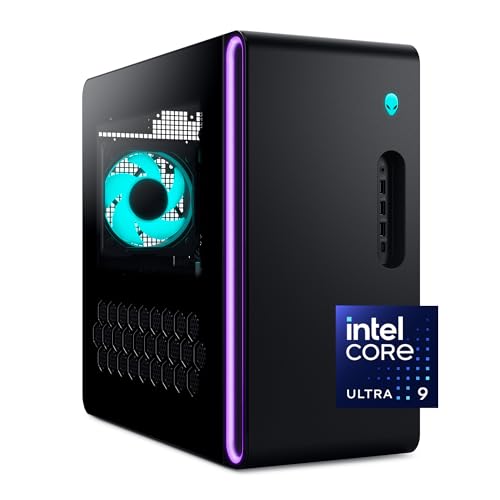
| 3 | Alienware Aurora ACT1250 | Intel Core Ultra 9 285 | NVIDIA RTX 5080 | 32GB DDR5 | 1TB SSD | Onsite service, Alienware ecosystem, clean design |
| 4 | Skytech King 95 (White) | AMD Ryzen 7 9800X3D | NVIDIA RTX 5070 Ti 16GB | 32GB DDR5-5600 RGB | 1TB Gen4 NVMe | Best all-rounder: top-tier CPU + strong GPU |
| 5 | Skytech King 95 (Black) | AMD Ryzen 7 9800X3D | NVIDIA RTX 5070 Ti 16GB | 32GB DDR5-6000 RGB | 2TB Gen4 NVMe | Same as white but with double storage and faster RAM |
| 6 | Skytech O11 Vision | AMD Ryzen 7 9850X3D | NVIDIA RTX 5070 Ti 16GB | 32GB DDR5-5600 | 2TB Gen4 NVMe | Lian Li showcase case, newest X3D chip |
| 7 | KOTIN G60B | AMD Ryzen 7 9700X | NVIDIA RTX 5070 12GB | 32GB DDR5-6000 | 1TB PCIe 4.0 SSD | Unique 11.3-inch smart display, WiFi 7 |
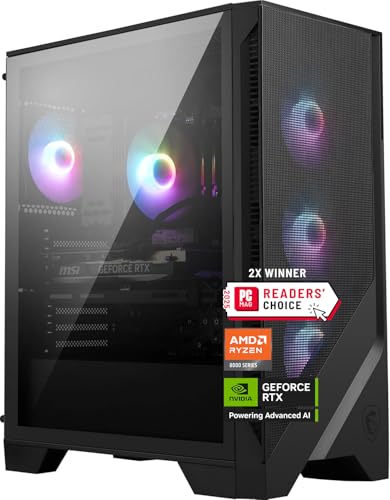
| 8 | MSI Codex Z2 | AMD Ryzen 7 8700F | NVIDIA RTX 5070 | 32GB DDR5 | 2TB NVMe SSD | Clean minimalist tower, great airflow |
| 9 | Horizon Autherium Dragon | Intel Core i9 (unlocked) | NVIDIA RTX 5070 OC | 64GB RAM | 10TB (2TB NVMe + 8TB HDD) | Ridiculous storage, 64GB RAM, 3-year warranty |
| 10 | Skytech Crystal | AMD Ryzen 7 5700 | NVIDIA RTX 5060 8GB | 32GB DDR4-3200 | 1TB NVMe SSD | Entry to high-end, great case, 1080p/1440p ultra |
We looked at six things that separate a genuinely high-end prebuilt from a dressed-up midrange box:

Pros
Cons
Best for: Gamers who want the absolute best single-player 4K experience and don't plan to upgrade for three to four years.
Check current price on Amazon →
The Corsair Vengeance i7500 is the closest thing to a "no compromises" prebuilt in 2026. The RTX 5080 is a monster: DLSS 4 Multi Frame Generation turns even the heaviest titles into buttery fluidity at 4K, and the raw rasterization performance is a clear notch above the RTX 5070 Ti. The 14900KF, despite not being Arrow Lake, remains a beast for gaming and productivity, especially when it has a liquid cooler hanging off it.
What holds it back from perfection is the 240mm AIO. The NAUTILUS RS is a good cooler, but a chip this hungry under sustained loads would benefit from a 360mm radiator. Corsair likely made the trade-off to keep the case compact. The wraparound glass is gorgeous but does restrict some front airflow. Still, for pure frame rate chasing, nothing here touches it.
The 2TB SSD is generous, and being able to sync all the RGB through one iCUE interface is a genuine quality-of-life win. If you're the kind of person who wants to play Cyberpunk 2077 at max settings with path tracing and not think about it again, this is the one.

Pros
Cons
Best for: Players who flip between demanding AAA single-player games and competitive shooters where every millisecond counts.
Check current price on Amazon →
The ZOTAC MEK earns its place by marrying the RTX 5080 with the 9800X3D, a CPU that doesn't just keep up but actually gives you a margin in CPU-bound scenarios like Valorant, CS2, or Battlefield at high refresh rates. The 3D V-Cache technology makes the chip sing in games that love large L3 caches. You get the 4K raw power of the RTX 5080 with the responsiveness of a dedicated esports machine.
The cooling solution is a full 360mm AIO, which makes a real difference on the 9800X3D during extended sessions. The 850W Gold PSU is well-chosen. The connectivity suite is comprehensive: WiFi 6E and 5Gb LAN mean you're good for the next several years of network upgrades.
One quirk: the front Infinity fans look fantastic but emit a noticeable whir under load. It's not loud enough to be a dealbreaker, but if you're sensitive to fan noise, you might swap them for Noctuas. The build quality feels solid, and the one-year complete system warranty plus three-year GPU warranty is reasonable.
Pros
Cons
Best for: Users who want a premium brand, onsite support, and don't plan to do their own upgrades.
Check current price on Amazon →
Alienware has been the poster child for prebuilt gaming PCs for a reason. The Aurora ACT1250 is a refined machine: the Core Ultra 9 285 is Intel's newest desktop architecture, and while it doesn't always beat the 9800X3D in gaming benchmarks, it's very competitive and leads in multi-threaded workloads. The RTX 5080 does everything you'd expect, and the 1000W Platinum PSU is overkill in the best way.
The catch is storage. At this tier, a 1TB SSD fills up fast. You can add another drive, but the proprietary layout makes it more annoying than in a standard case. The 240mm AIO is also underwhelming compared to the 360mm coolers on the ZOTAC and Skytech units. Alienware's advantage is the 1-year onsite service: if something breaks, Dell comes to you. That's real peace of mind for non-tinkerers.
The design is subjective, but the matte finish and stadium lighting are genuinely attractive. The clear side panel is a nice touch, though the internal cable routing isn't as clean as in some custom builders' systems. If you value support and a known brand above raw specs, this is your Alienware.

Pros
Cons
Best for: The majority of gamers who want a top-tier CPU and a strong GPU without overspending on the RTX 5080.
Check current price on Amazon →
The King 95 in white is the most balanced machine on this list. The 9800X3D is widely considered the best gaming CPU you can buy right now, and the RTX 5070 Ti with 16GB of VRAM handles any game you throw at it at 1440p and holds its own at 4K. You give up very little compared to the RTX 5080 in most titles, and you get a CPU that actually outperforms the 14900KF in gaming.
Skytech's decision to use a 360mm AIO is wise. The 9800X3D runs hot under all-core loads, and this cooler keeps it well within its comfort zone. The King 95 case is beautiful, with a curved glass side and excellent airflow. Assembly is done in the USA, which usually means better quality control than overseas bulk builds.
The downsides are relatively minor but real. The 1TB drive is fine for a few big games, but you'll be uninstalling and reinstalling. The RAM speed is 5600MHz, not the 6000MHz that AMD recommends for optimal performance with Ryzen 7000/9000. And the included Wi-Fi is last-gen AC, not even WiFi 6. These are easy fixes if you're comfortable swapping parts, but if you're not, consider the black variant next.

Pros
Cons
Best for: Gamers who want the exact same CPU/GPU combo as the white King 95 but need more storage and appreciate the black aesthetic.
Check current price on Amazon →
This is essentially the white King 95's more refined sibling. The core specs are identical: the 9800X3D and RTX 5070 Ti. But Skytech bumped the RAM from 5600MHz to 6000MHz and doubled the SSD to 2TB. Those are meaningful upgrades for anyone who values speed and space. The 6000MHz RAM is the sweet spot for Ryzen 9000 series, so you get the full memory bandwidth benefit.
The case is the same King 95 but in black. It's a handsome tower with excellent airflow. The decision to stick with 802.11ac Wi-Fi in 2026 is puzzling, but most people will plug in Ethernet anyway. If you need WiFi 6E, you can swap the card easily, but it's an extra cost.
For the small step up in spec from the white version, this is the smarter buy for anyone who doesn't love the white color. The extra storage alone is worth it.

Pros
Cons
Best for: Gamers who want the absolute best X3D CPU and love the iconic O11 case for showcasing RGB.
Check current price on Amazon →
The O11 Vision is a clear bid for the enthusiast who cares about aesthetics as much as performance. The Ryzen 7 9850X3D is a step above the 9800X3D, with a higher boost clock of 5.6GHz. In gaming, the difference is small but present, especially in CPU-limited scenarios. The RTX 5070 Ti is a proven performer.
The Lian Li O11 Vision case is a classic for a reason: dual chamber design hides cable clutter, and the glass panels show off your components. Skytech has filled it with a 360mm AIO and ARGB fans that look great. The build quality feels premium.
The main letdown is the Wi-Fi. In a system at this tier, WiFi 5 is a strange corner to cut. It works, but you're limited to about 433 Mbps link speed. The RAM is also 5600MHz, not 6000MHz. These are minor quibbles, but they stop the O11 Vision from being the definitive Skytech pick. If you love the case and want the new X3D chip, you won't be disappointed.

Pros
Cons
Best for: Those who want a conversation piece with real-time system monitoring built into the chassis.
Check current price on Amazon →
The KOTIN G60B is the most visually distinctive machine here. The 11.3-inch smart display isn't a gimmick; it shows CPU temperature, weather, time, and has customizable themes. It's genuinely useful for monitoring your system while gaming. The Ryzen 7 9700X is no slouch, and the RTX 5070 with 12GB GDDR7 handles 1440p with ray tracing easily.
The 360mm AIO is a nice touch at this tier, and the inclusion of WiFi 7 puts it ahead of most competitors on wireless connectivity. The system is assembled in California, which bodes well for quality control.
The main trade-offs are the brand recognition (KOTIN isn't as big as Corsair or Skytech) and the 1TB SSD. You can add more storage, but it's an extra step. The 12GB VRAM on the RTX 5070 is the biggest long-term concern: at 4K with ray tracing, some games already push past 12GB. For 1440p, it's fine. If you love the smart display, this is a unique and capable build.
Pros
Cons
Best for: Users who want a reliable, well-built system from a major motherboard maker and don't need flashy aesthetics.
Check current price on Amazon →
MSI is known for its components, and the Codex Z2 feels like it was designed by engineers rather than marketers. The Ryzen 7 8700F is a capable 8-core chip that games well, and the RTX 5070 gives you access to DLSS 4 and ray tracing without the cost of a 5070 Ti. The 2TB SSD is a standout at this tier.
The air cooler is the biggest difference between this and other systems. MSI uses an ARGB fan air cooler and relies on four case fans for airflow. For the 8700F, that's enough, but it won't handle as much sustained load as a 360mm AIO. The system also lacks WiFi 6E. On the plus side, the case is compact and unobtrusive, which is a relief if you don't want a glass box taking over your room.
The Codex Z2 is a "just the good stuff" build. It doesn't have the wow factor of the KOTIN display or the O11 case, but it's a reliable, well-cooled system with plenty of storage.

Pros
Cons
Best for: Gamers who also edit video or stream and need massive storage and RAM without upgrading.
Check current price on Amazon →
The Horizon Autherium Dragon is a paradox. It has the most RAM of any system here (64GB) and the most storage (10TB). The Core i9 unlocked is a brute. The cooling solution is extreme: 360mm AIO plus 11 fans total. The warranty is the longest. But the GPU is only an RTX 5070, which is odd in a build that seems designed for the highest end.
If you're a heavy multi-tasker who runs virtual machines, edits 4K video, or keeps a massive game library, the storage and RAM make this a fantastic workstation that also games really well. The 2TB NVMe handles your active games, and the 8TB HDD holds your archive. The 64GB RAM means you can have dozens of Chrome tabs, Discord, OBS, and a game open without a hiccup.
The case is a matter of taste. The Dragon front panel won't suit everyone, but it's undeniably an attention-grabber. The support team with over 20 years of experience is a nice bonus. This is not the best pure gaming PC on the list, but it's the best all-in-one gaming-plus-workstation.

Pros
Cons
Best for: Someone who wants a Skytech build with a modern GPU but is focused on 1080p ultra or 1440p medium at high frame rates.
Check current price on Amazon →
The Skytech Crystal is the most accessible system in this lineup. It uses the RTX 5060, which is the bottom of the RTX 50 series, but it's still a formidable card for 1080p and decent for 1440p with upscaling. The Ryzen 7 5700 is a last-gen chip, but it's still an 8-core processor that doesn't bottleneck the GPU.
The Crystal case is one of Skytech's best-looking: triple tempered glass panels show off the internals. The air cooler is adequate for the 5700, but don't expect quiet operation under full load. The 32GB of DDR4 is generous for a system at this level.
Is this truly "high-end"? For 1080p ultra settings with ray tracing, yes. For 4K, no. This is the system you buy if you want a Skytech build with a warranty and good looks, but your display is 1080p and you don't need the fastest GPU. It's a solid entry into the high-end ecosystem.
The right high-end gaming PC depends on where you want to play and what you value. Here are the factors that matter most.
The CPU and GPU need to work together. A Core i9 or Ryzen 9 paired with an RTX 5060 will leave performance on the table because the CPU is waiting on the GPU. Conversely, an RTX 5080 with a Ryzen 5 can bottleneck in CPU-bound games. For 4K, the GPU is almost always the bottleneck, so a strong GPU like the RTX 5080 or 5070 Ti matters more than the fastest CPU. For 1440p high refresh, the CPU becomes more important. The X3D chips from AMD (9800X3D, 9850X3D) are the best for gaming, while Intel's i9-14900KF is stronger for productivity.
All high-end systems should use at least a 240mm AIO liquid cooler for the CPU. Air coolers are fine for 65W CPUs, but once you go above that (i9, Ryzen 9), liquid cooling keeps temps consistent and noise lower. 360mm AIOs are best for sustained gaming sessions and allow the CPU to maintain boost clocks. Check the radiator location: front-mounted radiators heat the intake air, which can slightly raise GPU temps. Top-mounted is better.
Every high-end PC should boot from a Gen4 NVMe SSD. 1TB is the minimum; 2TB is better. Modern games can exceed 100GB each, so you'll fill a 1TB drive quickly. Some systems add an HDD for archive storage, which is useful but not for active games. Look for additional M.2 slots for future expansion.
A 750W 80+ Gold PSU is the minimum for an RTX 5070. The RTX 5080 demands 850W or more. ATX 3.0 certification is a plus, as it handles the transient power spikes of modern GPUs. A good PSU protects your investment. Avoid systems with non-branded or generic PSUs.
Some prebuilts use proprietary motherboards, PSUs, or cases that make upgrades difficult. If you plan to swap components later, look for standard ATX/micro-ATX boards, standard PSU sizes, and cases with room for extra drives. The Skytech systems and the KOTIN use standard parts. Alienware and some MSI models can be harder to upgrade.
A 1-year warranty is common, but some builders offer longer (Horizon offers 3 years parts, 5 years labor). Onsite service (Alienware) is valuable if you don't want to ship your machine. Check whether the warranty covers both parts and labor, and whether you need to register separately.
The RTX 5080 is the most powerful option widely available in prebuilts right now. It handles 4K with ray tracing and DLSS 4 Multi Frame Generation comfortably. The RTX 5070 Ti is the next step down and offers excellent 1440p performance. The RTX 5060 is more of a 1080p card, but still respectable for high-end entry.
For pure gaming, AMD's Ryzen 7 9800X3D and 9850X3D are the best choices due to their 3D V-Cache technology. Intel's Core i9-14900KF is faster in multi-threaded productivity and still excellent for gaming. The new Core Ultra 9 285 is competitive but doesn't lead in gaming.
32GB is the sweet spot. It's enough for any current game plus background tasks like Discord and a browser. 64GB is useful for content creation, streaming, or heavy multitasking, but it doesn't improve gaming performance. DDR5 is preferred over DDR4 for speed.
For CPUs like the Core i9 or Ryzen 9, yes. A 240mm or 360mm AIO keeps temperatures under control during long gaming sessions and allows the CPU to maintain boost clocks. Air coolers are fine for 65W CPUs, but high-end systems typically have higher TDP chips.
1TB is the minimum. With games like Call of Duty and Baldur's Gate 3 exceeding 150GB each, you'll fill 1TB quickly if you play more than a few titles. 2TB is recommended for a comfortable library. Consider adding an external or internal HDD for older games.
Building your own can save money and give you control over every component. But prebuilts offer convenience, a single warranty, and often better component availability during shortages. For someone who values their time or isn't comfortable building, a good prebuilt from Skytech, Corsair, or ZOTAC is a solid choice.
Good airflow is the priority. Look for mesh fronts, ample fan mounts, and at least two intake fans and one exhaust. Tempered glass is fine but can restrict airflow if the front panel is solid glass. Size matters: full towers are heavy but offer the best cooling; mid-towers are more manageable.
The high-end gaming PC market in 2026 has something for every kind of gamer. If you want the absolute best 4K performance, the Corsair Vengeance i7500 with its RTX 5080 and liquid-cooled i9 is the one to beat. For the best overall balance of CPU and gaming GPU, the Skytech King 95 (White) offers the outstanding 9800X3D paired with the RTX 5070 Ti in a well-built, well-cooled package. The KOTIN G60B stands out for its unique smart display and strong specs.
If you need the most storage and RAM for a gaming-plus-workstation setup, the Horizon Autherium Dragon is a storage monster. And if you're just entering the high-end space with a 1080p monitor, the Skytech Crystal gives you a current-gen GPU in a beautiful case.
Whichever you choose, make sure the system matches the resolution you play at and the type of games you enjoy. The best high end gaming pc is the one that makes you stop thinking about benchmarks and start actually playing.
This article contains Amazon affiliate links. We may earn a small commission on qualifying purchases at no extra cost to you.


