Physical Address
304 North Cardinal St.
Dorchester Center, MA 02124
Physical Address
304 North Cardinal St.
Dorchester Center, MA 02124

We’ve picked the best 50-inch TVs of 2026, from budget-friendly LEDs to stunning QLEDs. Our top picks include Amazon, Samsung, Roku, and more to help you find your perfect screen.
You stare at the screen. The picture looks fine in the store, but at home under real lighting, with a football game on and kids running past, that budget special you grabbed off the shelf starts showing its limits. Black levels turn milky, motion blurs, and the smart interface lags just enough to annoy. The best 50-inch TVs in 2026 don’t all suffer these compromises, but the difference between a good one and a great one is wider than ever.
The market splits into two camps: the LED workhorses that get the job done for less, and the QLED (and one Crystal UHD) sets that deliver genuinely impressive color and contrast for a small step up. There are also new models from Amazon and Roku that integrate their ecosystems more deeply than ever. Whether you're after a no-fuss daily driver, a gaming-friendly screen, or a living-room centerpiece that looks good with the lights off, the list below covers the real contenders at 50 inches.
TL;DR: The Amazon Fire TV 50" Omni QLED is the best all-rounder: fantastic HDR, local dimming, and hands-free Alexa. The Hisense 50" E6 Cinema Series Hi-QLED gives you near-identical picture quality for a little less with a slightly simpler smart interface. The Roku Select Series 4K QLED has the cleanest user experience and Bluetooth headphone mode. The Samsung 50" Crystal UHD is the pick for sports fans who value motion handling. For a strictly budget buy, the INSIGNIA 50" F50 works, but you'll want a soundbar.
| # | Product | Panel Type | HDR Support | Smart Platform | Best For |
|---|---|---|---|---|---|
| 1 | Amazon Fire TV 50" Omni QLED | QLED with local dimming (48 zones) | Dolby Vision IQ, HDR10+ Adaptive, HDR10, HLG | Fire TV | The complete package: picture, smarts, and hands-free control |
| 2 | Hisense 50" E6 Cinema Series Hi-QLED | Hi-QLED | Dolby Vision, HDR10+ Adaptive, HDR10, HLG | Fire TV | Cinema-quality colors and motion for movie lovers |
| 3 | Roku Smart TV 2026 50" Select Series 4K QLED | QLED | HDR10 | Roku TV | The easiest interface and Bluetooth headphone mode |
| 4 | Samsung 50" Crystal UHD U8000H | Crystal UHD LED | HDR10, HLG | Samsung Tizen + Alexa | Sports with Motion Xcelerator and free TV Plus channels |
| 5 | Toshiba 50" C350 Series | LED | Dolby Vision, HDR10, HLG | Fire TV | Solid all-around performance with REGZA engine |
| 6 | Amazon Ember 50" 4-Series | LED | HDR10+ | Fire TV | Fast processor, Wi-Fi 6, and new Alexa+ for Fire TV enthusiasts |
| 7 | Hisense 50" A7 Series | LED | Dolby Vision, HDR10+, HLG | Fire TV | Affordable Dolby Vision with Game Mode Plus |
| 8 | INSIGNIA 50" F50 Series | LED | HDR10 | Fire TV | The cheapest ticket to 4K Fire TV |
| 9 | Roku Smart TV 50" Select Series (LED) | LED | HDR10 | Roku TV | The simple Roku experience on a budget |
| 10 | INSIGNIA 55" F50 Series | LED | HDR10 | Fire TV | Want 55 inches for nearly the same as a 50 |

Pros
Cons
Best for: Anyone who wants the best picture quality at 50 inches without stepping up to an OLED, especially if they're already in the Amazon ecosystem.
Check current price on Amazon →
The Amazon Fire TV 50" Omni QLED is the TV that keeps surprising me. For a 50-inch set that doesn't cost a fortune, the combination of a quantum dot panel and 48-zone local dimming is rare. Most TVs in this size class either skip local dimming entirely or use a cheap edge-lit arrangement. Here, the 48 zones are full-array, which means dark scenes on a movie like The Batman actually look black, not gray. The Dolby Vision IQ support takes it further by using a built-in light sensor to adjust HDR tone mapping to your room's brightness, so you don't lose shadow detail in a sunlit room.
The hands-free Alexa is genuinely useful. You can say "Alexa, play The Boys on Prime Video" from across the room and the TV wakes, opens the app, and starts playing. The Ambient Experience, which shows artwork or your photos when the TV is idle, is nice but not essential. The real selling point is the picture.
The weak link is the Fire TV interface itself. It's fast enough, but Amazon pushes its own content hard, and you'll see sponsored rows before you get to your apps. If you can live with that, the Omni QLED is the best all-around 50-inch TV you can buy right now.

Pros
Cons
Best for: Home theater fans who want a cinematic HDR experience on a 50-inch screen and don't need local dimming.
Check current price on Amazon →
Hisense has been making a serious play for the mid-range, and the 50" E6 Cinema Series Hi-QLED is their strongest argument yet. The "Hi-QLED" branding is basically quantum dots, and the color volume here is excellent. Reds are punchy, greens are natural, and skin tones don't look waxy. It doesn't have local dimming, so peak black levels aren't as deep as the Omni QLED's, but the brightness is high enough that dark scenes still look good in a dim room.
Where the E6 pulls ahead is its HDR coverage. It's one of the few 50-inch sets to support both Dolby Vision and HDR10+ Adaptive, so no matter which streaming service you use, you'll get dynamic metadata. The Motion Rate 120 interpolation works well for sports, smoothing out 60 fps broadcasts without the soap-opera effect at moderate settings. And for gamers, the inclusion of VRR and ALLM (via Game Mode Plus) means this TV is genuinely capable with a PS5 or Xbox Series X, even though it's limited to 60 Hz.
The built-in audio is underwhelming, but that's true of nearly every TV in this class. The E6's strength is picture quality per dollar, and it delivers.

Pros
Cons
Best for: Anyone who values a hassle-free smart TV experience and wants good (not great) picture quality, plus the ability to listen via Bluetooth headphones.
Check current price on Amazon →
Roku has long been the smart platform that everyone else tries to copy, and the Roku Smart TV 2026 50" Select Series 4K QLED shows why. The interface is minimal, with no sponsored rows pushing specific services. You arrange your apps however you like, and the TV boots up in seconds. The voice remote works well, and the lost remote finder is a lifesaver for anyone who's ever lost a remote between couch cushions.
The QLED panel is solid, but it lacks the dynamic HDR support of the competition. You get HDR10 and HLG, but not Dolby Vision or HDR10+. That means Netflix Dolby Vision content will fall back to standard HDR10, which is still fine but not as impressive. In bright scenes, the TV looks great; in dark scenes, the lack of local dimming is noticeable next to the Omni QLED.
What sets this TV apart is the Bluetooth Headphone Mode. You can pair wireless headphones directly to the TV, and the speakers mute. It's perfect for late-night viewing without disturbing anyone. If you watch a lot of TV at odd hours or live with light sleepers, this feature alone might tip the scales.
Pros
Cons
Best for: Cord-cutters and sports fans who want a reliable, smart 50-inch TV with tons of free content and smooth motion handling.
Check current price on Amazon →
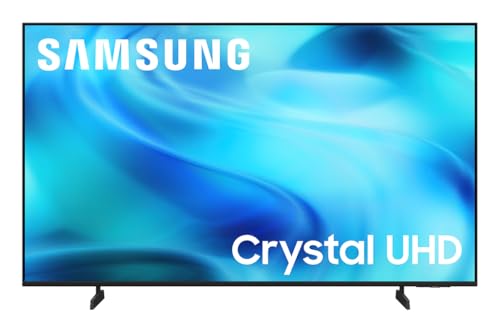
Samsung's 2026 entry-level 4K TV, the 50" Crystal UHD U8000H, doesn't try to be a picture-quality champion. Instead, it focuses on what a lot of people actually need: a dependable TV that looks good enough and makes finding something to watch easy. The Crystal Processor 4K does a decent job upscaling 1080p content, so your cable or antenna broadcasts don't look fuzzy. The Motion Xcelerator is the real draw here. It estimates frame transitions and smooths out panning shots and fast-moving balls better than most TVs at this level.
Samsung TV Plus is a standout feature. With over 2,700 free channels and no sign-up required, it's one of the best reasons to buy a Samsung TV. You get live news, sports, classic movies, and niche channels without any subscription. The U8000H also includes Alexa built-in, which works well for voice control.
The downside is the picture is capped. The Crystal UHD panel is an LED panel with a phosphor-based white LED backlight, so colors don't pop like a QLED. It supports HDR10 but not Dolby Vision, and there's no local dimming. Dark scenes look uniformly gray rather than black. If you're a cinephile, look elsewhere. But if you watch mostly sports, news, and network TV, this is a sensible choice that won't disappoint.

Pros
Cons
Best for: Viewers who want a reliable, well-rounded 50-inch TV with good upscaling and decent gaming features, without paying extra for quantum dots.
Check current price on Amazon →
The Toshiba 50" C350 Series doesn't get as much attention as the big brands, but it shouldn't be overlooked. The REGZA Engine ZR is Toshiba's own image processor, and it does a commendable job with upscaling. Lower-resolution content (like older shows or YouTube) looks cleaner and more detailed than on many budget TVs. The AI upscaling technique, which analyzes neighboring pixels to determine the right color for each one, results in fewer artifacts.
You get Dolby Vision and Dolby Atmos, which is rare at this level. The audio is still thin (plan on a soundbar), but the Dolby Atmos processing does add some width to the soundstage. Ultimate Motion is effective for sports, and the inclusion of ALLM and VRR in Game Mode means this TV is a surprisingly capable gaming partner for consoles that support those features.
Build quality feels decent. The bezels are thin for a budget model, and the stand is sturdy. The main tradeoff is the lack of quantum dots, so colors are standard LED: fine, but not as saturated as QLED sets. If you're coming from an old 1080p TV, you'll be impressed; if you've seen a QLED, you'll notice the difference.

Pros
Cons
Best for: Households that want a current-generation Fire TV with fast performance and the newest Alexa features, and don't need top-tier picture quality.
Check current price on Amazon →
The Amazon Ember 50" 4-Series is the newest Fire TV model, launched in late 2025, and it brings a meaningful speed upgrade. The quad-core processor and Wi-Fi 6 make app launching genuinely fast. You don't wait for Netflix to load; it's there. The Omnisense feature, which uses a sensor to wake the TV when you walk into the room, is a neat convenience. It shows the Ambient Experience with artwork or a clock, and then you can start watching quickly.
Picture quality is solid for an entry-level Fire TV. HDR10+ support means you get dynamic HDR on compatible content (mostly Prime Video and some other services), which improves contrast over static HDR10. But without quantum dots or local dimming, it's not in the same league as the Omni QLED. Colors are average, and blacks are gray.
The biggest reason to choose this over the cheaper INSIGNIA is the speed and the new Alexa+ experience, which understands more natural language. If you're a Prime member who uses Alexa a lot, this TV will feel like a natural hub. If picture quality is your priority, save up for the Omni.

Pros
Cons
Best for: Gamers on a budget who want VRR and ALLM, plus Dolby Vision for movies, without stepping up to a QLED.
Check current price on Amazon →
The Hisense 50" A7 Series sits below the E6 in the lineup, but it's surprisingly feature-rich. The Wide Color Gamut uses phosphor technology to stretch colors beyond what a basic LED can do. It's not quantum-dot level, but it's noticeably better than the INSIGNIA F50. The big win here is Game Mode Plus with VRR and ALLM. That's a rare find at this level, and it makes the A7 a solid choice for console gaming. Input lag is low, and the screen handles variable frame rates without tearing.
HDR support includes both Dolby Vision and HDR10+, which is excellent for a budget LED. You get the dynamic metadata that improves brightness and contrast scene by scene. The panel's limited peak brightness means HDR highlights won't be as punchy as on a QLED, but the effect is still noticeable.
Build feels a bit plasticky, and the remote is the standard Alexa remote. The Fire TV interface is the same as on other Fire TVs. For the money, this is the best option if you want gaming features and HDR versatility without spending on a QLED.

Pros
Cons
Best for: Someone who needs a large TV on a strict budget and is willing to live with basic picture quality.
Check current price on Amazon →
The INSIGNIA 50" F50 Series is the TV you buy when the main objective is getting a big screen for as little money as possible. It's a Fire TV, so you get the same smart platform and Alexa voice remote as more expensive sets. The picture is 4K with HDR10, but don't expect miracles. The panel has limited brightness and narrow color gamut. Blacks are dark gray, and bright HDR highlights don't pop. For casual viewing of news, YouTube, and standard streaming, it's acceptable.
DTS Virtual:X is a nice addition. It takes the tiny stereo speakers and simulates a wider soundstage. It won't replace a soundbar, but it's better than the basic stereo on most budget TVs. You also get eARC, which is useful for connecting a soundbar later.
The build quality matches the price: lightweight plastic, thin-feeling stand. If you can stretch to the Hisense A7 or the Toshiba C350, you'll get a noticeably better viewing experience. But if the number is firm, the INSIGNIA gets the job done.

Pros
Cons
Best for: Anyone who wants the Roku experience at the lowest possible cost, and doesn't need QLED color.
Check current price on Amazon →
This is the LED version of the Roku Select Series, with the same smart platform as its QLED sibling but a simpler panel. The Roku Smart TV 50" Select Series (LED) is essentially a 4K HDR10 set with the best TV interface on the market. If you've used a Roku before, you know what you're getting: clean home screen, fast app switching, automatic updates, and no bloatware.
The picture is acceptable for the type. Colors are a bit washed out compared to QLED, and dark scenes lack depth. But for daytime viewing of news, talk shows, and cartoons, it's fine. The Roku Smart Picture mode does a good job of adjusting settings based on content type, so you don't have to fiddle with menus.
If you're choosing between this and the INSIGNIA F50, the Roku's interface is the deciding factor. The INSIGNIA has DTS Virtual:X audio, but the Roku is simpler to use and gets new features faster. If you don't care about quantum dots, this is a fine choice.
Pros
Cons
Best for: Someone who wants a bigger screen than 50 inches but has a similar budget.
Check current price on Amazon →
We're including the INSIGNIA 55" F50 Series because it's part of this dataset and because it answers a common question: "Should I get a 55-inch instead?" If your room can fit the extra 5 inches diagonally and you don't want to spend more, this is the same basic TV as the 50-inch F50 in a larger size. The picture quality is identical (same limitations), but the bigger screen makes a bigger impact in a living room.
The tradeoffs are the same: mediocre contrast, average color, and a plastic build. But the VESA pattern is 200×200, the same as the 50-inch, so wall mounting is straightforward. If you sit more than 8 feet from the TV, the 55-inch is probably worth the extra inches for immersion.
Buying a 50-inch TV in 2026 means navigating panel types, HDR formats, and smart platforms. Here's what actually matters.
At the 50-inch size, OLED is still rare and expensive (there's no 50-inch OLED from major brands in this list). The real choice is between standard LED and QLED. QLED uses a quantum dot layer to produce purer reds and greens, resulting in a wider color gamut and higher brightness. If you watch a lot of HDR content or want a TV that looks vibrant in a bright room, a QLED like the Amazon Omni QLED or the Hisense E6 is worth the step up. Standard LED panels, like those in the INSIGNIA and basic Roku, are fine for casual viewing but will look washed out next to a QLED.
HDR10 is the baseline. Dolby Vision and HDR10+ add dynamic metadata that adjusts brightness and contrast per scene. If you subscribe to Netflix or Disney+, Dolby Vision is common there. If you use Prime Video or some international streaming services, HDR10+ is more common. A TV that supports both gives you the best experience across services. Brightness matters: look for a panel that can hit at least 400 nits peak for decent HDR. The Omni QLED and Hisense E6 are brighter than the budget options.
Fire TV is deeply integrated with Amazon services and Alexa. It's good if you're a Prime member, but the home screen can feel cluttered. Roku is the most neutral and user-friendly platform, with the fastest interface and no sponsored rows. Samsung Tizen is good for free TV (TV Plus) and works with multiple assistants. Choose based on which ecosystem you already use: if you have an Echo speaker, Fire TV makes sense; if you just want a TV that works, Roku wins.
For sports, look for a TV with 120 Hz motion processing (even if the panel is 60 Hz, interpolation helps). The Toshiba C350, Samsung U8000H, and Hisense E6 all have decent motion handling. For gamers, ALLM and VRR are key. The Hisense A7 and E6 both include Game Mode Plus with VRR and ALLM, which reduce input lag and screen tearing. The Omni QLED lacks VRR, so it's less ideal for competitive gaming.
TV speakers are universally weak at this price. DTS Virtual:X and Dolby Atmos processing can widen the soundstage, but they can't substitute for a real soundbar. Look for at least three HDMI inputs, with at least one supporting eARC for future soundbar connection. Wi-Fi 6 is a nice bonus (present on the Amazon Ember 4-Series) but not essential for streaming video.
A 50-inch TV typically weighs 18 to 25 pounds and uses a VESA 200×200 or 300×200 pattern. The Roku Select Series weighs 16.8 pounds, while the Omni QLED is 24.5 pounds. Make sure your wall mount can handle the weight. If table-standing, check the leg width: some TVs (like the Omni) have stands that extend nearly the full width of the TV, requiring a wide surface.
QLED (Quantum Dot LED) adds a layer of quantum dots to the backlight, which allows the TV to produce a wider range of more accurate colors. Standard LED TVs use a white LED backlight with color filters, which is less vibrant. For most people, QLED is worth the extra if you watch HDR content or have a bright room.
Dolby Vision is a dynamic HDR format used by Netflix, Disney+, Apple TV+, and many 4K Blu-rays. It adjusts brightness and contrast scene by scene, giving a more realistic image than static HDR10. If you watch a lot of streaming movies, Dolby Vision support is a meaningful upgrade. Not all 50-inch TVs have it; the INSIGNIA and basic Roku models don't.
If your viewing distance is more than 7 to 8 feet, a 55-inch will feel noticeably bigger without any downside in pixel density. The 55-inch INSIGNIA F50 in this list costs nearly the same as the 50-inch version, so it's an easy upgrade if your space allows.
No. Fire TV is Amazon's platform, heavily integrated with Prime Video, Alexa, and Amazon shopping. Roku is an independent platform that is simpler, faster, and more neutral about which streaming services you use. Both have voice remotes and thousands of apps, but the user experience is quite different.
For console gaming, Auto Low Latency Mode (ALLM) automatically switches the TV to a low-lag mode when you connect a compatible console. Variable Refresh Rate (VRR) reduces screen tearing during fast-paced games. A 60 Hz panel is fine for most games, but if you play competitive shooters, look for VRR support. The Hisense A7 and E6 both offer VRR and ALLM.
Wi-Fi 6 offers faster speeds and better performance in congested networks, but for streaming video, Wi-Fi 5 is usually sufficient. 4K streaming requires about 25 Mbps, and Wi-Fi 5 can easily handle that. Wi-Fi 6 is a nice future-proofing feature but not a reason to buy one TV over another.
Check the VESA pattern (most 50-inch TVs use 200×200). Buy a mount rated for the TV's weight. Some TVs have recessed VESA holes that require longer screws or spacers, so consult the manual. The INSIGNIA and Hisense models all have VESA 200×200.
For most people, the Amazon Fire TV 50" Omni QLED is the TV to get. It combines a premium QLED panel with local dimming, full HDR format support, and the convenience of hands-free Alexa. The picture quality is clearly above everything else at this size, and the smart features are deep if you're in Amazon's ecosystem. If you want a similar experience but prefer a simpler interface, the Roku Smart TV 2026 50" Select Series 4K QLED is an excellent alternative, with the best TV operating system and Bluetooth headphone mode. For sports fans who watch a lot of free TV, the Samsung 50" Crystal UHD U8000H delivers smooth motion and thousands of free channels. And if your budget is tight, the INSIGNIA 50" F50 will get you a 4K Fire TV for less, though you'll want to save for a soundbar. No matter which you choose, the best 50-inch TVs in 2026 offer genuine improvements over last year's models, especially in HDR support and smart platform speed. Pick the one that matches how you actually watch, and you'll be happy with it for years.
This article contains Amazon affiliate links. We may earn a small commission on qualifying purchases at no extra cost to you.


