Physical Address
304 North Cardinal St.
Dorchester Center, MA 02124
Physical Address
304 North Cardinal St.
Dorchester Center, MA 02124

Best Mixers for Karaoke (October 2026): 10 picks from YAMAHA and Behringer, from compact home singing rigs to 18-channel digital consoles for karaoke nights.

A karaoke night goes wrong in predictable ways. The singer's mic sounds thin because the mixer has no phantom power for a condenser. The backing track from a phone drowns the vocal because there is no dedicated mic level or talkover. Or the mixer turns out to be unpowered, and the buyer finds out only when nothing comes out of the speakers. The Best Mixers for Karaoke depend on how many mics you need, where the music comes from (Bluetooth, USB stick, laptop or a turntable) and whether the mixer needs to add reverb and echo itself.
The short answer: the Yamaha MG10XU suits most home and small-venue setups that want clean preamps and built-in effects, the Pyle PMXU43BT 4-Channel suits singers who want Bluetooth, USB playback and phantom power in a very light box, and the Behringer X AIR XR18 suits venues that run several mics and want tablet control. The rest of the list covers compact analog boards, a 12-channel console, budget Bluetooth mixers and a DJ-style unit with dual mic talkover.
TL;DR: top picks at a glance
- Best overall: the Yamaha MG10XU, 10 inputs with built-in SPX effects, a USB interface and 128 dBu equivalent input noise.
- Best for Bluetooth on a budget: Pyle PMXU43BT 4-Channel, Bluetooth, USB playback and 48V phantom power in a 2.9 lb steel chassis.
- Best for live venues: Behringer X AIR XR18, 18 channels and 16 programmable Midas preamps with a built-in Wi-Fi router.
- Best for simple wired setups: Mackie Mix8, an 8-channel analog mixer with 3-band EQ on every channel and no menus.
| # | Product | Best for | Channels | Connectivity | Weight |
|---|---|---|---|---|---|
| 1 | Yamaha MG10XU | Home and small venues | 10 | USB | 7.7 lb |
| 2 | Pyle PMXU43BT 4-Channel | Compact Bluetooth singing | 4 | Bluetooth, USB | 2.9 lb |
| 3 | Behringer X AIR XR18 | Multi-mic live venues | 18 | USB, Wi-Fi | 7.1 lb |
| 4 | Mackie Mix8 | Simple wired setups | 8 | Wired | 2.4 lb |
| 5 | Pyle PMXU63BT 6-Channel | Bluetooth with more inputs | 6 | Bluetooth, USB | 3.8 lb |
| 6 | Behringer XENYX 802S | Laptop karaoke streaming | 8 | USB | 3.5 lb |
| 7 | Pyle PMXU128BT 12-Channel | Large multi-mic rigs | 12 | Bluetooth, USB, aux | 10.6 lb |
| 8 | Riworal 6-Channel Bluetooth Mixer | Budget four-mic parties | 6 | Bluetooth, USB | 5.1 lb |
| 9 | Aveek AK-70 5-Channel | Tiny desktop setups | 5 | Bluetooth, USB | Not listed |
| 10 | Pyle PMX8BU DJ Mixer | Mobile DJ karaoke hosts | 3 | Bluetooth, USB | 2 lb |

Pros:
Cons:
Best for: The home or small-bar host who wants one or two good mics, a laptop for tracks and built-in reverb without extra gear.
Check current price on Amazon →
The Yamaha MG10XU is the best karaoke mixer here because it solves the part of karaoke that matters most: making a voice sound good through ordinary speakers. The discrete preamps and the high-pass filters remove rumble and stage handling noise, and the SPX effects supply the reverb that makes an untrained singer sound more polished. The 128 dBu equivalent input noise figure also means quiet passages stay clean when the gain is raised for a soft singer.
Against the Behringer XENYX 802S, the Yamaha has more inputs, a sturdier chassis and effects on board, while the Behringer is lighter and aimed at streaming. Against the Pyle PMXU63BT 6-Channel, it gives up Bluetooth and a built-in MP3 player in exchange for better preamps and a metal build with a stronger reputation for staying quiet.
It is the wrong choice if your tracks live on a phone and you want to pair wirelessly. In that case the Pyle PMXU43BT 4-Channel is the lighter, simpler fit. It is also more than a single-mic household needs, where the Mackie Mix8 does the job with fewer controls.

Pros:
Cons:
Best for: The singer or family who wants phone-to-mixer Bluetooth and a condenser mic in a small, light box.
Check current price on Amazon →
The Pyle PMXU43BT 4-Channel earns its place by being the lightest full-featured option in the Pyle range. At 2.9 lb with a steel chassis, it travels easily, and the built-in controls for play, pause and track skip mean a singer can run the show without touching the phone. The 3-band EQ on every channel is generous for this size.
Compared with the Pyle PMXU63BT 6-Channel, it has two fewer channels and nearly a pound less weight, so it is the better pick when you only need a mic or two plus a track source. Compared with the Yamaha MG10XU, it gives up the SPX effects and the stronger preamps, but adds wireless playback.
Choose something else if you plan to run more than two mics or want built-in reverb. The Riworal 6-Channel Bluetooth Mixer and Pyle PMXU128BT 12-Channel both list DSP effects, and the Yamaha has the better effects engine.

Pros:
Cons:
Best for: The venue owner or KJ who runs several mics at once and wants monitor mixes and recording from a tablet.
Check current price on Amazon →
The Behringer X AIR XR18 is a different class of product from the rest of the list. It is a digital mixer built for live sound, and its value in karaoke comes from the 16 Midas-designed preamps and the 12 buses. Those mean a venue can give each performer a separate monitor mix and still send a clean blend to the main speakers.
The built-in Wi-Fi router lets the host walk the room with a tablet and adjust a vocal from the audience side of the stage. That is useful in a large bar, where the mixer position is rarely where you hear the room best. The Dugan-style auto-mixing for mic gain sharing is listed as a future firmware feature, so do not buy for it today.
It is the wrong choice for a living-room singer. The Yamaha MG10XU has the effects and tactile controls that make home use easier, and the Mackie Mix8 is simpler still. A venue that wants more physical channels without a tablet should look at the Pyle PMXU128BT 12-Channel.

Pros:
Cons:
Best for: The wired-setup karaoke fan with powered speakers who wants a clean, uncomplicated mixer.
Check current price on Amazon →
The Mackie Mix8 is the straightforward choice. It does what a mixer should do: combine a couple of mics and a stereo source, shape them with EQ and send the result to speakers. The two extra channels are the aux returns, which is worth knowing because the 8-channel label counts them.
Compared with the Pyle PMXU63BT 6-Channel, the Mackie has more stable, quieter-sounding wired inputs but lacks Bluetooth and a USB player. Compared with the Behringer XENYX 802S, it has no USB interface, so it is not the one for streaming from a laptop.
It also suits musicians who plan to add MIDI keyboards to a home rig, since the two stereo line inputs take a keyboard's outputs directly. It is the wrong choice if you rely on a phone for tracks: the Pyle PMXU43BT 4-Channel adds Bluetooth for less desk space.

Pros:
Cons:
Best for: The party host who wants Bluetooth, a USB player and room for two or three mics.
Check current price on Amazon →
The Pyle PMXU63BT 6-Channel is the sensible step up from the 4-channel model. It keeps the same Bluetooth, USB and phantom power feature set and adds the inputs a small group needs, which makes it a good middle point in the Pyle range.
The main reason to pick it over the Riworal 6-Channel Bluetooth Mixer is that it lists no DSP effects but is lighter and carries a one-year warranty, against 90 days for the Riworal. If you want built-in effects at this size, the Riworal is the one that lists 16 of them.
Skip it if you need studio-grade preamps: the Yamaha MG10XU is the better-sounding mixer. Skip it if you run a large room, where the Pyle PMXU128BT 12-Channel has the inputs.

Pros:
Cons:
Best for: The karaoke streamer who plays tracks from a laptop and wants clean mic inputs.
Check current price on Amazon →
The Behringer XENYX 802S fits a specific modern use: singing along to laptop-based tracks or an online karaoke player while streaming the result. The USB interface lets the computer's audio go into the mix, and the mixer's output goes back to the computer, so viewers hear both the singer and the track.
Against the Mackie Mix8, the Behringer has the USB interface that the Mackie lacks, while the Mackie offers 3-band EQ on every channel and a more established wired layout. Against the Aveek AK-70 5-Channel, the Behringer relies on analog processing and has no Bluetooth, which suits users who prefer cable reliability.
It is the wrong choice for a phone-first karaoke setup. The Pyle PMXU43BT 4-Channel pairs wirelessly, and the Yamaha MG10XU is the better pick when you want effects in the mixer.
Pros:
Cons:
Best for: The host of a large karaoke party who needs many mic inputs and onboard effects.
Check current price on Amazon →
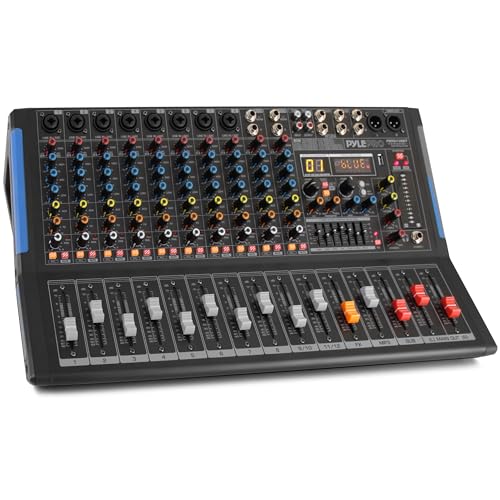
The Pyle PMXU128BT 12-Channel is the biggest analog mixer here. It combines console layout, Bluetooth and a USB soundcard with DSP effects, which means one box can run a band-style karaoke night without outboard gear.
Compared with the Behringer X AIR XR18, it is much simpler to operate, because every control is on the panel. The trade-off is that it lacks the XR18's separate monitor buses and tablet control. Compared with the Pyle PMXU63BT 6-Channel, it adds channels, effects and more EQ bands for a big jump in size and weight.
It is the wrong choice for a single singer on a coffee table. The Pyle PMXU43BT 4-Channel or the Mackie Mix8 are less bulky.

Pros:
Cons:
Best for: The party host on a tight budget who needs four mic inputs and built-in effects.
Check current price on Amazon →
The Riworal 6-Channel Bluetooth Mixer stands out for its channel mix. Four XLR inputs on a 6-channel board is a better ratio for group singing than the Pyle PMXU63BT 6-Channel, which spreads its inputs across other uses.
The compromise is quality control. Mixed sound feedback, a mirrored headphone feed and a power-on spike mean it suits casual use better than a permanent bar setup. It also carries only a 90-day warranty.
For a more dependable build with the same channel count, the Yamaha MG10XU has better preamps and the Pyle PMXU63BT 6-Channel has a longer warranty.

Pros:
Cons:
Best for: The solo singer who records covers at a desk and wants a small, all-in-one box.
Check current price on Amazon →
The Aveek AK-70 5-Channel is aimed at the person who sings, streams and records from one desk. The USB-B port and recording chip make it behave like a sound card, and the echo and delay effects mean the vocal does not sound dry.
The exclusive input rule is the main thing to understand. Because Bluetooth, USB and the 4/5 channel inputs share a path, you cannot play a Bluetooth track and run a keyboard on those channels at once. The Pyle PMXU43BT 4-Channel lets you combine sources more freely.
Pick the Behringer XENYX 802S instead when you need a dedicated analog mixer with an interface for streaming. Pick the Aveek only when size is the priority.

Pros:
Cons:
Best for: The mobile DJ or event host who needs mic talkover, a crossfader and a very light mixer.
Check current price on Amazon →
The Pyle PMX8BU DJ Mixer is the only unit here built around DJ-style workflow. The talkover feature lowers the music when the host speaks, and the CUE monitor lets them prepare the next song, which is exactly what a mobile karaoke host does.
The hum reports and the lack of phantom power keep it near the bottom of the list. For a dependable sound, choose the Yamaha MG10XU, and for condenser microphones choose the Pyle PMXU43BT 4-Channel.
The core trade-off is simplicity against flexibility. A small Bluetooth mixer is easy to set up but limits mics and sources, while a larger analog or digital console handles more singers but takes more space and learning.
Before choosing, check these project details:
Channel count matters less than the number of real mic inputs. The Riworal 6-Channel Bluetooth Mixer has four XLR inputs, while the Pyle PMXU63BT 6-Channel shares its six channels more evenly. The Pyle PMXU128BT 12-Channel and the Behringer X AIR XR18 suit larger groups.
Two mic inputs are enough for most home duets, and the Mackie Mix8 and Pyle PMX8BU DJ Mixer both cover that. If a host also talks between songs, the PMX8BU talkover is the most useful feature in the list.
Phone-based karaoke is best served by Bluetooth, as on the Pyle PMXU43BT 4-Channel and Aveek AK-70 5-Channel. Check whether Bluetooth can run alongside other inputs, because the Aveek cannot combine it with its extra channels.
Laptop-based karaoke needs a USB audio interface. The Yamaha MG10XU and Behringer XENYX 802S both provide one, and the XR18 offers an 18 x 18 interface for multitrack recording.
Reverb and echo make an untrained voice easier to listen to. The Yamaha MG10XU has SPX effects, the Pyle PMXU128BT 12-Channel and Riworal list 16 DSP effects, and the Aveek offers echo and delay.
EQ matters for fixing feedback and harsh mics. The Pyle PMXU128BT has 7 bands, most others have 3, and the Aveek has only 2.
Check the speakers first. A mixer is not an amplifier, so the Mackie Mix8 and most others on this list need powered speakers. If you are building a whole entertainment room, an affordable surround sound system can double as the karaoke output when it accepts a line-level input.
For portability, the Pyle PMX8BU DJ Mixer at 2 lb and the Pyle PMXU43BT 4-Channel at 2.9 lb are easy to carry. The Pyle PMXU128BT at 10.6 lb is a fixed installation.
The Yamaha MG10XU is the best fit for most homes, with built-in effects, a USB interface and strong preamps. For a smaller, lighter setup with Bluetooth, the Pyle PMXU43BT 4-Channel is the better choice. Both need powered speakers or an amplifier.
Bluetooth is convenient if backing tracks come from a phone or tablet, and the Pyle PMXU63BT 6-Channel and Aveek AK-70 5-Channel both offer it. If you play tracks from a laptop, the USB interface on the Behringer XENYX 802S is more reliable. A wired mixer like the Mackie Mix8 works fine with a cable.
Some do. The Yamaha MG10XU has SPX effects, and the Pyle PMXU128BT 12-Channel and Riworal 6-Channel Bluetooth Mixer list 16 DSP effects. The Mackie Mix8 has no effects, so reverb would need to come from software or another device.
No, most mixers combine and shape signals but do not drive speakers. The Mackie Mix8 is explicitly unpowered, so it needs powered speakers or an amplifier. Check this before buying any model here.
Two is enough for most duets, and the Pyle PMX8BU DJ Mixer offers two with talkover. For groups of four, the Riworal 6-Channel Bluetooth Mixer has four XLR inputs. Venues with many singers should look at the Behringer X AIR XR18 with 16 preamps.
Best Mixers for Karaoke for most homes and small venues start with Yamaha MG10XU: 10 inputs, SPX effects, a USB interface, 128 dBu equivalent input noise and a metal chassis. Its main weakness is that it has no Bluetooth and weighs 7.7 lb.
For alternatives by use case, the Pyle PMXU43BT 4-Channel is the pick for phone-based Bluetooth singing in a 2.9 lb box, and the Pyle PMXU63BT 6-Channel adds inputs for small groups. The Mackie Mix8 suits wired setups with powered speakers, and the Behringer XENYX 802S suits laptop streaming through its USB interface.
The specialist picks cover the extremes. The Behringer X AIR XR18 and Pyle PMXU128BT 12-Channel serve venues with many mics, the Riworal 6-Channel Bluetooth Mixer and Aveek AK-70 5-Channel serve tight budgets and desk setups, and the Pyle PMX8BU DJ Mixer serves mobile hosts who need talkover. If you are still undecided, count your mics and check where your music comes from, then start with the Yamaha.


[…] mentioning mixers and audio interfaces. It is a car radio mic, and for karaoke or streaming work a mixer for karaoke setup is a different category. For a windscreen, the ViaBecs 3.5mm Car Mic is the better […]