Physical Address
304 North Cardinal St.
Dorchester Center, MA 02124
Physical Address
304 North Cardinal St.
Dorchester Center, MA 02124

Compare the 10 Best 32GB RAM PCs (November 2026), from Skytech Gaming and GMKtec, with clear differences in CPU, graphics, memory type and form factor.

Thirty-two gigabytes of memory sounds like a finished spec, but it hides large differences. A tower with a dedicated graphics card, a palm-sized mini PC with integrated graphics and an older renewed office desktop can all carry the same RAM figure while behaving nothing alike. Buy the wrong type and you end up with a gaming rig that cannot be tucked behind a monitor, or a compact workstation that stalls the moment a modern game launches. The Best 32GB RAM PCs depend on what the memory is feeding: a graphics card, a CPU doing virtual machines and browser tabs, or a simple desk that needs to stay quiet and small.
The short answer: the Skytech Crystal RTX 5060 Ti suits anyone who wants a DDR5 gaming tower ready for 1080p play, the GMKtec M6 Ultra 1TB suits users who want a tiny PC with USB4, dual 2.5GbE and triple-display output, and the KAMRUI P2 Mini PC suits multitaskers who want a 12-core, near-silent box that mounts behind a monitor. The rest of the list covers more mini PCs, four more gaming towers and two renewed Dell office desktops, ranked and compared by processor, graphics, memory type and size.
TL;DR: top picks at a glance
- Best overall: the Skytech Crystal RTX 5060 Ti, pairing a Ryzen 7 7700 and RTX 5060 Ti 8GB with 32GB of DDR5 5600 and a 650W Gold power supply.
- Best for compact multi-display setups: GMKtec M6 Ultra 1TB, with USB4, dual 2.5GbE and 1TB of storage in a mini chassis.
- Best for quiet multitasking: KAMRUI P2 Mini PC, a 12-core Core i5-12600H in a 1.2-pound box with a VESA bracket.
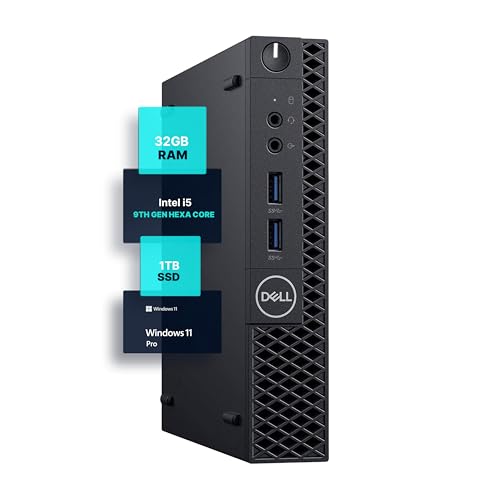
- Best for basic office work: Dell OptiPlex 3070 Micro, a renewed ultra-small desktop with a six-core i5-9500 and 32GB of DDR4.
| # | Product | Best for | Processor | Graphics | Memory |
|---|---|---|---|---|---|
| 1 | Skytech Crystal RTX 5060 Ti | 1080p gaming | Ryzen 7 7700 | RTX 5060 Ti 8GB | DDR5 5600 |
| 2 | GMKtec M6 Ultra 1TB | Compact multi-display desk | Ryzen 5 7640HS | Radeon 760M | DDR5 |
| 3 | KAMRUI P2 Mini PC | Quiet multitasking | Core i5-12600H | Not listed | DDR5 |
| 4 | Leaderhub AD8 Mini PC | Light gaming, creation | Ryzen 7 H255 | Radeon 780M | LPDDR5X 6400 |
| 5 | Dell OptiPlex 3070 Micro | Basic office work | Core i5-9500 | Not listed | DDR4 |
| 6 | Evounic i7-11700F Gaming PC | Liquid-cooled gaming | Core i7-11700F | RTX 5050 8GB | DDR4 |
| 7 | GMKtec M6 Ultra 512GB | Lower-storage mini PC | Ryzen 5 7640HS | Radeon 760M | DDR5 |
| 8 | AEXPXO Ryzen 7 5700X Gaming PC | GDDR7 graphics value | Ryzen 7 5700X | RTX 5060 8GB | DDR4 3200 |
| 9 | Olialia RTX 3060 Ti Gaming PC | Budget 1440p play | Ryzen 5 5500 | RTX 3060 Ti | Not listed |
| 10 | Dell OptiPlex 7050 SFF | Renewed office desktop | Core i7-7700 | Integrated | DDR4 |

Pros:
Cons:
Best for: Gamers who want a ready-to-run 1080p machine with a current-generation processor and DDR5 memory.
Check current price on Amazon →
The Skytech Crystal takes first place because it is the most balanced combination of processor, graphics and memory in the group. The Ryzen 7 7700 and RTX 5060 Ti 8GB are matched to DDR5 5600, so no single part holds the others back. It is rated for Ultra settings at 1080p with 60+ FPS in titles such as Cyberpunk 2077, Starfield and Alan Wake 2.
Against the AEXPXO Ryzen 7 5700X Gaming PC, the Skytech has the newer platform (DDR5 versus DDR4 3200) and a stronger power supply. Against the Olialia RTX 3060 Ti Gaming PC, it gives up nothing on RAM and moves to a newer graphics generation, though the Olialia may still hold its own at higher resolutions.
It is the wrong choice if desk space is tight or if the machine will mostly run spreadsheets and video calls. In that case the GMKtec M6 Ultra 1TB or the KAMRUI P2 Mini PC do the job in a fraction of the volume. Its 8GB of video memory is also the practical ceiling for heavy 1440p texture settings.

Pros:
Cons:
Best for: Desk workers and home-lab users who need a small PC with fast networking and several monitors.
Check current price on Amazon →
What sets the M6 Ultra 1TB apart is its I/O. Dual 2.5GbE, USB4 and three simultaneous display outputs are rare in a mini PC, and the user-replaceable SO-DIMMs mean the 32GB can grow later. The 8-CU Radeon 760M also hardware-encodes and decodes AV1, HEVC and AVC, which helps with video playback and light editing.
Compared with the KAMRUI P2 Mini PC, it has the faster memory platform and wider expansion, while the KAMRUI has a 12-core processor and ships with Windows 11 Pro. Compared with the GMKtec M6 Ultra 512GB, it is the same machine with double the storage, which is the easier choice for anyone who does not want to buy a second drive.
Skip it if the goal is modern 3D gaming. The Skytech Crystal RTX 5060 Ti and Evounic i7-11700F Gaming PC are the right category for that.

Pros:
Cons:
Best for: Developers, analysts and home-office workers who want a silent, always-on machine that disappears behind a monitor.
Check current price on Amazon →
The KAMRUI is built for sustained, quiet work rather than peak graphics. The 12th-gen i5-12600H has more cores than the Ryzen 5 7640HS in the GMKtec M6 Ultra 1TB, which favours threaded work like compiling and virtualisation. At about 1.2 pounds it is also lighter than the 1.34-pound Leaderhub AD8 Mini PC.
It also suits a machine that stays on all day, since the low-wattage design draws far less than a tower such as the Olialia RTX 3060 Ti Gaming PC.
Choose differently if you need 2.5GbE networking or USB4 bandwidth, both of which the GMKtec offers. Anyone planning to play current games should move to the Skytech Crystal RTX 5060 Ti, since the KAMRUI does not list dedicated graphics.

Pros:
Cons:
Best for: Creators and casual gamers who want a very small machine with the best integrated graphics in the list.
Check current price on Amazon →
The AD8 is the stronger-on-paper alternative to the GMKtec M6 Ultra, with eight cores against six and RDNA 3 graphics with higher memory bandwidth. It suits light esports titles and content work, and the USB4 port and dual 2.5GbE match the GMKtec feature for feature.
It ranks below the GMKtec and KAMRUI mainly on support and track record: a 365-day warranty is thinner than the 3-year and 2-year terms elsewhere. If longer coverage matters, pick the GMKtec M6 Ultra 1TB. If you want serious 3D performance, a tower such as the Evounic i7-11700F Gaming PC is the better fit.
Pros:
Cons:
Best for: Offices and home desks that need a low-power, space-saving machine for everyday productivity.
Check current price on Amazon →
The OptiPlex 3070 Micro is the plain, dependable option. It does not compete with the KAMRUI P2 Mini PC on cores or the Leaderhub AD8 Mini PC on graphics, but it covers email, web apps and office software with room to spare thanks to the 32GB of memory.
It is the wrong pick for creative work, multi-monitor trading setups or anything graphics-heavy. For those, the GMKtec M6 Ultra 1TB is the more capable small machine, while the Dell OptiPlex 7050 SFF offers a similar renewed office approach with a Core i7.
Pros:
Cons:
Best for: Gamers who want a showy, liquid-cooled build with included peripherals.
Check current price on Amazon →
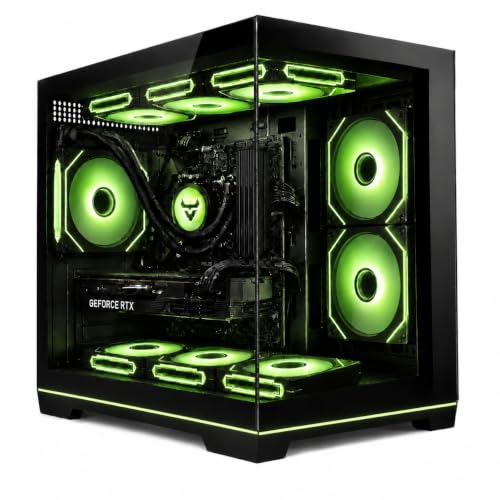
The Evounic leans on cooling and extras. Its eight-core i7-11700F is a capable processor, and the included keyboard and mouse make it a complete setup. But the RTX 5050 uses GDDR6, a step behind the GDDR7 on the AEXPXO Ryzen 7 5700X Gaming PC's RTX 5060, and the platform is older than the Skytech Crystal RTX 5060 Ti.
If you want more graphics performance or documented power supply details, step up to the Skytech or AEXPXO. If you only need an everyday PC, one of the mini PCs is a simpler and smaller choice.

Pros:
Cons:
Best for: Network and server users who do not need much local storage.
Check current price on Amazon →
This is the same machine as the GMKtec M6 Ultra 1TB with half the storage, so it ranks lower because it offers less for the same platform. It makes sense mainly when the PC will act as a router or small server where local storage matters little.
For general desktop use, the 1TB version or the KAMRUI P2 Mini PC gives more room from day one.

Pros:
Cons:
Best for: Gamers who want a current-generation graphics card on a DDR4 platform.
Check current price on Amazon →
The AEXPXO pairs a modern RTX 5060 with an older processor platform. That is a sensible split for gaming, since the GPU matters most at 1080p, and it puts the tower within reach of the Skytech Crystal RTX 5060 Ti in graphics generation while sitting behind it on memory and power.
It beats the Evounic i7-11700F Gaming PC on GPU tier, but the Evounic documents its cooling and wireless in more detail. Anyone planning a long-term upgrade path should choose the Skytech instead.

Pros:
Cons:
Best for: Budget-minded gamers who want strong 1440p performance from a previous-generation card.
Check current price on Amazon →
The Olialia is the value-focused tower. The RTX 3060 Ti is rated here to outperform some newer entry-level GPUs, which makes it competitive with the Evounic's RTX 5050 in raw rasterisation, though it lacks the newer DLSS and memory generation of the AEXPXO Ryzen 7 5700X Gaming PC.
It is the wrong choice for anyone who wants the longest upgrade path or documented memory specs. The Skytech Crystal RTX 5060 Ti covers that need with DDR5 and a Gold-rated supply.

Pros:
Cons:
Best for: Budget-conscious offices that need a complete, ready-to-use desktop with dual-monitor support.
Check current price on Amazon →
The OptiPlex 7050 SFF is the older, more complete package: peripherals and Wi-Fi are included. Against the Dell OptiPlex 3070 Micro, it has a faster-clocked Core i7 but fewer cores and a larger chassis at over 12 pounds.
For anyone who wants warranty confidence or modern multi-display output, the GMKtec M6 Ultra 1TB or KAMRUI P2 Mini PC are the better buys.
The core trade-off is simple: 32GB of RAM is common across this list, so the real decision is what the rest of the machine does with it. A gaming tower spends its budget on a graphics card, a mini PC spends it on size and efficiency, and a renewed office desktop spends it on basic capability.
Before choosing, check these project details:
Mini PCs such as the KAMRUI P2 (about 1.2 pounds) and Leaderhub AD8 (1.3 pounds) mount behind a monitor and free up the desk. The GMKtec M6 Ultra sits in the middle at about 3.2 pounds for the 512GB version. Towers like the Olialia (17.2 pounds) and Skytech trade that convenience for room to fit a dedicated graphics card.
Small form factor Dell desktops, such as the OptiPlex 7050 SFF at 12.17 pounds, sit between the two. Anyone considering portability over a fixed desk might also look at a 32GB RAM laptop, which gives up upgradeability for a built-in screen and battery.
A dedicated card is the dividing line. The Skytech (RTX 5060 Ti), AEXPXO (RTX 5060), Evounic (RTX 5050) and Olialia (RTX 3060 Ti) are the gaming machines. Mini PCs rely on integrated Radeon graphics, with the 780M in the Leaderhub ahead of the 760M in the GMKtec models.
The Dell office desktops list no gaming graphics at all. If your workload is documents, video calls and browsers, integrated graphics are enough, and you save space and power.
Memory generation affects longevity. The Skytech and both GMKtec models use DDR5, and the Leaderhub uses faster LPDDR5X at 6400MT/s, so buyers who plan to keep a machine for years can look at the wider category of 32 GB DDR5 RAM before committing. The GMKtec M6 Ultra also supports expansion to 128GB.
The DDR4 machines, including the AEXPXO, Evounic and both Dells, are more limited. The AEXPXO runs at 3200MHz, which is why shoppers weighing an upgrade often compare 32GB DDR4 3200MHz kits against newer DDR5 modules.
Every machine here ships with 1TB of storage except the 512GB GMKtec. The mini PCs offer clear expansion: the GMKtec and Leaderhub support up to 8TB across dual M.2 slots, and the KAMRUI goes to 4TB. Workloads that outgrow 32GB, such as large virtual machines, point toward 64GB RAM configurations, which only the GMKtec's 128GB ceiling comfortably accommodates here.
Ports and warranty vary widely. USB4 appears on the GMKtec and Leaderhub, dual 2.5GbE on both as well, and warranties run from 90 days on the Dell 7050 to 3 years on the GMKtec models. Read those terms before assuming all 32GB RAM PCs are supported equally.
Yes, 32GB is more than most current games need, and it leaves room for streaming or background apps. The graphics card matters more, so the Skytech Crystal RTX 5060 Ti or AEXPXO Ryzen 7 5700X Gaming PC will game better than a 32GB mini PC. Integrated-graphics machines like the Leaderhub AD8 handle lighter titles only.
DDR5 offers a longer upgrade path and higher bandwidth, which helps integrated graphics in particular. The Skytech Crystal and the GMKtec M6 Ultra models use DDR5, while the Evounic, AEXPXO and both Dell desktops use DDR4. For everyday office work, the difference is small.
It depends on the model. The GMKtec M6 Ultra uses dual SO-DIMM modules and supports expansion to 128GB, though upgrades are not included. The KAMRUI P2 and Leaderhub AD8 list their 32GB configurations without stating the upgrade ceiling, so check before planning to add memory.
The GMKtec M6 Ultra 1TB drives three displays, including 8K at 60Hz over USB4. The KAMRUI P2 Mini PC drives three 4K screens at 60Hz, and the Leaderhub AD8 supports up to four displays. The Dell OptiPlex 7050 SFF supports dual monitors.
They suit basic office work well, since the Dell OptiPlex 3070 Micro and 7050 SFF pair generous memory with SSD storage. They use older processors and shorter warranties, though, with just 90 days on the OptiPlex 7050 SFF. For longer support, the GMKtec models offer a 3-year limited warranty.
Only if you game or do GPU-accelerated work. The KAMRUI P2 Mini PC and Dell OptiPlex 3070 Micro handle office and development tasks without one. For 3D games, the Skytech Crystal or Olialia RTX 3060 Ti Gaming PC are the right category.
Best 32GB RAM PCs for most buyers start with Skytech Crystal RTX 5060 Ti: a Ryzen 7 7700, RTX 5060 Ti 8GB, 32GB of DDR5 5600, a 1TB NVMe SSD and a 650W Gold power supply. Its main weakness is Wi-Fi 5 and a large case, but nothing else in the list matches its balance of graphics, processor and memory.
For smaller desks, the GMKtec M6 Ultra 1TB is the best all-round mini PC, with USB4, dual 2.5GbE, triple-display output and a 3-year warranty. The KAMRUI P2 Mini PC suits quiet, threaded work with its 12-core i5-12600H, and the Leaderhub AD8 Mini PC offers the strongest integrated graphics with its Radeon 780M. Those who want a tower on a tighter plan can choose the AEXPXO Ryzen 7 5700X Gaming PC for its RTX 5060 or the Olialia RTX 3060 Ti Gaming PC for 1440p value.
The specialist picks cover narrower needs. The Evounic i7-11700F Gaming PC is the liquid-cooled showpiece, the GMKtec M6 Ultra 512GB suits network duty with little local storage, and the Dell OptiPlex 3070 Micro and Dell OptiPlex 7050 SFF are renewed office machines. If you are still undecided, decide first whether you need a dedicated graphics card: if yes, start with the Skytech, and if not, start with the GMKtec M6 Ultra 1TB.


