Physical Address
304 North Cardinal St.
Dorchester Center, MA 02124
Physical Address
304 North Cardinal St.
Dorchester Center, MA 02124

Protect your home from outages with our picks for the 9 best home battery backup systems in 2026. From portable power stations to UPS units, find the right backup for any household.
When the lights go out, the clock starts ticking. For some, it's just an inconvenience. For others, it means lost work, spoiled food, or medical equipment going dark. A home battery backup system changes that equation by keeping your essentials humming until the grid comes back. But the term "home battery backup" covers a lot of ground. On one end, you have compact uninterruptible power supplies that keep your Wi‑Fi router alive through a flicker. On the other, you have portable power stations that can run a refrigerator for days. We've sorted through the options to find the 9 best home battery backup systems for different needs and setups.
Some of these units are designed to sit under your desk and switch in milliseconds when the power dips. Others are built to travel from the garage to the campsite and back, charging from solar panels along the way. The right choice depends entirely on what you need to keep running and for how long. Here, we break down the picks in a sequence that moves from the most versatile whole‑home power stations down to the focused units designed to keep your internet alive during a brief interruption.
TL;DR: The Anker SOLIX C1000 Gen 2 is the one most people should buy: it recharges in under an hour, weighs under 25 pounds, and has enough output to run a fridge and a few lights. The EcoFlow Delta 2 offers expandable capacity if your needs grow. The Jackery HomePower 3600 Plus delivers serious whole‑home power for larger households. For pure electronics protection, the APC Back‑UPS Pro 1500 and CyberPower CP1500PFCLCD are the top UPS picks.
| # | Product | Capacity | Output | Best For |
|---|---|---|---|---|
| 1 | Anker SOLIX C1000 Gen 2 | 1024Wh | 2000W (peak 3000W) | Fast‑charging portable backup for home essentials, camping, and RV |
| 2 | EcoFlow Delta 2 | 1024Wh (expandable to 3kWh) | 1800W | Expandable system for growing needs, off‑grid living |
| 3 | Jackery HomePower 3600 Plus | 3584Wh (expandable to 21kWh) | 3600W (7200W parallel) | Whole‑home backup for large households, high‑draw appliances |
| 4 | EcoFlow Delta 3 Max | 2048Wh | 3400W (X‑Boost) | High‑power appliances, power tools, medical equipment |
| 5 | Anker SOLIX C2000 Gen 2 | 2048Wh (expandable to 4kWh) | 2400W (peak 4000W) | Extended runtime, car alternator charging, RV |
| 6 | APC Back‑UPS Pro 1500 | 1500VA / 900W | 5 battery + 5 surge outlets | Home office with multiple devices, AVR, LCD |
| 7 | CyberPower CP1500PFCLCD | 1500VA / 1000W | 6 battery + 6 surge outlets | Pure sine wave for sensitive electronics, large office |
| 8 | APC BE600M1 | 600VA / 330W | 5 battery + 2 surge outlets | Keeping router, modem, and small computer running |
| 9 | CyberPower ST425 | 425VA / 260W | 4 battery + 4 surge outlets | Basic protection for a single device, smallest footprint |
When evaluating the best home battery backup systems, we focused on the factors that matter most in real‑world use:
Pros
Cons
Best for: The household that wants a single, fast‑charging, portable power station that can keep a fridge, modem, and lights running during an outage and still be small enough to toss in the car for a camping trip.
Check current price on Amazon →
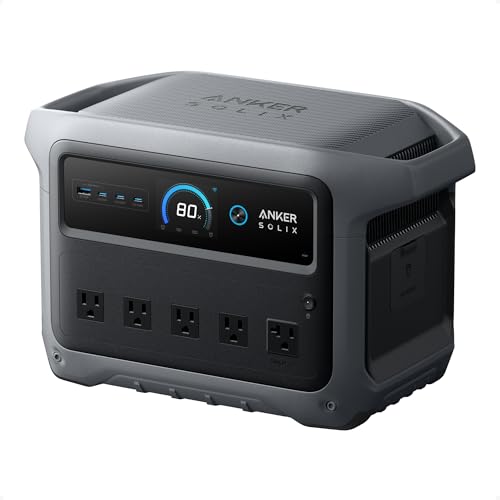
The Anker SOLIX C1000 Gen 2 hits a sweet spot that few other portable power stations manage. Its 1024Wh capacity is enough to run a modern refrigerator for roughly 10 to 14 hours, and its 2000W output can handle the startup surge of most compressors. What sets it apart is the charging speed: plug it into a wall outlet, and the internal HyperFlash tech pulls up to 1600W, taking the battery from zero to full in 49 minutes. That means if you get a warning about a potential outage, you can top it off in the time it takes to eat lunch.
The unit is also notably compact for its power class. At 24.9 pounds and roughly the size of a small desktop PC, it fits on a shelf or in a closet without dominating the room. The gray plastic case feels dense but not cheap, and the front panel includes a clear display that shows input, output, and remaining capacity. Anker includes a 10‑year warranty on the InfiniPower system, and the battery is rated for 4000 cycles before hitting 80% capacity. For a 1kWh station, that kind of longevity is exceptional. About the only real trade‑off is that you cannot add expansion batteries later. If you think you might need more than 1kWh, one of the expandable options below might be a better fit.

Pros
Cons
Best for: Someone who wants the flexibility to start with a 1kWh unit and add capacity later, or who anticipates running higher‑draw devices for longer periods.
Check current price on Amazon →
The EcoFlow Delta 2 was a breakthrough product when it launched, and it remains one of the most well‑rounded portable power stations available. Its core specs are nearly identical to the Anker C1000 in capacity and output, but the big differentiator is expandability. EcoFlow sells separate Smart Extra Batteries that snap onto the top of the Delta 2, boosting total capacity to 3kWh. That makes it a system you can grow into as your needs evolve.
Charging performance is still excellent. The X‑Stream technology pushes 0–80% in about 50 minutes, and a full charge takes roughly 80 minutes. That is a bit slower than the Anker, but in real‑world terms both are in the same ballpark. The Delta 2 also offers a generous 15 outlets, including two USB‑C ports and a 12V car port. The app control is intuitive, letting you monitor energy flow and set charge limits. The main downsides are the weight (27 pounds) and the lack of a handle that folds flush, though the integrated carry handle works fine for short carries. If you need the option to scale up without buying a whole new unit, this is the one.
Pros
Cons
Best for: Large households or anyone who wants to power a well pump, electric heater, or dryer during extended outages without worrying about capacity.
Check current price on Amazon →
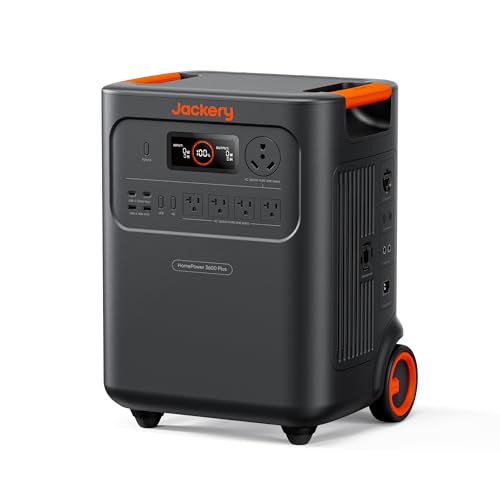
The Jackery HomePower 3600 Plus is in a different league from the 1kWh stations above. Its 3584Wh capacity can run a full‑size refrigerator for 30+ hours or keep a home office, lights, and a microwave going for days. When you add the expansion battery (sold separately), capacity jumps to over 7kWh, and you can daisy‑chain multiple units to reach up to 43kWh. The 3600W output (7200W in parallel) is enough to start a sump pump, a well pump, or a furnace fan, which are the kinds of loads that smaller stations cannot handle.
Jackery built this unit with high‑temperature‑resistant ceramic cells that prevent thermal runaway, and the battery is rated for 6000 cycles. That is twice the cycle life of many competitors. The unit rolls on integrated wheels, which is essential given its 77‑pound weight. The telescopic handle feels solid, and the entire package is less intimidating to move than you might expect. Charging options are flexible: AC input tops it off in 2.5 hours, and you can also charge from a gas generator or solar panels. The only real strike against it is the size and weight: if you need to take it camping or up a flight of stairs, it is a two‑person job. For a stationary whole‑home solution, though, it is hard to beat.

Pros
Cons
Best for: Users who need to run high‑draw appliances like large refrigerators, space heaters, or power tools, and want the peace of mind of ultra‑fast recharging.
Check current price on Amazon →
The Delta 3 Max sits between the Delta 2 and the Jackery in capacity. Its 2048Wh battery is twice that of the Delta 2, but its real party trick is the X‑Boost output. With X‑Boost enabled, the unit can deliver up to 3400W continuously, which means it can run a 1500W microwave and a 1000W refrigerator at the same time without breaking a sweat. The peak surge capacity is even higher, so it handles motor startups reliably.
Charging speed is outstanding: 0 to 80% in about 68 minutes, with a full charge in under two hours. The 10ms UPS transfer time means connected devices do not even blink during a switchover. EcoFlow also emphasizes quiet operation; the cooling fan rarely spins up under normal household loads. The unit is lighter than the Jackery but still substantial, and it lacks built‑in wheels. The app includes features like time‑of‑use scheduling, which is handy if you want to charge during off‑peak hours and discharge during peak times. For anyone who needs the extra wattage for tools or high‑power appliances, this is a focused, capable choice.

Pros
Cons
Best for: RV owners and homeowners who need maximum runtime from a single charge and the ability to recharge quickly from a vehicle alternator.
Check current price on Amazon →
The Anker SOLIX C2000 Gen 2 is essentially the big brother of the C1000. It offers double the capacity and a higher continuous output, making it suitable for running a refrigerator for up to 32 hours (or 64 hours with the expansion pack). The 2400W output can start and run most window air conditioners in an RV or cabin, and the 4000W peak handles the initial surge.
One standout feature is the 800W alternator charging. If you drive an EV or have a vehicle with a high‑output alternator, you can recharge the C2000 from 0 to 100% in about 3 hours while driving. That is roughly 8 times faster than using a standard 12V car socket. The unit is also surprisingly light for a 2kWh station at 41.7 pounds, and it is 25% lighter and 29% smaller than comparable products from other brands. The standby power draw is just 9W, which means it does not drain its own battery while sitting idle. For off‑grid scenarios or frequent road trips where you need to keep a fridge running overnight, this is a strong contender.

Pros
Cons
Best for: Home offices with a desktop PC, monitor, router, and NAS drive, where you need enough runtime to save work and shut down properly.
Check current price on Amazon →
The APC Back‑UPS Pro 1500 is the most popular home UPS for good reason. Its 1500VA capacity provides about 19 minutes of runtime at a 300W load, which is enough to keep a typical desktop PC and monitor running through short outages and to allow a graceful shutdown during longer ones. The AVR feature is especially useful if your area experiences frequent brownouts: it boosts low voltage (as low as 88V) back to 120V without tapping into the battery, preserving backup runtime for when you actually need it.
The ten outlets are arranged with five spaced to accommodate bulky power adapters, and the two USB ports (one Type‑A, one Type‑C) provide 1.5A charging for phones and tablets even during an outage. The LCD panel shows load level, battery capacity, and estimated runtime, which is more informative than a simple row of LEDs. The unit is designed to support active PFC power supplies, so it works with modern gaming PCs and workstations. The simulated sine wave output is fine for most electronics, though audiophiles with high‑end gear might prefer the pure sine wave of the CyberPower model below. For the vast majority of home office setups, this is the UPS to buy.

Pros
Cons
Best for: Users with sensitive electronics such as high‑end audio gear, medical devices, or any equipment that requires a clean sine wave signal.
Check current price on Amazon →
If you need pure sine wave output from your UPS, the CyberPower CP1500PFCLCD is the standard. Pure sine wave mimics the smooth waveform from your wall outlet, which is important for devices with active PFC power supplies (common in modern PC power supplies) and for audio equipment that can hum or buzz on simulated sine wave. The 1000W capacity is actually higher than the APC 1500’s 900W, so it can support slightly larger loads.
The 12 outlets are generous, with six providing battery backup and six providing surge protection only. The color LCD panel is a step up from the APC: it displays input voltage, output voltage, load level, and battery status in a clear, graphical format. The panel also tilts up to 22 degrees, making it easier to read from a standing position. CyberPower includes free PowerPanel software that can safely shut down your computer during an extended outage. The $500,000 equipment guarantee provides extra peace of mind. The main downside is the size: it is a mini‑tower design that takes up more desk or floor space than the APC. But for those who value signal purity, it is worth the real estate.
Pros
Cons
Best for: Keeping your internet connection alive during short outages, or providing safe shutdown time for a single small computer.
Check current price on Amazon →
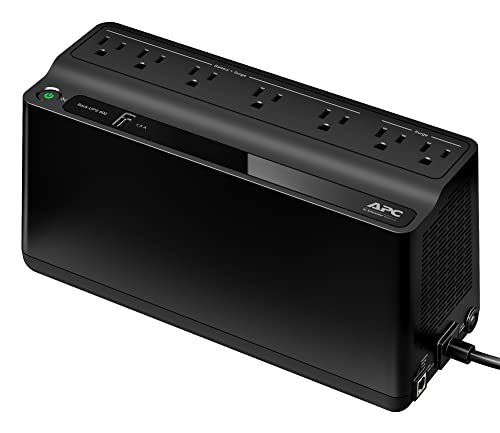
The APC BE600M1 is the UPS that should live under your desk or near your router. Its 600VA capacity is modest, but it is perfectly matched to the needs of a typical home network: a cable modem, a Wi‑Fi router, and perhaps a small network switch. At a 100W load, it provides about 23 minutes of runtime, which is enough to keep your internet active through most short outages and to allow a computer to shut down cleanly.
The layout of outlets is well thought out. Five of the seven outlets are spaced to fit bulky power bricks without blocking adjacent ports. The built‑in USB port delivers 1.5A, so you can charge a phone even when the power is out. The unit is small enough to be unobtrusive, and the black case blends into most office environments. The user‑replaceable battery (APCRBC154, sold separately) means you can swap a worn‑out battery instead of replacing the whole unit. For anyone whose primary concern is staying online during a flicker, this is a reliable, space‑efficient solution.

Pros
Cons
Best for: Dedicating to a single essential device like a fiber optic modem or a cordless phone base station, especially where desk space is tight.
Check current price on Amazon →
The CyberPower ST425 occupies the smallest niche on this list, but it fills it perfectly. At just 3.2 inches wide and 4.5 inches tall, it can slide into a space that no other UPS can fit. The 425VA / 260W capacity is enough to keep a single device running for about 20 minutes (depending on the load), making it ideal for a router or modem that you absolutely do not want to lose connectivity on.
The eight outlets include four that provide both battery backup and surge protection, plus four that offer surge‑only protection for less critical peripherals. The right‑angle plug design helps it sit flush against a wall. CyberPower’s GreenPower technology reduces its own power draw when not in use, which is a thoughtful touch for a device that runs 24/7. The lack of an LCD or AVR is expected at this size, and the built‑in LED status light gives you basic feedback. If your main worry is keeping your internet alive, and you want the smallest possible device to do that job, this is the one.
Choosing the right home battery backup comes down to understanding the three main categories: portable power stations, standby UPS units, and the hybrid devices that blur the line between them. The best choice depends on what you want to protect, for how long, and how much portability you need.
The most important specification is capacity, measured in watt‑hours (Wh) for portable power stations and in volt‑amps (VA) for UPS units. A portable power station with 1000Wh can typically run a 100‑watt refrigerator for about 10 hours (accounting for inverter efficiency and compressor cycling). A UPS with 1500VA provides about 15 to 20 minutes of runtime at a 300‑watt load, which is enough for a computer to shut down safely. For whole‑home backup, look for 2000Wh or more; for just keeping your router alive, a 600VA UPS suffices.
Output is measured in watts (W). You need to add up the power draw of every device you plan to connect simultaneously and ensure the unit’s continuous output exceeds that number. Surge capacity is critical for devices with motors: refrigerators, pumps, and power tools can draw two to three times their running wattage for a split second when starting. A portable power station with a high peak surge (like 4000W) handles these loads without tripping.
After an outage, you want your backup to recharge as quickly as possible. Portable power stations with fast AC charging (under two hours to full) are more convenient than those that take six or more hours. Solar input is valuable for off‑grid use, but not everyone needs it. Some units also support charging from a car alternator or a gas generator, which can be a lifesaver during multi‑day outages.
Lithium iron phosphate (LiFePO₄) batteries are now standard in mid‑range and high‑end portable power stations. They offer 3000 to 6000 charge cycles before degrading to 80% capacity, which translates to a usable life of 5 to 10 years for most households. Older lithium‑ion or lead‑acid batteries (common in budget UPS units) offer fewer cycles and shorter lifespans. For a UPS that sits plugged in 24/7, the sealed lead‑acid battery is still fine, but it will need replacement every 3 to 5 years.
Portable power stations are designed to be moved. They have handles, and some have wheels. If you plan to take your backup camping or move it between rooms, weight matters. A 20‑pound unit is easy to carry; an 77‑pound unit is best kept in a fixed location. UPS units are meant to stay put: they are heavier relative to their capacity and lack handles. They excel at sitting under a desk and providing instant switchover.
App control, energy tracking, and scheduling are valuable for portable power stations. They let you see how much power you are using, set charge timers, and monitor battery health. For a UPS, features like Automatic Voltage Regulation (AVR) protect equipment from brownouts without draining the battery, and an LCD display shows load and runtime at a glance. Network‑connected UPS units can notify you of outages or low battery, but that is a premium feature.
It depends on the capacity of the unit and the load you connect. A portable power station with 1000Wh can run a 100W refrigerator for about 10 hours, while a 1500VA UPS might keep a desktop PC running for 20 minutes. To estimate runtime, divide the battery capacity (in watt‑hours) by the total wattage of the devices you plan to power, then multiply by 0.85 to account for inverter losses.
Yes, most portable power stations with 1000Wh or more can run a standard refrigerator for 8 to 14 hours, provided the station has enough surge capacity to handle the compressor startup. Look for a unit with at least 1800W continuous output and a surge rating above 2500W. Always check the refrigerator’s starting wattage.
A UPS (Uninterruptible Power Supply) is designed to provide instant battery power during a power flicker, usually within milliseconds. It is meant for short‑term backup to allow safe shutdown or to ride through brief outages. A portable power station (also called a solar generator) typically has much larger capacity, can be recharged from solar panels or a wall outlet, and is designed for longer‑duration backup or off‑grid use. Many modern portable power stations also include a UPS mode with fast switchover.
List the wattage of every device you want to run simultaneously. The wattage is usually printed on the device’s label or power adapter. Add them up to find the continuous load. For devices with motors (refrigerator, pump, furnace fan), note the startup surge, which can be 2–3 times the running wattage. Choose a battery backup whose continuous output exceeds your total running load and whose surge capacity exceeds the highest startup surge.
Only a large, high‑capacity UPS (1500VA or more) can run a small sump pump for a very short time. Even then, the pump’s startup surge may exceed the UPS’s capacity. For a sump pump, a dedicated portable power station with 2000W+ output is a better choice, as it can handle the surge and provide longer runtime.
For portable power stations with LiFePO₄ batteries, minimal maintenance is required. Keep the unit charged to around 50–80% for long‑term storage, and recharge it every 3–6 months if not in use. For UPS units with sealed lead‑acid batteries, perform a self‑test monthly and replace the battery every 3–5 years. Most UPS units have a replaceable battery cartridge that slides out.
Automatic Voltage Regulation (AVR) corrects low or high voltage from the wall without switching to battery power. If your area experiences brownouts (voltage drops), AVR boosts the voltage back to a safe level. This extends the life of both the UPS battery and your connected equipment, because the battery is not drained correcting minor fluctuations.
The best home battery backup for you depends on how much power you need, how long you need it, and whether you want a portable solution or a dedicated desktop device.
For most people, the Anker SOLIX C1000 Gen 2 is the clear winner. It combines fast charging, enough capacity to keep a refrigerator and lights running overnight, and a compact, lightweight design that makes it easy to store and move. Its 2000W output handles the majority of home appliances, and the 10‑year lifespan means it will not need replacing anytime soon.
If you need more capacity or want the option to expand later, the EcoFlow Delta 2 is a smart alternative. Its expandability to 3kWh gives you room to grow, and its 1800W output is nearly as capable as the Anker’s. For whole‑home backup that can run pumps and heaters, the Jackery HomePower 3600 Plus is the heavyweight champion.
For pure electronics protection, the APC Back‑UPS Pro 1500 is the most reliable choice for a home office, while the CyberPower CP1500PFCLCD offers the cleanest power for sensitive gear. If your only concern is keeping your internet alive, the APC BE600M1 or CyberPower ST425 will do the job in the smallest possible package.
No matter which route you choose, a home battery backup is one of those purchases that you will not appreciate until the lights go out, and then you will wonder why you waited so long.
This article contains Amazon affiliate links. We may earn a small commission on qualifying purchases at no extra cost to you.

