Physical Address
304 North Cardinal St.
Dorchester Center, MA 02124
Physical Address
304 North Cardinal St.
Dorchester Center, MA 02124

We found the 10 best budget gaming laptops in 2026 for every player, from entry-level eSports to AAA gaming on a tighter budget, with picks from Lenovo, ASUS, Acer, MSI, and more.
You don't need to spend wild money to get a laptop that runs today's games smoothly. But separating a genuine gaming machine from a basic notebook with a "gamer" sticker takes a careful eye. The best budget gaming laptops in 2026 span everything from sub-$800 RTX 4050 rigs to integrated-GPU powerhouses that punch well above their weight on eSports and older titles. We sorted through the options to find the real contenders, and the list includes a few surprises.
Some of these machines handle ray-traced AAA blockbusters; others are ideal for Fortnite, Valorant, and light content creation. A few are better thought of as general-purpose laptops with enough graphics muscle for casual play. What they share is that each one earns its place in this roundup by giving you something meaningful for the money. Here are our picks.
TL;DR: The Lenovo Legion LOQ is the best all-rounder: RTX 5050, i7, 16GB RAM, and a 144Hz G-Sync display. The ASUS TUF Gaming F16 matches it on GPU with a superior 165Hz screen and military-grade build. The Acer Nitro V is the leanest entry point into dedicated RTX performance. And the NIMO with Ryzen 7 6800H offers the most RAM (32GB) and storage (1TB) for those who need a work-and-play powerhouse at a restrained cost.
| # | Product | Processor | Graphics | RAM / Storage | Best For |
|---|---|---|---|---|---|
| 1 | Lenovo Legion LOQ | Intel Core i7-13650HX | NVIDIA GeForce RTX 5050 | 16GB / 1TB SSD | AAA gaming on a budget with no major compromises |
| 2 | ASUS TUF Gaming F16 | Intel Core i5-13450HX | NVIDIA GeForce RTX 5050 | 16GB / 512GB SSD | High-refresh 165Hz gaming with durable build |
| 3 | Acer Nitro V | Intel Core i5-13420H | NVIDIA GeForce RTX 4050 | 8GB / 512GB SSD | Entry-level RTX gaming at a restrained spend |
| 4 | MSI Thin A15 | AMD Ryzen 5-7535HS | NVIDIA GeForce RTX 3050 | 16GB / 512GB SSD | Thin-and-light gaming on a budget |
| 5 | NIMO (Ryzen 7 6800H) | AMD Ryzen 7 6800H | AMD Radeon 680M | 32GB / 1TB SSD | Heavy multitasking plus eSports with huge RAM/storage |
| 6 | NIMO (Ryzen 5 6600H) | AMD Ryzen 5 6600H | AMD Radeon 660M | 16GB / 512GB SSD | Balanced integrated gaming for students |
| 7 | KAIGERR (Ryzen 7 5700U) | AMD Ryzen 7 5700U | AMD Radeon Graphics (Vega) | 16GB / 512GB SSD | Light gaming and everyday work in a slim chassis |
| 8 | YOZISUAN 16" | Intel Core i5-8210Y | Integrated Intel UHD | 16GB / 512GB SSD | Large 16:10 screen for school and casual games |
| 9 | NEOBIHIER N95 | Intel Celeron N95 | Integrated Intel UHD | 16GB / 512GB SSD | Ultra-basic 2K display for retro/2D gaming |
| 10 | YOZISUAN 15.6" | Core processor (up to 3.4GHz) | Integrated Graphics | 16GB / 512GB SSD | Absolute entry-level for word processing and web |

Pros
Cons
Best for anyone looking for a no-compromise budget gaming laptop that can run modern AAA titles at high settings without stutter or screen tearing.
Check current price on Amazon →
Legion is Lenovo's serious gaming line, and the LOQ is the gateway model that doesn't feel cut down. The RTX 5050 delivers strong 1080p performance in games like Baldur's Gate 3 and Call of Duty, and the G-Sync panel keeps everything smooth. The i7-13650HX is a desktop-class CPU with enough cores for streaming, recording, or video editing alongside your game. You get 1TB of storage out of the box, which is rare at this level. The Hyperchamber cooling system uses dual fans and copper heat pipes, and Lenovo's AI Engine+ tweaks power allocation on the fly. The main trade-off is weight: it's not a featherlight commuter machine. But for stationary or occasional portable use, this is the one most people should buy.
Pros
Cons
Best for gamers who want the smoothest possible motion on a budget and need a laptop that can survive bumps in a backpack.
Check current price on Amazon →
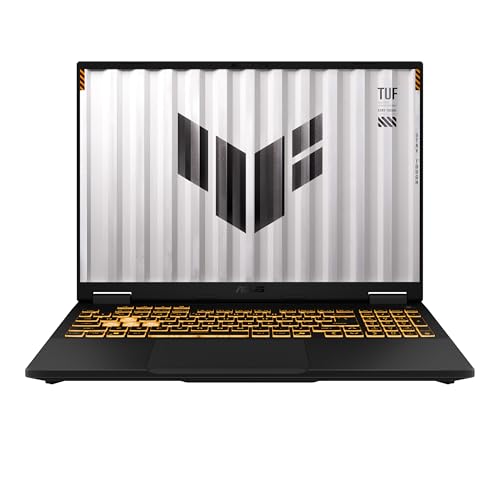
The TUF F16 pairs its RTX 5050 with a 16-inch 16:10 panel that runs at 165Hz. That refresh rate gives you a visible advantage in competitive shooters, and the 100% sRGB coverage makes games and media look vibrant. Adaptive-Sync works with both the GPU's output and the panel to eliminate tearing without locking you to a fixed frame rate. ASUS built this thing to military specs: it can handle drops, vibration, and extreme temperatures better than most plastic-chassis gaming laptops. The 2nd Gen Arc Flow fans are a genuine improvement, moving air efficiently without the whine you get on older gaming machines. Storage is the only sore spot: 512GB fills up fast with modern game installs, but the machine has an extra M.2 slot. Spending a little on a second drive later solves that.

Pros
Cons
Best for gamers who are set on RTX features like DLSS and ray tracing but are willing to add more RAM later.
Check current price on Amazon →
The Nitro V brings the RTX 4050 into the conversation at a restrained point. This GPU supports DLSS 3.5, which uses AI to boost frame rates while keeping ray tracing quality high. In practice, that means games like Hogwarts Legacy and Fortnite with ray tracing on run better than you'd expect from an entry-level RTX card. The 165Hz panel is genuinely good for the money: it's fast enough for esports and sharp enough for single-player titles. Acer also threw in Thunderbolt 4, which is rare at this level and lets you hook up external storage or even an eGPU later. The big catch is the memory: 8GB is the bare minimum for modern gaming. The good news is that the Nitro V has two DDR5 slots, so you can drop in a second 8GB stick for about the same as a game. The build is a little creaky if you press on the palm rest, but the performance per whatever you pay is excellent.

Pros
Cons
Best for students or commuters who need a laptop that fits in a cramped backpack and still plays Overwatch 2, Rocket League, and lighter AAA titles at decent frame rates.
Check current price on Amazon →
The MSI Thin A15 is exactly what its name suggests: a gaming laptop that skips the usual bulk. At 0.85 inches thick, it's noticeably slimmer than the Lenovo and ASUS machines, and it weighs less than many 15-inch ultrabooks from a few years ago. The RTX 3050 is the oldest GPU on this list, but it's still capable of running the most popular competitive titles at high frame rates. Paired with the 144Hz panel, games like Valorant and Apex Legends look fluid. The Ryzen 5 processor is efficient and doesn't throttle easily, and MSI's Cooler Boost fans do a fine job despite the thin chassis. The laptop lacks the latest RTX features, so don't expect great ray tracing performance. But if portability is your top priority and you play mostly eSports or older games, this is the one to get.

Pros
Cons
Best for users who need a single laptop for both work (video editing, compiling, virtual machines) and eSports gaming like League of Legends or CS2.
Check current price on Amazon →
This NIMO is a different kind of "budget gaming laptop." It doesn't have a dedicated graphics card, but the Radeon 680M is the best integrated GPU you can get in a laptop, roughly matching a GTX 1050 Ti or a low-end RTX 2050. It can run Fortnite at 60 fps on low, GTA V smoothly, and older titles at playable frame rates. What sets this NIMO apart is the insane amount of RAM and storage: 32GB and 1TB are workstation-class specs. If you're a developer, a content creator, or someone who runs multiple virtual machines and also games on the side, this laptop does both jobs better than any other machine in this roundup. The 100W USB-C charging is a nice plus, and the hidden webcam is a thoughtful privacy feature. The main sacrifice is on the GPU side: you cannot play new AAA games at high settings. But the CPU and memory combination is future-proof for years of heavy multitasking.

Pros
Cons
Best for students on a tighter spend who play mostly competitive eSports titles and need a reliable all-day laptop for classes.
Check current price on Amazon →
The Ryzen 5 version of NIMO is a more focused machine for the student crowd. It trades some CPU cores and RAM capacity for a lower entry barrier, but the core value is the same: a strong integrated GPU in a thin chassis. The Radeon 660M is slightly less powerful than the 680M but still runs eSports titles at high frame rates. You get 16GB of DDR5 memory, which is enough for multitasking between Discord, Chrome tabs, and your game. The upgradeable design means you can add more storage later without voiding anything. The fingerprint reader on the touchpad is convenient, and the 100W USB-C charging means one cable for both power and monitor if you have a compatible display. This NIMO is not for Cyberpunk, but for the most played games on Steam right now, it's a surprisingly capable little laptop.

Pros
Cons
Best for someone who wants a very portable laptop for light gaming (Minecraft, Stardew Valley, indie titles) plus productivity tasks.
Check current price on Amazon →
KAIGERR's entry uses a Ryzen 7 5700U, a capable processor from AMD's previous generation that still holds up well for everyday work and casual gaming. The Vega 8 integrated graphics are not going to set any records, but they can handle 2D games, older 3D titles, and eSports at low settings. The laptop is impressively slim at just over half an inch thick, making it one of the most portable machines here. You get a generous set of ports, including USB-C and HDMI for external monitors. The main limitation is the GPU: if you think you might want to play Fortnite or GTA V, you will need to accept low details and lower frame rates. This is more of a "gaming" laptop in the sense that it can play games, not that it excels at them. For a student or commuter who needs a lightweight laptop for school and occasionally plays lightweight games, it's a fine choice.

Pros
Cons
Best for anyone who prioritizes a large, high-quality screen for productivity and wants to play the occasional browser game or 2D indie title.
Check current price on Amazon →
This YOZISUAN is a bit of a wolf in sheep's clothing. It says "Gaming Laptop" in the title, but the i5-8210Y is a fanless Y-series chip designed for passive cooling and battery life. It will struggle with anything beyond solitaire or old 2D games. The saving grace is the display: a 16-inch IPS panel at 1920×1200 with a 16:10 ratio gives you more screen real estate than the typical 15.6-inch 16:9 laptop, which is genuinely useful for schoolwork and browsing. The backlit keyboard and 16GB of RAM are nice touches. If you are looking for a budget gaming laptop for real gaming, skip this one. But if you need a large-screen laptop for productivity and might play a few very lightweight games on the side, it's worth a look for that aspect ratio alone.

Pros
Cons
Best for users who want a very affordable laptop with a sharp screen for watching movies and doing basic office work, and who might play 10-year-old games.
Check current price on Amazon →
The NEOBIHIER stands out for one reason: a 2K resolution display at an entry-level spend. That screen will make text and videos look crisp, which is a real plus for reading or media consumption. But the Celeron N95 processor and its integrated graphics cannot push modern games at that resolution, or even 1080p. You're limited to games that are a decade old or 2D indie titles. The laptop is slim and has a fingerprint sensor, which is nice. But like the YOZISUAN above, it is not a gaming laptop in any practical sense. Think of it as a basic productivity laptop with a surprisingly good screen that can also run Stardew Valley or The Binding of Isaac.

Pros
Cons
Best for someone who needs the cheapest possible new laptop with decent RAM and storage for schoolwork and has zero gaming aspirations beyond solitaire.
Check current price on Amazon →
The last YOZISUAN on our list is the cheapest new laptop in the roundup. It is labeled a "gaming laptop" but realistically it is a very basic Windows machine. The processor is not named in the product description ("Core processor up to 3.4GHz"), which suggests it is a low-end Intel Celeron or N-series chip. It will boot Windows, run Office, stream video, and handle web browsing. But it cannot play any modern 3D game. The 16GB of RAM and 512GB SSD are generous for this class of machine, and the weight is impressively low. If you are buying for a child who only plays web-based games or for basic homework, this will do. But it is not a participant in the gaming category. It is here to show the floor: this is the minimum possible investment for a new portable computer.
When you are looking for a budget gaming laptop, a few key factors decide whether you get a machine that genuinely plays modern games or one that can only handle spreadsheets with a gamer logo on the lid. Here is what to weigh.
This is the single most important decision. A dedicated GPU (like the RTX 3050, 4050, or 5050) has its own video memory and processing cores. It can render complex 3D scenes, run ray tracing (with the newer RTX cards), and maintain high frame rates in modern titles. Integrated graphics (Radeon 680M, Radeon 660M, Vega, Intel UHD) share system memory and are much weaker. The Radeon 680M is an exception: it is fast enough for eSports and many older games. But if you want to play the latest AAA games, a dedicated GPU is non-negotiable.
The processor must keep up with the GPU. A Celeron or Pentium will bottleneck even a mid-range graphics card. Look for at least a modern Core i5 or Ryzen 5. The Lenovo and ASUS machines use H-series Intel chips (13450HX, 13650HX) that are closer to desktop CPUs in performance. The Ryzen 5 and 7 processors in the MSI and NIMO laptops are also solid. Avoid Y-series (like the i5-8210Y) or low-power U-series chips if gaming is a priority. Also pay attention to the number of cores: 6 or more is ideal for multitasking while gaming.
A higher refresh rate (120Hz, 144Hz, 165Hz) makes motion look smoother and gives you an edge in competitive shooters. If you mostly play slow-paced single-player games, 60Hz is fine. Resolution matters too: 1920×1080 is standard, but some budget laptops have 2K or 16:10 panels that offer more workspace. Just know that higher resolution puts more load on the GPU, so you may need to play at 1080p on a 2K screen for playable frame rates.
Budget gaming laptops often compromise on cooling. A thin chassis can choke the fans, causing the CPU and GPU to throttle down after 20 minutes of gaming. Look for laptops with dual fans, multiple heat pipes, and large vents. The ASUS TUF and Lenovo Legion have the best thermal designs here. The MSI Thin is impressive for its size but will get hotter. If you plan long gaming sessions, a slightly thicker laptop with better airflow is worth the trade-off.
Many budget laptops now solder RAM to the motherboard or only have one SSD slot. If you want to keep the machine for three to four years, being able to add more RAM or a second SSD is crucial. The Acer Nitro V has upgradable RAM. The NIMO laptops advertise upgradeable slots. Check before buying: soldered RAM means you are stuck with whatever you buy initially.
Yes, if it has a dedicated GPU like the RTX 3050, 4050, or 5050. Games like Cyberpunk 2077 and Elden Ring run at 1080p with medium settings. Laptops with only integrated graphics will struggle with AAA titles and are best for eSports or older games.
The RTX 4050 is newer and supports DLSS 3.5, which uses AI to boost frame rates in supported games. It also has better ray tracing performance. The RTX 3050 is based on older architecture and lacks those features, but it can still run many games at medium settings.
8GB is the bare minimum. Many modern games recommend 16GB. If you buy an 8GB laptop, plan to upgrade to 16GB soon (if the RAM is not soldered). The Acer Nitro V with 8GB is the only one in our roundup with that amount, and it has two slots for easy upgrading.
It depends on the model. The Lenovo Legion LOQ, ASUS TUF, Acer Nitro V, and both NIMO laptops allow upgrades or have dual slots. The MSI Thin and the ultra-budget models (YOZISUAN, NEOBIHIER, KAIGERR) may have soldered RAM or limited slots. Check the product details before buying if upgradeability matters.
If you play fast-paced games like first-person shooters, a 144Hz or 165Hz display makes a visible difference. For slower games or mixed use, 60Hz is fine. All other things being equal, a higher refresh rate is better, but it often comes at a slight premium.
Both can be good. Intel's H-series (like the i5-13450HX and i7-13650HX) offer high performance but use more power. AMD's Ryzen 5 and 7 are efficient and often integrated better with their own Radeon graphics. For laptops with dedicated GPUs, the choice matters less than the specific comparison between models.
Thin gaming laptops (MSI Thin, KAIGERR) are easier to carry but often have worse cooling and may throttle under sustained load. Thicker laptops (Lenovo Legion, ASUS TUF) keep temperatures lower and run consistently. If you game for hours, the thicker ones are better. If you commute daily and game occasionally, the thin option works.
The best budget gaming laptop in 2026 is the Lenovo Legion LOQ. It gives you a powerful RTX 5050, a fast i7, plenty of RAM, a roomy 1TB SSD, and a smooth 144Hz display with G-Sync. It holds up in sustained gaming sessions and covers all the bases. If you need a slightly more portable option with a faster 165Hz screen, the ASUS TUF Gaming F16 is close behind. For the absolute lowest barrier to entry with RTX performance, the Acer Nitro V is the clever choice, provided you add a second RAM stick.
For those who want integrated graphics and massive RAM/storage for work and light gaming, the NIMO with Ryzen 7 6800H is a unique find. And for pure portability with decent eSports performance, the MSI Thin A15 remains a solid companion.
No single laptop fits every budget or gaming need. Identify whether you want to play AAA titles, compete in eSports, or just dip your toes into PC gaming. Then pick the machine that matches that ambition without spending on specs you cannot use.
This article contains Amazon affiliate links. We may earn a small commission on qualifying purchases at no extra cost to you.


