Physical Address
304 North Cardinal St.
Dorchester Center, MA 02124
Physical Address
304 North Cardinal St.
Dorchester Center, MA 02124

We’ve found the 9 best phones for seniors in 2026, from easy-to-use cordless models to amplified handsets with big buttons and loud ringers.
You notice it the first time your parent or grandparent squints at a keypad, holds the handset three inches from their ear, or asks you to repeat yourself three times during a call. The phone that used to work just fine has become a daily frustration. With the right handset, a landline can still be the most reliable way to stay in touch. The best phones for seniors make every step easier — oversized buttons, bright screens, adjustable volume, and call blocking that actually stops robocalls. But not every “senior-friendly” phone delivers on its promises. We sorted through the most popular models to find which ones are worth your time.
This roundup covers cordless systems for whole-home coverage, corded phones that never need batteries, and amplified handsets built for hearing loss. Some come with answering machines and photo speed dialing; others keep it simple with just a dial tone and a ringer you can hear from the next room. Whether you need a single handset for the kitchen table or a multi-handset system for a two-floor house, there’s a pick here that fits.
TL;DR: The AT&T BL102-2 is the one most people should buy — great range, big screen, and smart call blocking in a two-handset package. For hearing loss, the VTech Amplified Senior Phone packs a 90dB ringer and 50dB audio boost. The Panasonic KX-TGU433B adds a built-in flashlight and a flashing favorites key for everyday ease. And the SWISSVOICE 3355 gives you a corded base plus a cordless handset with photo speed dial.
| # | Product | Key Specs | Best for |
|---|---|---|---|
| 1 | AT&T BL102-2 | 2 cordless handsets, answering machine, 2-inch display, call blocker | Most households wanting cordless freedom and modern features |
| 2 | AT&T BL102-3 | 3 cordless handsets, same features as BL102-2 | Larger homes needing extra handsets in multiple rooms |
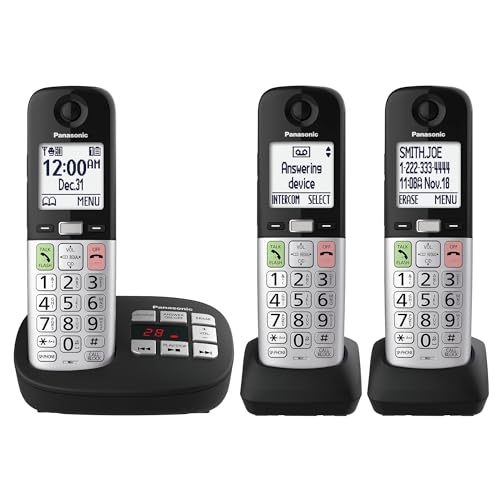
| 3 | Panasonic KX-TGU433B | 3 handsets, 2.1-inch display, flashlight, volume boost, favorites key | Seniors who want a flashlight and quick-dial favorites |
| 4 | VTech Amplified Senior Phone | 1 handset expandable to 4, 90dB ringer, 50dB audio assist, answering machine | Hard-of-hearing users who need extra-loud volume and big buttons |
| 5 | Panasonic KX-TGD833M | 3 handsets, advanced call blocking, bilingual caller ID, 2-way recording | Call-blocking enthusiasts and bilingual households |
| 6 | SWISSVOICE 3355 | 1 corded base + 1 cordless handset, answering machine, photo speed dial, 90dB ringer | Those who want a reliable corded base plus a roaming cordless handset |
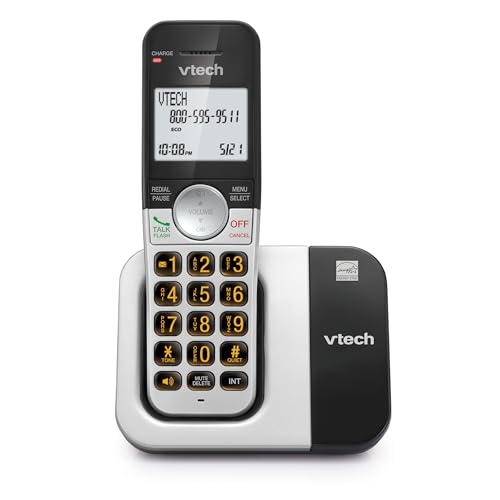
| 7 | VTech DECT 6.0 Cordless – VG231 | 1 handset, large backlit display, speakerphone, quiet mode | Simple, no-frills cordless for a single room |
| 8 | Uvital Big Button Phone | Corded, 9 one-touch dialing, 120dB ringer, 98dB handsfree, no batteries needed | Visually impaired users and anyone wanting a simple corded phone with no power cord |
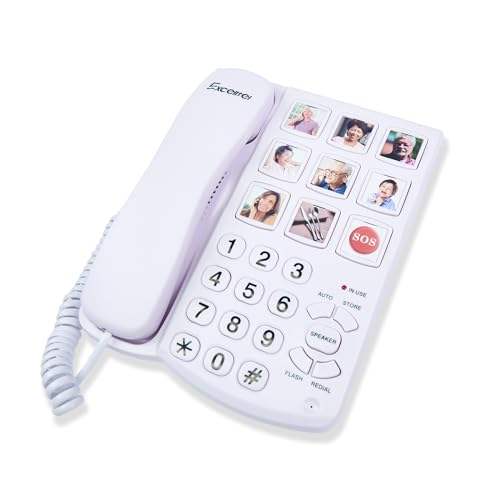
| 9 | Excelltel Big Button Phone | Corded, 9 one-touch dialing with photo slots, SOS button, handsfree, LED ring indicator | Alzheimer’s patients or those needing photo speed dial and an emergency button |
We looked at what actually matters when you hand a phone to someone over 70.

Pros
Cons
Best for: Most households that want a reliable, feature-rich cordless phone with excellent range and modern call blocking.
Check current price on Amazon →
This is the phone that keeps showing up in people’s homes for a reason. The AT&T BL102-2 gets every fundamental right. The handset feels solid in the hand, the 2-inch screen is genuinely easy to read from across a room, and the illuminated keypad makes dialing in the dark a non-issue.
What sets it apart from cheaper cordless phones is the range. AT&T uses a unique antenna design and noise-filtering circuitry that lets you walk to the far end of a large house, even out into the yard, without losing clarity. Many similarly-priced phones start crackling at half that distance.
The smart call blocker is another standout. It automatically blocks robocalls before they ever ring through. You can also blacklist numbers with one touch on the handset. The directory stores up to 1,000 blocked numbers. For anyone tired of spam calls, this alone makes the BL102-2 worth considering.
The answering machine records up to 22 minutes of messages and includes a voice guide for setup. The handset announces the caller’s name, so you can decide whether to pick up without looking at the screen. A full-duplex speakerphone means both people can talk at the same time — no annoying cutouts.
The only real compromises are the lack of photo speed dial (common on dedicated senior phones) and the fact that the base unit is cordless-only. If you prefer a phone that stays plugged in and never needs charging, consider a corded model instead. But for cordless convenience that actually works, this is our top pick.

Pros
Cons
Best for: Two-story homes or families who need phones in the kitchen, living room, and bedroom without buying separate systems.
Check current price on Amazon →
The AT&T BL102-3 is essentially the same phone as the BL102-2, but with three handsets instead of two. If you have a two-floor house, an office at one end, or just want a phone by the bed, the kitchen counter, and the easy chair, this saves you from buying a second expansion handset separately. Each handset has the same large backlit display, big buttons, and speakerphone. You can also use the intercom to call from one room to another, which is handy for checking on a family member without shouting.
The call blocker and answering machine work across all handsets. One-touch blocking on any handset applies to the whole system. The only downside is that the base station doesn’t have a corded backup — if the power goes out, you lose phone service unless you have a separate corded phone plugged into the wall. But for daily use, three cordless handsets give you coverage without compromise.
Pros
Cons
Best for: Seniors who want a cordless phone with thoughtful extras like a flashlight and one-touch calling for a few key contacts.
Check current price on Amazon →
Panasonic’s KX-TGU4 series was designed with seniors in mind, and it shows. The handset has a 2.1-inch display — slightly larger than the AT&T’s — and the buttons are big, raised, and backlit. The keypad is well-spaced, so accidental presses are rare.
The feature that surprised us most is the built-in flashlight. A lot of phone makers promise “emergency” features that feel tacked-on. Here, the flashlight lives on the bottom of the handset and is easy to find by touch. In a power outage or during a middle-of-the-night bathroom trip, it’s genuinely useful. The handset also has a “Favorites” key that flashes when you miss a call from one of your top three contacts, so you know right away who tried to reach you.
Volume Boost amplifies incoming audio by up to 12 dB. It’s not as aggressive as the 50dB boost on the VTech amplified phone, but for mild hearing loss it’s enough. Call blocking is comprehensive: automated call block catches robocalls before they ring, and you can block up to 1,000 numbers with one touch.
You get three handsets in the box, which is plenty for most homes. The only limitation is the favorites system: it supports just three contacts. If you need more, you’ll rely on the phonebook and speed dial numbers. Still, for everyday use with a small circle of family and friends, this phone is hard to beat.

Pros
Cons
Best for: Anyone with moderate to significant hearing loss who needs extreme ringer volume and audio amplification, along with photo dialing for loved ones.
Check current price on Amazon →
When standard phones aren’t loud enough, this is the one you want. The VTech Amplified Senior Phone cranks the ringer to 90dB. That’s roughly as loud as a lawnmower — you will not miss a call. The handset also has a one-touch Audio Assist button that boosts the earpiece volume by up to 50dB. It’s not subtle: conversations that were faint become crystal clear.
The phone also works with hearing aids, which is critical for many seniors who wear them. The full-duplex speakerphone lets you set the handset down and talk hands-free without volume drop. And the visual ring indicator flashes brightly, so you get both audio and visual alerts.
Photo speed dial is a standout feature. You can place small photos of family members in the four slots on the base and program each to call a specific number. Just press the photo and the phone dials. It’s more intuitive than any numeric speed dial system. The slots are small, so you’ll need to cut down a 2×3 photo to fit, but once it’s in, it works.
The answering machine records 22 minutes of messages and can be accessed remotely. Call blocking is on par with the AT&T: up to 1,000 numbers blocked, and robocalls are automatically screened. The only catch is that the kit includes just one handset. You can add up to three more, but each costs extra. For a single-user household or a dedicated phone in the living room, one handset is fine. For whole-home coverage, budget for expandable handsets.

Pros
Cons
Best for: Households plagued by robocalls and telemarketers that need robust blocking plus the ability to record important calls.
Check current price on Amazon →
Panasonic’s KX-TGD830 series is known for its call-blocking prowess, and the KX-TGD833M takes it a step further. It has three layers of defense: Automated Call Block stops numbers identified as robocalls before they ring, Telemarketing Call Block lets you block announced callers, and a one-touch Call Block button lets you blacklist any number after it rings. There’s also a One-Ring Scam Alert that shows a confirmation screen when you try to return a one-ring call, preventing you from accidentally calling back a premium-rate number.
Two-way recording is unusual for a cordless phone. With the press of a button, you can record a conversation. A beep announces the recording. This is useful for jotting down medical instructions, confirming appointment details, or documenting telemarketer harassment. Just be aware of local laws regarding recording calls.
The handset has an illuminated keypad with large characters and a high-contrast display. It’s not as big as the 2.1-inch screen on the KX-TGU433B, but it’s clear enough. The phone also supports bilingual caller ID in English and Spanish, which is a rare and welcome feature.
Volume is adjustable, but there’s no dedicated audio boost button. For moderate hearing loss, it’s fine. For severe loss, the VTech amplified phone is a better fit. This Panasonic shines as an all-around cordless system with superior nuisance call protection.

Pros
Cons
Best for: Anyone who wants the reliability of a corded phone but also the convenience of being able to take a call into another room.
Check current price on Amazon →
The SWISSVOICE 3355 solves a problem many of us don’t think about until the power goes out: cordless phones are dead without electricity. This system pairs a corded base phone — which works during a blackout — with a cordless handset for mobility. You get the best of both worlds.
The corded base has extra-large buttons and four photo memory slots on the front. You put a picture of the person in each slot, and pressing it dials their number. There’s also a dedicated SOS button for emergencies. The handset volume is adjustable and goes up to 90dB, which is very loud. The phone is hearing aid compatible.
The cordless handset is smaller than the base but still has large buttons and a clear display. You can take it to the garden or upstairs while the base stays plugged in. The whole system also includes a digital answering machine.
The main drawbacks are that the corded handset is tethered by its cord — you can’t take it far — and the cordless range is adequate but not extraordinary. Also, the photo slots are on the base, not the cordless handset, so you need to be near the base to use speed dial. Still, for a senior who spends most of their time in one room but wants the option to roam, this combo is a smart choice.
Pros
Cons
Best for: A simple, reliable cordless phone for one location — kitchen counter, nightstand — without extra features the user won’t use.
Check current price on Amazon →
If someone just needs a phone that rings, displays caller ID, and makes calls without fuss, the VTech VG231 does exactly that. It’s a no-nonsense DECT 6.0 cordless with a 2-inch display and generously sized backlit buttons. The sound quality is clear, and the speakerphone works well for hands-free chats.
Quiet Mode silences the ringer on both the handset and base with one press. ECO Mode reduces transmission power when the handset is near the base, extending battery life. Caller ID stores up to 50 call records. There’s no answering machine, no photo dialing, no call blocking. That simplicity is exactly what some users want. For someone who struggles with menus and multiple features, this phone is straightforward.
The tradeoffs are obvious: no answering machine means missed calls stay missed unless you have voicemail through your phone provider. And it’s a single-handset system with no expansion option. But for a dedicated phone in a single room, it’s a solid, no-headache choice.

Pros
Cons
Best for: Visually impaired users who need massive buttons with picture labels, or anyone who wants a dead-simple corded phone that works without electricity.
Check current price on Amazon →
The Uvital Big Button Phone strips everything down to the essentials. There’s no screen, no menus, no answering machine. It’s a corded phone with nine enormous one-touch buttons on the face. You can print or draw a small picture for each button and slide it into the clear window. Press the picture to call that person. It doesn’t get simpler than that.
The ringer can reach 120dB — painfully loud, but impossible to miss. The hands-free speakerphone goes up to 98dB, so you can have a conversation across the room. A bright LED flashes when a call comes in, which helps in noisy environments or for those with both hearing and vision problems.
Because it’s corded and runs purely on the phone line voltage, it works during power outages. There are no batteries to replace. That reliability is a real advantage. The major downside is the lack of caller ID — you have to answer to see who’s calling. For some, that’s a dealbreaker. But for a senior whose communication is limited to a handful of family members and who finds screens confusing, this phone is perfect.
Pros
Cons
Best for: Alzheimer’s patients or anyone who benefits from photo-based speed dialing in a simple, reliable corded phone.
Check current price on Amazon →
The Excelltel EX-LD-858HF is very similar to the Uvital but adds a few thoughtful touches. The nine one-touch buttons are large and have clear plastic covers for inserting photos. The top button is red and marked SOS. One press dials a pre-programmed emergency number. For families with a senior who lives alone or has memory issues, that single button provides real peace of mind.
Volume controls are simple: a three-position switch for the ringer (off, low, high) and another for the handset earpiece (medium, high, very high). The highest setting is loud enough for most hearing impairments. A bright LED flashes in sync with the ringer.
Like the Uvital, this phone has no display and no answering machine. But it supports 10 groups of two-button memory in addition to the nine one-touch keys, so you can store more numbers if needed. The hands-free speakerphone works well, and the overall build feels sturdier than many ultra-budget corded phones. If you need photo speed dial and an SOS button in a no-nonsense corded package, this is a strong choice.
Picking the right phone comes down to matching the phone’s capabilities to the user’s real daily challenges. The best phone for someone who just needs to call three family members is very different from the best phone for someone who can’t hear the doorbell.
This is the single most important factor for many seniors. Standard phones have earpiece volume around 12 to 18 dB gain. Phones marked “amplified” or “senior” often go much higher. The VTech Amplified Senior Phone offers up to 50dB boost. That’s enough for moderate to severe hearing loss. Other phones, like the Panasonic KX-TGU433B, provide 12dB boost — enough for mild loss.
Ringer volume is measured in decibels. A typical phone ringer is about 65 to 70dB. A loud one is 90dB (the VTech, the SWISSVOICE). The Uvital and Excelltel corded phones claim 120dB, but that’s peak and may distort. A visual ringer indicator (flashing light) is also crucial for anyone who doesn’t hear well.
Big buttons are not optional. Look for buttons at least half an inch wide with high-contrast labels (white on black or black on white). Backlit keypads are essential for dialing in dim light. A large backlit display (2 inches or more) makes caller ID readable from a few feet away. Some phones, like the Uvital and Excelltel, skip the display entirely — fine if the user only dials from speed dial, but frustrating if they want to screen calls.
Cordless phones let you walk around the house, but they rely on batteries and stop working in a power outage unless the base has a battery backup. Corded phones work every time you pick up the handset, no charging required. The SWISSVOICE 3355 offers a hybrid — a corded base plus a cordless handset — which is a great compromise. If you live in an area with frequent blackouts, keep a corded phone plugged in somewhere.
Robocalls are a plague on landlines. The best cordless phones (AT&T BL102 series, Panasonic KX-TGD833M, VTech Amplified) have built-in databases that automatically block known spam numbers. One-touch blocking is a must — if you answer a spam call, you should be able to press one button to blacklist that number permanently. Corded phones without displays generally have no call blocking.
For seniors with memory issues, photo speed dial is a game changer. Phones like the SWISSVOICE 3355, VTech Amplified, Uvital, and Excelltel let you put a small photo of the person next to a button. Press the photo to call. An SOS or emergency button (like on the Excelltel) adds safety. The Panasonic KX-TGU433B has a flashing Favorites key but only supports three contacts.
If you need phones in multiple rooms, choose a multi-handset system from the start. The AT&T BL102-3 and Panasonic KX-TGU433B include three handsets. The VTech Amplified can expand up to four. Adding a single handset later is usually cheaper than buying two separate systems. DECT 6.0 ensures the handsets communicate clearly with the base across the house.
The VTech Amplified Senior Phone is our top recommendation. Its 90dB ringer and 50dB audio boost are unmatched, plus it has photo speed dial and hearing aid compatibility.
Most cordless phones rely on AC power for the base station, so they stop working during a blackout. Corded phones pull power from the phone line itself and continue to work. If you must have cordless convenience, keep a corded backup phone plugged into a wall jack.
Yes. Most modern cordless and corded phones, including the AT&T, Panasonic, and VTech models listed here, work with traditional landlines, cable phone services, and VoIP providers like Ooma, Vonage, and Google Voice. The phone connects to a standard RJ11 jack.
It means the handset produces less magnetic interference and is designed to couple with the telecoil in a hearing aid. Look for a rating of M3 or M4 (or T3/T4) for best compatibility. The SWISSVOICE 3355 and VTech Amplified are explicitly hearing aid compatible.
Most cordless bases can communicate with handsets up to several hundred feet away indoors. One base centrally located on the main floor can serve two to three handsets spread across both levels. A three-handset system like the AT&T BL102-3 or Panasonic KX-TGU433B is a good fit.
After looking at every category of senior phone, the AT&T BL102-2 stands out as the best all-rounder. It combines excellent range, a readable 2-inch screen, smart call blocking, and a reliable answering machine in a package that works for most people. If you need more handsets, the BL102-3 gives you three out of the box. For hearing loss, the VTech Amplified Senior Phone in a class of its own for ringer and earpiece volume. And for someone who just wants a dead-simple corded phone with photo speed dial, the Uvital or Excelltel are both solid options.
The best phone for a senior is the one they’ll actually use. Prioritize the features that remove friction from their daily call — loud audio, big buttons, easy dialing — and you’ll get them a phone that becomes a source of connection, not frustration.
This article contains Amazon affiliate links. We may earn a small commission on qualifying purchases at no extra cost to you.


