Physical Address
304 North Cardinal St.
Dorchester Center, MA 02124
Physical Address
304 North Cardinal St.
Dorchester Center, MA 02124

Discover the 10 best Polaroids in 2026 covering instant cameras and film packs from Fujifilm and Polaroid for every shooter from beginner to enthusiast.
Instant photography has a way of turning a moment into a physical object you can hold, hand to a friend, or stick on a fridge. The problem with picking the right Polaroid setup is that the decision splits in two: you need a camera that actually feels good to shoot, and you need film that develops the way you want. The good news is that in 2026 both Fujifilm and Polaroid have refined their formulas to the point where the chemistry is predictable and the cameras are genuinely fun to use. Whether you are buying for yourself or for someone who still thinks loading a film pack is magic, the right combination of body and film makes all the difference.
The list below covers the full range of what you can buy today. Fujifilm’s Instax Mini system is compact, reliable, and prints credit-card-sized photos that develop in about ninety seconds. Polaroid’s I-Type and 600 films produce the classic square frame with the white border everyone recognizes, and the company’s newest cameras bring autofocus and USB-C charging. You will find film packs sized for a weekend party or a month-long trip, plus two cameras that represent the best entry points into each ecosystem.
TL;DR: The Polaroid Now 3rd Generation Bundle is the most complete way to start shooting Polaroid I-Type film today, with autofocus and rechargeable battery. The Fujifilm Instax Mini 12 is the compact camera that fits in a jacket pocket and nails exposure every time. For film, the Fujifilm Instax Mini 50-sheet pack keeps heavy shooters supplied, and the Polaroid I-Type 48-sheet bulk pack is the lowest cost per shot for wide-format prints.
| # | Product | Type | Photo Size | Best For |
|---|---|---|---|---|
| 1 | Fujifilm Instax Mini Instant Film 50 Sheets | Film (Mini) | 62 x 46 mm | Heavy shooters who want the lowest per-shot cost in Mini format |
| 2 | Fujifilm Instax Mini Film 20 Prints + Microfiber Cloth | Film (Mini) | 62 x 46 mm | First-time buyers who want a convenient starter bundle with a cleaning cloth |
| 3 | Polaroid I-Type Film 40 Photos | Film (I-Type) | 4.2 x 3.5 in (frame) | Classic Polaroid fans who shoot regularly and want a solid mid-size pack |
| 4 | Polaroid Now 3rd Gen Camera + Film Bundle | Camera + Film | 4.2 x 3.5 in | Anyone buying a full Polaroid system for the first time |
| 5 | Polaroid I-Type Film 48 Photos Bulk Pack | Film (I-Type) | 4.2 x 3.5 in | Enthusiasts who shoot multiple packs in a single outing and want the biggest bulk option |
| 6 | Fujifilm Instax Mini Film 20 Sheets + Boomph Cloth | Film (Mini) | 62 x 46 mm | Backup film buyers who also want a premium cleaning cloth included |
| 7 | Fujifilm Instax Mini 12 Camera, Clay White | Camera | 62 x 46 mm | Beginners and casual shooters who want the simplest, most reliable Mini camera |
| 8 | Polaroid 600 Film Triple Pack 24 Photos | Film (600) | 4.2 x 3.5 in | Owners of vintage Polaroid 600 cameras who need fresh film stock |
| 9 | Polaroid I-Type Film Triple Pack 24 Photos | Film (I-Type) | 4.2 x 3.5 in | Moderate shooters who want a reasonable number of shots without committing to a bulk pack |
| 10 | Polaroid I-Type Film Double Pack 16 Photos | Film (I-Type) | 4.2 x 3.5 in | Occasional users or first-timers who want to try I-Type film with minimal waste |

Pros
Cons
Best for Someone who wants a modern Polaroid experience with autofocus convenience and a rechargeable battery, all in one box with film included.
Check current price on Amazon →
The Polaroid Now 3rd Generation is the camera Polaroid should have made years ago. The twin-lens autofocus system is a genuine improvement it measures distance and switches between the two lenses without you having to tap a button or guess a range. In practice, this means you get sharp portraits at arm’s length and clear group shots at five or six feet. The camera still expects you to use the flash in anything short of bright daylight, but the flash is well-balanced and does not blow out subjects the way older Polaroid flashes tend to.
The USB-C battery is a quality-of-life upgrade that most instant cameras still lack. You can charge it from a laptop or a wall adapter and shoot for a month of heavy use before reaching for a cable. The included 16-photo film pack is a generous touch, though you will probably buy a second pack within your first day of shooting. The double-exposure mode is surprisingly fun you take one shot, press the button again without advancing the film, and the two images blend onto one print. It is a neat party trick that works reliably.
The body design is unmistakably Polaroid, with the rounded corners and the rainbow stripe. It is not a pocket camera, but it fits easily in a small shoulder bag. The viewfinder is slightly offset from the lens, so you need to compose with that parallax in mind, but after a few shots you adjust. The only real limitation is that you cannot turn off the autofocus if you want to override it manually. For the vast majority of shooters, though, the Autofocus just works.

Pros
Cons
Best for Anyone who wants a tiny, foolproof instant camera to take to parties, trips, or daily carry without fuss.
Check current price on Amazon →
The Fujifilm Instax Mini 12 is the camera that makes instant photography effortless. Twist the lens barrel, it clicks on. Point, press the big shutter button, and the camera handles exposure and flash automatically. The results are consistently well-lit photos with the characteristic Instax Mini look: slightly soft, slightly contrasty, and undeniably charming. The close-up mode, activated by twisting the lens a little further, corrects for parallax so a selfie is framed properly.
This camera is tiny. It sits in the palm of your hand and weighs about a pound with batteries. The Clay White color option is a warm off-white that looks more premium than the pastel shades. The automatic flash fires in low light, and the camera compensates well for backlit scenes, though you will still lose detail in very bright sunlight. The fixed focus means everything beyond about 60 cm is acceptably sharp, but macro-style shots of a drink or a flower will be blurry unless you use close-up mode.
The biggest practical downside is the AA battery requirement. The included pair lasts for about ten packs of film, but you will need to carry spares on a long trip. The plastic body is light but does not feel as substantial as the Polaroid Now. For the sheer convenience of size and simplicity, though, the Mini 12 is the camera most people should pick up first. It pairs perfectly with any of the Instax Mini film options below.

Pros
Cons
Best for Anyone who owns an Instax Mini camera and shoots frequently enough to need a reliable bulk supply.
Check current price on Amazon →
If you already own a Fujifilm Instax Mini camera, this 50-sheet bundle is the most straightforward way to keep shooting without restocking every few days. Each pack contains ten sheets, so you can open one for a party and save the rest for later without exposing them. The film itself is the same standard Instax Mini film Fujifilm has been making for years: ISO 800, sharp, and with a warm color balance that leans slightly toward the yellow side in dim light.
The individual packs are sealed in foil, which helps preserve the chemistry. A common mistake is leaving a partially used pack in the camera for weeks; the film can degrade or the battery might drain. With five separate packs you can load a fresh one each time you shoot and store the rest in a cool, dry place. The photos develop in about 90 seconds and stabilize fully in a few minutes. The biggest limitation is the pure white frame. If you want colored borders or themed frames you will need to buy the specialty editions. For everyday shooting, this is the pack you grab without thinking.

Pros
Cons
Best for Regular Polaroid I-Type camera owners who want a solid mid-volume supply that balances quantity and freshness.
Check current price on Amazon →
Polaroid’s I-Type film 40-pack is the sweet spot for anyone who shoots a Polaroid Now or Now+ regularly. The chemistry has been updated within the last few years, and the difference shows: colors are more saturated than the 2020 manufacturing runs, with especially good deep blues and reds. The contrast is punchy without losing shadow detail, provided you have enough light. The instruction to “shoot in bright light or use flash” is not negotiable; dimly lit shots will come out muddy and dark.
The 40-count box means you get eight five-shot packs inside one carton. That is convenient for a long weekend, but once you open the outer box all eight inner packs are exposed to air. If you shoot only occasionally, a smaller triple pack (24 photos) might be wiser. The developing ritual matters: face the prints down on a flat surface for at least 15 minutes, and do not stack them while they are wet. The final results are slightly unpredictable in the best way each print has its own subtle color shifts and light leaks that give it character.

Pros
Cons
Best for Dedicated Polaroid I-Type users who shoot at least half a pack per week and want to minimize packaging waste.
Check current price on Amazon →
The Polaroid I-Type 48-pack is essentially the same film as the 40-pack but in a larger carton containing more individual packs. You get the same color chemistry, the same development time, and the same requirement for good lighting. The advantage is purely logistical: fewer individual cartons to store and less chance of running out mid-event. The disadvantage is that once you open the main box, the internal packs are no longer individually sealed in foil, so you should store the whole box in a cool, dark place and use it within a few months.
In practice, this pack makes sense for households with multiple shooters or for someone who takes the camera to a wedding or festival. The 48-shot count lets you shoot freely without counting frames. The film behaves identically to the 40-pack, so all the usual tips apply: always use flash inside, face prints down to develop, and do not bend or flex the wet photo. For enthusiasts who burn through film, this is the most efficient way to stock up.

Pros
Cons
Best for Shooters who want a multi-pack that fits in a small bag and can be shared among friends without committing to a huge carton.
Check current price on Amazon →
The Polaroid I-Type Triple Pack is the most practical option for moderate users. Each of the three packs holds eight photos, giving a total of 24 shots. That is enough for a weekend outing or a family gathering, and the individual packs mean you can give one to a friend without opening a big carton. The film quality is identical to the larger I-Type packs: the same rich tonality, the same development curve.
The 8-shot pack size is actually my favorite for daily carry. It slides into a coat pocket easily and does not tempt you to shoot wastefully just because you have 40 frames left. The triple pack works perfectly with the Polaroid Now bundle we listed first. If you buy the Now bundle and one triple pack of film, you are set for the season. The only thing to watch is expiration dates these packs are fresh but film does degrade over time, so use them within a year of purchase.
Pros
Cons
Best for New Polaroid users who are not sure how much they will shoot and want a low-commitment introduction to I-Type film.
Check current price on Amazon →
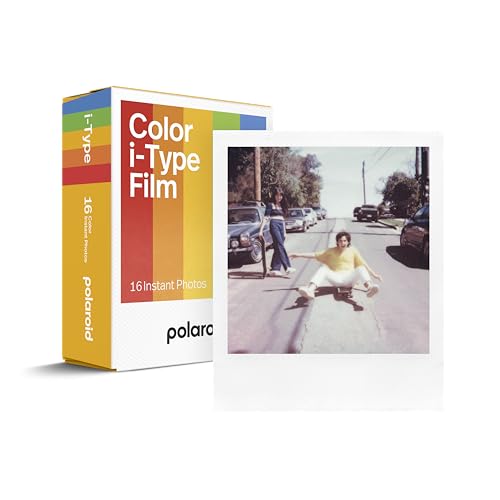
The Polaroid I-Type Double Pack is the entry-level film option. With two packs of eight photos each, you get 16 prints total. That is enough to learn the camera, test the exposure, and still have a few good shots to hand to friends. The chemistry is the same as in the 40- and 48-packs, so you are not sacrificing quality for quantity.
The main appeal of the double pack is low commitment. If you are buying a Polaroid Now as a gift, throwing in one double pack means the recipient can start shooting immediately without having to store a huge carton of film. It is also a good backup to have in your bag when you only expect to take a handful of pictures. The downside is that 16 shots disappear fast; you might want a triple pack or bulk pack as your primary stock and keep a double pack as a spare.

Pros
Cons
Best for Owners of original Polaroid 600 cameras (OneStep, Sun 600, etc.) who need reliable fresh film stock.
Check current price on Amazon →
If you have a vintage Polaroid 600 camera sitting on a shelf, the 600 Film Triple Pack is what you need to bring it back to life. The film cartridges include a battery that powers the camera’s flash and exposure system, so you do not need separate batteries. The film itself is the same formula Polaroid uses for I-Type, with the same rich colors and contrastive tones.
The 600 format is slightly different from I-Type only in that it includes the battery and is designed for the older camera bodies. The photo size and frame are identical. In practice, the photos from a refurbished 600 camera often have a warmer, softer look than I-Type shots from the Now, because the older cameras have simpler lenses. That vintage character is exactly why many people stick with 600 film. The triple pack is the ideal size for testing a camera that has been unused for years you get 24 shots, which is enough to confirm the camera works and capture a few good images without committing to a bulk supply.

Pros
Cons
Best for Gifting: buying a Mini camera and film together, or someone who needs a modest film stock and a cleaning cloth.
Check current price on Amazon →
This bundle from Fujifilm partners with a third-party supplier to include a microfiber cloth. The film itself is the standard Instax Mini stock: two packs of ten, ISO 800, with the usual credit-card-sized prints. The cloth is a nice touch if you do not already have one; you can use it to wipe the lens before shooting or to gently clean dried prints. But it is not a reason to choose this over the 50-sheet bulk pack.
The 20-shot count is fine for a single party or a short trip, but you will want to buy another pack if you are shooting more than a handful of frames each day. The real strength of this bundle is convenience: you get film and a cleaning accessory in one box. For an existing Instax Mini owner who simply wants a refill, the 50-sheet pack is a better deal. For a complete beginner buying a camera and film for the first time, this bundle plus a camera works perfectly.

Pros
Cons
Best for Budget-conscious film buyers who also want a cleaning cloth included with their refill.
Check current price on Amazon →
The Boomph-branded bundle is the closest competitor to the Quality Photo bundle above. The film inside is still genuine Fujifilm Instax Mini stock, ISO 800, with the same development time and image quality. The included cloth is marketed as “Ultimate Performance,” but in practice it works fine for wiping down the camera’s lens or removing dust from finished prints.
This bundle makes the most sense if you are ordering film alongside a new camera and want a one-stop package. The 20-shot count is enough for a first afternoon of shooting, though you will likely want to add a larger pack to your cart. The Boomph cloth has a slightly different texture than the generic microfiber cloth, thicker and with a printed logo. It is a perfectly serviceable accessory. As with the other 20-sheet bundles, the 50-sheet pack is a better value for frequent shooters.
Not all instant photography is the same. The choice between Fujifilm Instax Mini and Polaroid I-Type (or 600) affects everything from the size of the print to the camera you can use. Here are the key factors to consider.
The most important decision is which film format your camera uses. Instax Mini prints are 62 x 46 mm, about the size of a credit card, with a white frame that makes the image area roughly postage-stamp-sized. The prints are small enough to fit in a wallet or stick on a mirror. Polaroid I-Type film produces the classic 4.2 x 3.5 inch print with the wide white border, delivering a much larger image area. Polaroid 600 film is the same size as I-Type but includes a battery in the cartridge to power vintage cameras.
Cameras are not interchangeable between systems. A Fujifilm Instax Mini camera only takes Instax Mini film. A Polaroid Now only takes I-Type film. If you own a vintage Polaroid 600 camera, you must buy 600 film. Choose the format based on the print size you prefer and the camera you want to use. Instax Mini is more portable; Polaroid I-Type gives you bigger, more detailed prints.
Instant cameras have come a long way from the fixed-focus models of the 1990s. The Polaroid Now’s twin-lens autofocus measures distance and picks the appropriate lens, which means portraits and close-ups are sharper. The Instax Mini 12 relies on a fixed focus but compensates with a close-up mode and parallax correction. Both cameras have automatic flash that fires in low light.
The practical effect is that the Now handles group shots and close-ups better out of the box, while the Mini 12 requires you to remember switching to close-up mode. For casual shooting in good light, both perform well. In dim conditions, use the flash every time.
The Mini 12 uses two AA batteries, which are easy to find but eventually need replacement. The Polaroid Now has a built-in USB-C rechargeable battery that lasts for over 15 film packs. The difference is meaningful if you shoot often: a rechargeable battery saves you from carrying spares. If you prefer the convenience of standard batteries, the Mini 12 wins. If you want to reduce waste and avoid dead batteries mid-shoot, the Now is better.
Instant film is sensitive to temperature. Store unopened film in a cool, dry place ideally in the refrigerator (not the freezer). Let refrigerated film warm to room temperature for an hour before use to prevent condensation. Once you load a pack into the camera, keep the camera close to body temperature. Extreme heat or cold can affect color and development.
After shooting, place each photo face down on a flat surface for at least 10 to 15 minutes. Do not stack them while the chemistry is still wet, and do not shake the prints (a common myth that actually risks damaging the image). Shield developing photos from direct light by placing them face down or in a dark pocket.
Pack sizes range from 8 to 50 shots. If you are a casual shooter who might take 5 to 10 photos in a month, an 8- or 16-shot pack is sufficient. For a party or event, 20 to 40 shots will cover the day. Heavy shooters who take the camera everywhere should buy the 48- or 50-shot bulk packs to reduce the frequency of reordering. The per-shot consumption difference between small and bulk packs is negligible in terms of packaging, but bulk packs require you to open all the film at once, which can shorten shelf life.
I-Type film is designed for newer Polaroid cameras like the Now and Now+. It does not contain a battery because those cameras have built-in rechargeable batteries. 600 film includes a battery inside the cartridge to power vintage Polaroid 600 cameras. The image size and frame are identical. You cannot use I-Type film in a 600 camera, and you can technically use 600 film in a Now camera, but it is not recommended because the battery is wasteful.
No. Polaroid film is not physically compatible with Instax Mini cameras. The film cartridges are different shapes and the chemistry is designed for different camera systems. Stick to Instax Mini film for Fujifilm cameras and Polaroid I-Type or 600 film for Polaroid cameras.
Unopened Polaroid and Instax film has a shelf life of about 12 to 24 months from the manufacturing date, depending on storage conditions. Refrigerated film can last longer. Always check the expiration date on the box. Film past its date can still produce images, but colors may be faded or shifted.
Yes, storing film in the refrigerator extends its life. Keep the film in its sealed foil pack and let it warm to room temperature for about an hour before using. Do not freeze film. Once you open a pack and load it into the camera, treat the camera with care and avoid extreme temperatures.
If you are starting fresh, the Polaroid Now (3rd Gen) is the best modern choice for its autofocus, rechargeable battery, and creative modes. If you prefer the vintage look and own a 600 film camera, stick with that and buy fresh 600 film. The Now is easier to use and produces more consistent results.
For absolute beginners, start with Fujifilm Instax Mini film in a 20-sheet bundle. The film is forgiving, develops quickly, and the small print size makes mistakes less frustrating. Once you are comfortable, try Polaroid I-Type for larger prints with a more unpredictable, artistic look.
Instax Mini film comes in packs of 10 photos. Larger bundles combine multiple packs (20, 30, or 50 sheets). Polaroid I-Type and 600 film come in packs of 8 photos, with bundles offering 16, 24, 40, or 48 photos.
The best Polaroid system for you depends on how you want to shoot. If you want the classic full-size Polaroid print with modern autofocus convenience, buy the Polaroid Now 3rd Gen camera and load it with the I-Type 40- or 48-sheet bulk pack. If you want the smallest, most portable camera that still delivers excellent image quality, the Fujifilm Instax Mini 12 is your camera, paired with the Instax Mini 50-sheet pack for extended shooting.
For vintage camera enthusiasts, the Polaroid 600 film triple pack is the only way to keep old hardware alive. And for anyone buying a gift, the Polaroid Now bundle includes everything needed to start shooting immediately. Instant photography is about capturing a moment you can hold in your hand. Pick the combination that makes you want to shoot more, and the rest will take care of itself.
This article contains Amazon affiliate links. We may earn a small commission on qualifying purchases at no extra cost to you.


