Physical Address
304 North Cardinal St.
Dorchester Center, MA 02124
Physical Address
304 North Cardinal St.
Dorchester Center, MA 02124

We found the 10 best portable scanners for 2026, from fast sheet-fed duplex models to handy wand scanners. Here's which one suits your go-bag.
You're three weeks into a field project and the receipts are piling up in your bag like confetti. Or you've just inherited a box of old family photos and the thought of feeding each one through a flatbed makes your back ache. This is the moment a portable scanner earns its keep. The device that turns paper chaos into sorted digital folders, without anchoring you to a desk.
The market has split into two distinct camps: the sheet-fed models that pull paper through like a tiny conveyor belt and the handheld wand scanners that you drag across a page. Both have a place. We've sorted through the ten most notable compact scanners available right now to find the ones that actually make your life simpler. Whether you need duplex scanning for double-sided documents, a wand that won't crease vintage photographs, or a flatbed that fits in a laptop bag, there's a pick here that handles the real friction of paper.
TL;DR: The Brother DS-640 is the one most people should buy: fast, ultralight, and powered by a single USB cable. The Canon imageFORMULA R10 is the best duplex sheet-feeder for mobile professionals who need two-sided scanning on the go. The MUNBYN Black wand scanner is the safest bet for fragile photos and old books. The ScanSnap iX1300 is the heavy-lifting home-office hub that does everything.
| # | Product | Type | Max Resolution | Best for |
|---|---|---|---|---|
| 1 | Brother DS-640 | Sheet-fed | 600 dpi | Everyday portability: the lightest, fastest single-sided mobile scanner |
| 2 | Canon imageFORMULA R10 | Sheet-fed duplex | 600 dpi | Two-sided scanning on the go with an automatic feeder |
| 3 | Epson Workforce ES-50 | Sheet-fed | 600 dpi | Long receipts and single-sheet simplicity |
| 4 | Brother DS-740D | Sheet-fed duplex | 600 dpi | Duplex scanning in an ultra-compact body |
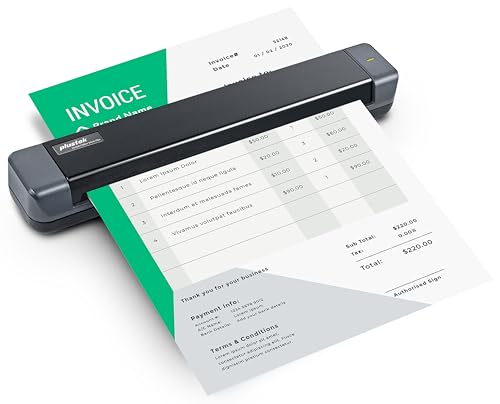
| 5 | Plustek Mobile Scanner S410 Plus | Sheet-fed | 600 dpi | True button-free automatic scanning |
| 6 | ScanSnap iX1300 | Sheet-fed duplex + manual feeder | 600 dpi | A complete desk-free scanning hub for mixed media |
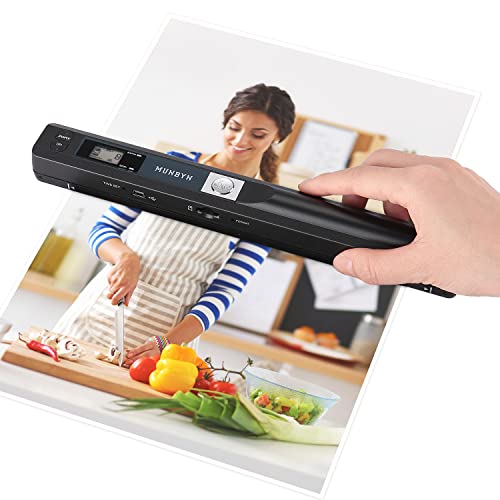
| 7 | MUNBYN Portable Scanner (Black) | Wand | 900 dpi | Safe scanning of fragile photos and book pages |
| 8 | MUNBYN Portable Scanner (Silver) | Wand | 900 dpi | Same great wand scanner in a silver finish |
| 9 | Hczrc Portable Scanner | Wand | 900 dpi | Bargain-bin option for occasional scanning |
| 10 | Canon CanoScan Lide 300 | Flatbed | 2400 dpi | High-res scans of documents and photos from a flatbed you can actually pack |

Pros
Cons
Best for: Professionals and students who need the most portable, fastest single-sided document scanner they can throw in a bag and forget about.
Check current price on Amazon →
The Brother DS-640 is what you reach for when you want to stop thinking about scanning and just get it done. It's smaller than a standard ruler at under a foot long, weighs 1.03 pounds, and draws power through a single micro USB 3.0 cable. No power brick. No batteries. Plug it into your laptop, and it appears as a drive ready to accept pages.
The scan speed is the headline: 16 pages per minute in color is genuinely fast for a device this small, and the speed doesn't drop when you switch from black-and-white to color. The iPrint&Scan desktop app handles all the common destinations: your PC, network folders, cloud services like Dropbox, email, and OCR to editable Word or Excel. Automatic color detection, background removal, and text enhancement mean you rarely need to tweak settings.
The tradeoff is obvious: it only scans one side at a time. If you're dealing with double-sided documents, you'll be flipping each page by hand. And it's a single-sheet feeder, so you stand there feeding pages one by one. That's the compromise for its size. For the person who scans a few pages at a time on the road, this is the best portable scanner to have in your bag.

Pros
Cons
Best for: Mobile professionals who regularly scan double-sided contracts, forms, or reports and need an ADF.
Check current price on Amazon →
The Canon imageFORMULA R10 is essentially a desk scanner that happens to be small enough to take on trips. The 20-sheet automatic document feeder is the killer feature here: load up to 20 pages, hit scan, and walk away. And it scans both sides in a single pass. That changes the workflow for anyone who handles double-sided paperwork.
Canon uses the same imaging technology from their camera division, and the output quality shows it. Colors are accurate, text is crisp, and the automatic straightening and trimming work well. The bundled CaptureOnTouch software is already on the device, so no installation CD hunting. You get searchable PDF, JPEG, and other common outputs.
There are two catches. The R10 is not designed for scanning photographic prints, so keep that box of old family photos away from it. And the ADF, while useful, can be tempermental with flimsy receipts or documents that have been folded and smoothed out. Stick to standard office paper and it runs smoothly.

Pros
Cons
Best for: Anyone who needs to digitize long receipts, tax documents, or the occasional ID card with a scanner that's barely heavier than a phone.
Check current price on Amazon →
The Epson ES-50 is the lightest sheet-fed scanner on this list at just over half a pound. It's shorter than a standard sheet of paper and about as thick as a paperback. That, combined with the 5.5-second scan speed, makes it the scanner you toss in your bag for the occasional receipt or one-page fax and forget it's there.
The ES-50's party trick is the long document mode. It can scan a strip of paper up to 72 inches long. That's a six-foot receipt. If you do any business travel where you come back with a stack of restaurant and hotel receipts, this scanner reduces that pile to a single PDF in minutes. The included Epson ScanSmart software handles the sorting and OCR conversion to editable formats automatically.
What you give up is speed in volume. There's no ADF and no duplex, so you're feeding pages one by one. For the traveler who scans a few papers at a time, that's fine. For someone trying to digitize a filing cabinet, this is not the right tool.

Pros
Cons
Best for: Users who need double-sided scanning in a truly portable package and are willing to trade ADF for the smallest possible duplex unit.
Check current price on Amazon →
The Brother DS-740D takes everything good about the DS-640 and adds duplex scanning. You feed a page in, and it scans both sides in one pass. For double-sided documents, that effectively doubles your throughput. The scan speed is the same 16 ppm as the single-sided model, and it maintains that speed in color.
Brother's Desk Saving Design is a nice ergonomic touch: the scanner sits in a vertical stand when not in use, which frees up desk space. The DS-740D is a little thicker than the DS-640 and weighs about 1.4 pounds, still light enough for a bag but not something you'd forget in a jacket pocket.
Like its single-sided sibling, the DS-740D lacks an ADF. You feed each page by hand. For mobile use, that's the tradeoff for getting duplex in such a small chassis. If you frequently scan double-sided documents and can't tolerate flipping pages, a desktop scanner with a full ADF is a better choice. But if you're on the move and need duplex, this is the most portable option available.
Pros
Cons
Best for: Windows users who want the most "set and forget" portable scanner that processes and saves scans automatically.
Check current price on Amazon →
The Plustek S410 Plus takes a different approach: you plug it in, put a document in the feeder slot, and the scanner automatically detects it, scans it, processes the image, and saves it to a pre-designated folder. No buttons to press. No software window to open. It's the closest thing to a "scan and walk away" experience in a portable.
The included Plustek DocAction software does OCR on the fly, converting scans into searchable PDFs, editable Word or Excel files. You can set up multiple profiles for different destinations (local folder, email, FTP, shared network drive). Once configured, anyone in the office can use it without instruction.
The big limitation is OS support: Windows 7 through 11 only. If you're on a Mac, this scanner won't work. It's also single-sided and single-sheet in its feeding. But for the Windows user who wants the simplest, most automated scanning process, the S410 Plus is hard to beat.

Pros
Cons
Best for: Home-office users who need a compact scanner that handles everything from multi-page double-sided documents and receipts to photos and plastic cards, without dedicating a corner of a desk to it.
Check current price on Amazon →
The ScanSnap iX1300 is the most capable scanner on this list when it comes to versatility. It has two paper paths: a 50-sheet ADF for stacks of documents and a manual feeder on top for single items like business cards, plastic ID cards, or even thick paper. That combination means you can load a stack of double-sided documents and then immediately scan a credit-card-thick item without reconfiguring the scanner.
Wi-Fi connectivity sets it apart. You can send scans directly to a smartphone, tablet, or cloud service without being tethered to a computer. The ScanSnap Home software organizes scans into searchable PDFs, and the dedicated Quick Menu lets you drag and drop scanned data into whatever application you use.
The tradeoff for all that capability is size and weight. At 4.4 pounds and requiring an AC power adapter, it's not something you toss in a day bag on a whim. It's more of a "move between rooms" scanner than a pocket companion. But if you want one device that replaces a desk scanner and a travel scanner, the iX1300 does both jobs well.
Pros
Cons
Best for: Scanning old family photos, book pages, and documents where you cannot risk damage from a sheet-fed mechanism.
Check current price on Amazon →
The MUNBYN handheld scanner works by sliding it across the surface of a document or photo. There's no roller pulling paper through, which means fragile items like 50-year-old Polaroids or crumbling newspaper clippings won't get creased or torn. That alone makes it the correct tool for archival scanning.
It stores scans directly to the included 16GB SD card, so you can use it without a computer. Later, plug it in via USB to transfer files. The 900 dpi resolution is higher than most sheet-fed portables, which cap at 600 dpi. If you need fine detail from a high-quality print, the MUNBYN delivers.
The downsides are real. You need two AA batteries, which are not included, and the scanner has a learning curve. You have to move it across the page at a consistent speed. Too fast and the scan is stretched. Too slow and it blurs. The instructions recommend pressing the scan button, green light on, then moving at a steady pace. It takes a few tries. But once you get the hang of it, you can scan an entire book page in seconds without damaging the spine.

Pros
Cons
Best for: Anyone who prefers the silver aesthetic or wants a backup wand scanner in a different color.
Check current price on Amazon →
This is the same MUNBYN wand scanner as the black version, just in a silver finish. The specs are identical: 10 inches long, 0.44 pounds, 900 dpi resolution, built-in SD card storage, and two AA battery power. It scans A4 documents, photos, book pages, magazines, receipts, and more.
The silver model may be slightly more visible if you tend to misplace small electronics. Functionally, there is no difference. Choose based on which color you prefer. Both are excellent portable scanners for getting documents and images digitized without a computer attached.

Pros
Cons
Best for: Occasional scanning on a tight schedule, where the lowest initial investment matters more than polished performance.
Check current price on Amazon →
The Hczrc wand scanner is the most straightforward entry point into handheld scanning. It shares the same basic format as the MUNBYN: slide it over a document, and it saves the scan to an SD card. The 900 dpi resolution matches the MUNBYN, and it also runs on two AA batteries. The included 16GB card can hold thousands of scans.
The differences are in the details. The Hczrc feels lighter and cheaper in the hand. The scanning mechanism is a bit more hit-or-miss, with a narrower window of acceptable movement speed. The user manual is sparse. But for someone who needs a scanner only once in a while and doesn't want to invest much, it will get the job done. Just expect to practice more before you get consistently good results.

Pros
Cons
Best for: Users who need genuine high-resolution flatbed scanning for photos and documents but still need to transport the scanner between locations.
Check current price on Amazon →
The Canon CanoScan Lide 300 is a full flatbed scanner in a package that's only 1.7 inches thick. That's thin enough to put in a laptop bag alongside a notebook. You get the advantages of a flatbed: you can scan bound books without breaking the spine, place photos flat for even illumination, and scan documents that are too thick or delicate for a sheet-fed feeder.
The 2400 dpi optical resolution is the highest on this list. For archiving old family photos or digitizing art, that extra resolution matters. The auto scan mode is genuinely useful: set the document on the glass, press the scan button, and the scanner figures out if it's a photo or document and adjusts color and exposure accordingly.
The tradeoff is speed and weight. At 3.6 pounds, it's not something you'd carry "just in case." And scanning multiple pages means lifting the lid and placing each one individually. The Lide 300 is a flatbed that happens to be portable, not a portable that happens to be a flatbed. If your priority is image quality over throughput, this is the best portable scanner for you.
Opening a bag and finding a handful of crinkled receipts, or facing a shelf of family albums you've promised to digitize, is when you need to match the scanner to the job. The wrong choice leads to frustration: a wand scanner used for hundred-page stacks of double-sided reports, a sheet-fed scanner fed with bent old photos that get jammed and torn. Here's how to pick the right one.
The mechanism defines nearly everything about the scanning experience. Sheet-fed scanners pull paper through a set of rollers. They are fast and produce consistent, straight scans because the paper path controls the movement. They work best with standard office paper, receipts, and documents in good condition. They can jam, scratch, or bend fragile items.
Wand scanners (handheld) are the opposite. You move the scanner across the page. This gives you full control over what you scan and how fast, and it lets you scan things that can't be fed through a roller: bound books, magazines, newspapers, fragile old photographs. The downside is that your hand speed matters. Scans can be distorted or blurred if you don't move smoothly.
Flatbed scanners place the document on a glass platen and a scanning head moves underneath. This is the most versatile mechanism, handling anything that lies flat, from thick hardcover books to wrinkled paper. Image quality is the highest because the platen keeps the document perfectly still. The cost is size, weight, and speed: every page requires lifting the lid, placing the item, scanning, and removing it.
For sheet-fed models, speed is usually measured in pages per minute (ppm). A speed of 12 to 16 ppm is good for a portable. Duplex scanning (scanning both sides in one pass) effectively doubles throughput for double-sided documents. If you handle contracts, reports, or any material printed on both sides, a duplex scanner saves significant time.
Wand scanners don't have a ppm spec. Speed is limited by how fast your hand can move. Expect 3 to 5 seconds per page once you have practice, but the first few scans will be slower as you learn the right pace.
Most portable document scanners top out at 600 dpi optical resolution. That's fine for text and standard business documents. For photos or detailed graphics, 900 dpi or higher is better. The wand scanners in this list reach 900 dpi, which is enough for good photo reproduction, though you may still see softness compared to a flatbed.
Flatbed scanners like the Canon Lide 300 offer 2400 dpi or higher. That resolution is necessary for archival work, fine art reproduction, or enlarging small prints. For everyday document scanning, 600 dpi is sufficient and creates smaller file sizes to store.
The most portable scanners are bus-powered, drawing all their power from a USB cable. No wall outlet needed. That's the case with the Brother DS-640, DS-740D, Epson ES-50, Canon R10, and Plustek S410 Plus. Wand scanners use AA batteries, which means they can operate completely untethered but require replacement batteries periodically.
Wireless connectivity (Wi-Fi) is rare in portable scanners but the ScanSnap iX1300 has it. This allows scanning directly to a smartphone or cloud service without a computer. Most other scanners require a USB connection to transfer files, though wand scanners with SD cards let you capture scans offline and transfer later.
Good software turns a scanner from a dumb peripheral into a productivity tool. Look for automatic detection of document type, automatic color correction, blank page removal, and OCR that creates searchable PDFs or editable Word files. The Brother and ScanSnap scanners offer the most polished software experiences. The Epson and Canon models are also strong. Wand scanners typically rely on third-party OCR apps, which you need to download separately.
Yes. Most wand scanners, including the MUNBYN and Hczrc models, store scans directly to an SD card. You can capture images away from a computer and transfer them later. The ScanSnap iX1300 can also scan to a mobile device via its app.
Use a wand scanner. Place the book flat on a table, open to the page you want, and slide the wand along the page close to the binding. Sheet-fed scanners cannot handle bound books. Flatbed scanners can, but you must press the book down against the glass, which can stress the spine.
300 dpi is fine for text documents. 600 dpi is better for documents with small fonts or fine details. For photos, use at least 600 dpi, and 900 to 1200 dpi if you plan to enlarge them or do archival work. Flatbed scanners offer much higher resolution (2400 dpi or more) and are better for photo scanning overall.
They have a learning curve. You need to maintain a steady hand speed and keep the scanner aligned with the paper. After five to ten practice scans, most people get consistent results. For occasional use, a sheet-fed scanner is easier because it handles the movement for you.
Some sheet-fed scanners specifically support plastic cards, including the Canon imageFORMULA R10, Epson ES-50, and ScanSnap iX1300. These models have a slot or feeder that accepts cards without damage. Wand scanners can scan cards easily since there's no roller to jam.
Most modern portable scanners output JPEG and PDF. Some also offer searchable PDF, TIFF, or PNG. The Brother and ScanSnap software can save in multiple formats and even auto-convert to editable Word or Excel files via OCR.
Many do, but not all. The Brother DS-640 and DS-740D work with Windows, Mac, and Linux. The CanoScan Lide 300, Epson ES-50, Canon R10, and ScanSnap iX1300 support both Windows and Mac. The Plustek S410 Plus is Windows-only. Wand scanners are usually OS-agnostic because they appear as a USB mass storage device.
The Brother DS-640 earns the top spot because it balances speed, size, and reliability better than anything else in the compact category. It's the scanner you'll actually carry with you and use without resistance. If you need duplex scanning in a similar form factor, the Brother DS-740D is the obvious upgrade. For those who handle two-sided documents in volume, the Canon imageFORMULA R10 provides an ADF and duplex that transforms workflow.
For delicate items like old photos and books, the MUNBYN Black wand scanner is the safest choice. It removes the risk of mechanical damage and stores scans directly to an SD card. The ScanSnap iX1300 is the most versatile home-office hub, bridging the gap between portable and desktop.
If high-resolution flatbed scanning is non-negotiable, the Canon CanoScan Lide 300 is the best portable scanner in that category, despite its weight.
Still unsure? Think about what you scan most. Loose papers: get the Brother DS-640. Double-sided documents on the go: get the Canon R10. Old albums and brittle paper: get the MUNBYN wand. One device for every medium: get the ScanSnap iX1300. That's the 10 Best Portable Scanners in 2026, chosen to match the real way you work.
This article contains Amazon affiliate links. We may earn a small commission on qualifying purchases at no extra cost to you.


