Physical Address
304 North Cardinal St.
Dorchester Center, MA 02124
Physical Address
304 North Cardinal St.
Dorchester Center, MA 02124

We've rounded up the 10 best 55-inch TVs in 2026, from budget-friendly LED to premium QLED with Dolby Vision. Find the perfect screen for your home theater setup.
You walk into the living room, remote in hand, and the TV takes three seconds to respond. The picture looks washed out during a dark movie scene. The sound is thin. You wonder if you should have spent a bit more. That moment of regret is exactly what a good TV buying guide is meant to prevent. The 55-inch size is the sweet spot for most homes: big enough to feel cinematic, small enough to fit an average wall or stand. But the range of options is brutal, from basic 4K LED sets to fancy QLEDs with Mini LED backlights and every smart platform imaginable. The best 55-inch TVs in 2026 cover that full spectrum, and this guide will help you sort them out.
We have ten picks here, spanning brands like Insignia, Roku, Amazon, Samsung, TCL, and Hisense. Some are straightforward plug-and-play sets that just work. Others are feature-heavy panels for movie buffs and gamers. A couple are more about the smart experience than pure picture quality. And one is a 50-inch TV that we included because it fills a specific role for people who want a smaller screen but the same smart platform. No matter your priorities, one of these will be the right fit.
TL;DR: The Amazon Ember 55" 4-Series is the one most people should buy: fast, great picture, and Alexa built in. The Roku Select 55" QLED is the easiest to live with for anyone who hates complicated menus. The Samsung 55" M70H Mini LED is the premium pick for serious picture quality. The INSIGNIA 55" F50 is the straightforward Fire TV option that handles the basics well.
| # | Product | Panel Type | Smart Platform | HDR Support | Best For |
|---|---|---|---|---|---|
| 1 | Amazon Ember 55" 4-Series | LED | Fire TV | HDR10+ | The all-rounder with fast performance and Alexa+ |
| 2 | Roku Select 55" QLED | QLED | Roku | HDR10 | Easiest interface and Bluetooth headphone mode |
| 3 | Samsung 55" M70H Mini LED | Mini LED QLED | Samsung Tizen | HDR10+ | Exceptional contrast and gaming features |
| 4 | TCL 55" Q65 QLED | QLED | Google TV | Dolby Vision / HDR10+ | Movies and gaming with Google TV smarts |
| 5 | Hisense 55" E6 Cinema Series Hi-QLED | Hi-QLED | Fire TV | Dolby Vision / HDR10+ Adaptive | Cinema-like color and Dolby Atmos sound |
| 6 | Samsung 55" Crystal UHD U8000H (2026) | LED | Samsung Tizen | HDR (HLG) | Reliable Samsung with Vision AI and free channels |
| 7 | Samsung 55" Crystal UHD U8000F (2025) | LED | Samsung Tizen | HDR (HLG) | Budget Samsung with Knox security |
| 8 | Amazon Fire TV 55" Omni QLED | QLED | Fire TV | Dolby Vision IQ / HDR10+ Adaptive | Hands-free Alexa and local dimming |
| 9 | INSIGNIA 55" F50 Series | LED | Fire TV | HDR10 | Best for a simple, reliable Fire TV experience |
| 10 | INSIGNIA 50" F50 Series | LED | Fire TV | HDR10 | A smaller screen for tighter spaces with the same Fire TV |
We looked at what actually matters when you unbox a 55-inch TV. These are the considerations that separate a good purchase from a buyer's remorse.

Pros
Cons
Best for: Anyone who wants a fast, modern Fire TV with good picture quality and doesn't need bleeding-edge color performance.
Check current price on Amazon →
The Amazon Ember 4-Series is the new standard for what a Fire TV should be. It has Wi-Fi 6, which matters more than you think if your router is in another room and you stream 4K content. The quad-core processor makes the interface feel like a modern phone: apps open in a second, no stuttering when switching inputs. The HDR10+ support gives it better contrast than a basic LED set, though it doesn't use quantum dots. The picture is bright enough for a living room with windows, and the upscaling of 1080p content is clean. The Omnisense wake sensor is a small but thoughtful touch: walk into the room and the TV shows art or the time instead of a black slab. The remote has dedicated buttons for Prime Video, Netflix, Disney+, and Amazon Music. If you live in the Amazon ecosystem, this TV integrates seamlessly. The main trade-off is that the color saturation isn't as punchy as the QLED models in this list. But for most people the difference is subtle, and the overall experience is so smooth that we'd pick this over a slower QLED.

Pros
Cons
Best for: People who want a TV that just works without learning a complex OS, and who value color accuracy and private listening.
Check current price on Amazon →
Roku makes the most user-friendly smart platform on the market, and this Select Series TV wraps it in a solid QLED panel. The colors are vivid without being cartoonish, and the 4K upscaling handles live broadcasts well. The 55-inch screen has a thin bezel that gives it a near-edgeless look. The killer feature here is Bluetooth Headphone Mode: pair any Bluetooth headphones and the TV sends audio only to them, while the screen stays on. That means you can watch an action movie at full volume without waking anyone. The voice remote works well and includes a lost remote finder (press a button on the TV and the remote beeps). The Roku home screen is clutter-free: just rows of your apps, no ads trying to sell you subscriptions. The downside is the lack of Dolby Vision, so HDR content is limited to HDR10. If you have a large 4K Blu-ray collection, you might miss Dolby Vision. But for streaming from Netflix, Hulu, and similar services, the picture is excellent. The sound is decent for a TV, but we'd recommend a soundbar for anything beyond casual viewing.

Pros
Cons
Best for: Home theater enthusiasts who want the best contrast and color in this size class, plus gamers who need 120Hz support.
Check current price on Amazon →
The Samsung M70H is the most technically impressive TV on this list. The Mini LED backlight divides the screen into many dimming zones, so a starfield in a space movie looks like individual points of light against true black, rather than a grayish glow. The Pure Color Spectrum claim of one billion colors is not just marketing: the color saturation is extraordinary, especially with HDR10+ content. The Motion Xcelerator feature with DLG (Dynamic Local Gamma) gives a 120Hz refresh rate for smoother motion, which is a big deal for fast-paced games and sports. This TV includes Samsung Gaming Hub, which aggregates Xbox Game Pass, GeForce Now, and other cloud services. The design is slim and sits on a central pedestal stand. The only real drawback is that Samsung stubbornly sticks with HDR10+ and does not include Dolby Vision, so some movies on Disney+ or Apple TV will not get the best HDR treatment. The Tizen smart platform is fine but not as fast as the Fire TV or Roku. If you are building a mid-range home theater and want the best picture quality possible for the size, this is your pick.

Pros
Cons
Best for: Moviegoers who want both Dolby Vision and HDR10+, and casual gamers who want a responsive experience.
Check current price on Amazon →
TCL has been making aggressive gains in the TV space, and the Q65 shows why. It uses a QLED panel with a high brightness LED backlight that makes HDR highlights pop. The killer feature is support for both Dolby Vision and HDR10+, so no matter which streaming service or disc you use, you get optimal HDR. The Dolby Atmos processing on the built-in speakers gives a wider soundstage than typical TV audio. For gaming, the Auto Game Mode kicks in instantly when you connect a console, and the MEMC frame insertion smooths out panning shots in sports. The Google TV platform is excellent if you use Android apps and want Google Assistant integration. However, the processor can feel a bit sluggish after you have installed several apps, and the interface is not as snappy as the Amazon Ember. The design is standard black plastic, nothing fancy. But for a QLED that covers all major HDR formats and has good gaming features, this is a strong contender.

Pros
Cons
Best for: People who want vibrant cinema-like colors and prefer the Fire TV ecosystem, especially if they watch in varied lighting conditions.
Check current price on Amazon →
Hisense calls their panel technology Hi-QLED, and while it is not quantum dot in the traditional sense, the color saturation is impressive. Reds and blues are particularly punchy. The E6 Cinema Series includes Dolby Vision and HDR10+ Adaptive, which uses a light sensor to adjust the HDR output based on ambient room light. That is a genuine benefit for rooms with big windows or inconsistent lighting. The Dolby Atmos processing widens the soundstage, and the built-in speakers have more body than many competitors. The Fire TV integration is native, with a voice remote that has dedicated buttons. The AI Light Sensor also helps with daytime viewing, keeping the picture visible without washing out. The Motion Rate 120 uses frame interpolation to reduce blur, but it is not a true 120Hz panel, so competitive gamers might notice smearing. For movie and TV watching, it handles motion well. The design is sleek with thin bezels, and the TV feels well-built for its weight. This is a strong alternative to the TCL Q65 if you prefer Fire TV over Google TV.
Pros
Cons
Best for: Viewers who want a reliable Samsung with a good smart platform and free live TV, without needing top-tier HDR.
Check current price on Amazon →
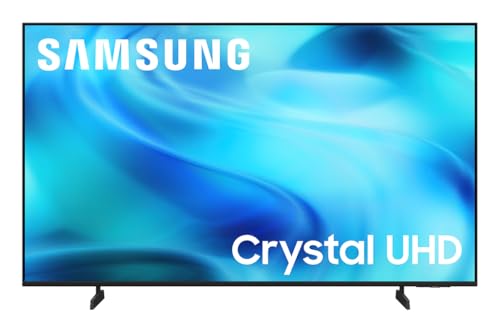
The 2026 U8000H is the successor to last year's U8000F. It keeps the same basic formula: a Crystal UHD LED panel with Samsung's upscaling and color boosting. The Motion Xcelerator does a good job smoothing 24p content and sports, though it is still a 60Hz panel. The biggest selling point is the Samsung TV Plus free channel lineup: you get over 2,700 channels without any subscription, covering news, sports, and movies. For cord-cutters, that alone can be a compelling reason to pick this TV. The Crystal Processor 4K upscales HD content reasonably well, but it is not as sharp as the QLED sets. The lack of advanced HDR formats is a limitation if you watch a lot of HDR content. The Color Booster setting does liven up standard SDR content. Voice control works via Alexa or Bixby. This TV is a solid choice for a secondary room or for someone who wants a Samsung but does not need the premium picture.

Pros
Cons
Best for: Budget-conscious buyers who want a well-designed Samsung with good security and free TV channels.
Check current price on Amazon →
The 2025 U8000F is very similar to the U8000H, but it has a slightly different design: the MetalStream construction uses a single sheet of metal for the rear, giving it a more premium feel than the plastic of the 2026 model. The 4K upscaling is competent, and the Samsung TV Plus free content is identical. The main reason to pick this over the newer version is if you find it at a lower price or prefer the metal design. The Knox security platform is a genuine benefit if you plan to use the TV for browsing or connecting IoT devices. The picture quality is standard LED fare: decent brightness, no local dimming, acceptable black levels. For casual watching in a well-lit room, it's fine. But for a dark room movie night, the lack of advanced HDR and local dimming is noticeable. This is a dependable secondary TV or living room set for someone who watches mainly cable and free streaming.

Pros
Cons
Best for: People who want a QLED with local dimming and the convenience of hands-free voice control, especially in an Amazon smart home.
Check current price on Amazon →
The Omni QLED sits above the Ember 4-Series in Amazon's lineup. The key difference is the QLED panel with full array local dimming across 64 zones. That gives it noticeably better black levels than the Ember, and the Dolby Vision IQ adjusts the HDR based on ambient light. The far-field microphones let you control the TV without the remote: "Alexa, launch Netflix" works from anywhere in the room. The Ambient Experience turns the screen into a digital art frame when idle, and it can show your own photos. The adaptive brightness is smooth. The main downsides: it lacks Wi-Fi 6 (the Ember has it), and the hands-free Alexa means the microphones are always listening unless you use the physical switch. The picture quality is very good for a QLED in this class, but the Samsung M70H's Mini LED outperforms it in contrast. For Amazon-centric homes, the Omni is a strong choice.

Pros
Cons
Best for: Buyers who want the simplest possible Fire TV experience at a very low entry point, and are okay with standard LED picture.
Check current price on Amazon →
The INSIGNIA F50 is the most popular TV on this list for good reason: it is a no-frills Fire TV that does exactly what you need. The 4K picture is sharp enough for most content, and HDR10 gives a slight improvement over standard SDR. The DTS Virtual-X sound processing does make the built-in speakers sound wider than they have any right to. The remote has Alexa and direct buttons for streaming services. The simplicity is the appeal: you plug it in, connect to Wi-Fi, and the familiar Fire TV interface appears. The picture is not going to impress a videophile, but for watching the evening news, streaming sitcoms, or letting kids use it, it is perfectly fine. The main compromise is that the panel is not QLED, so colors look a bit flat compared to the pricier sets. The bezels are thicker than the Roku or Samsung. But for a clean, straightforward experience, this TV is hard to beat.
Pros
Cons
Best for: People who want the Insignia Fire TV experience but have a space constraint that calls for a 50-inch rather than 55-inch screen.
Check current price on Amazon →
This is the 50-inch sibling of the 55-inch F50. Everything about it is identical except the screen size. The Fire TV platform is the same, the ports are the same, the DTS Virtual-X is the same. It exists for those situations where a 55-inch would be too tight: a bedroom, a small apartment living room, or a wall where the studs don't line up for a bigger panel. The picture quality is adequate, with decent upscaling of 1080p content. The audio is acceptable for casual viewing. The main reason to consider this over the 55-inch is purely about fit. But if you have the space, the 55-inch model is a better value. This is a niche pick for a narrow use case.
When you start shopping for a 55-inch TV, you will quickly realize that the specs matter less than the experience. A panel that looks great in a showroom may flop in your living room. Here are the factors that really separate a good pick from a bad one.
The panel type determines how colors and contrast look. Basic LED TVs use a white backlight with a color filter. They are bright enough for most rooms but struggle with black levels. QLED (quantum dot) TVs add a layer of nanocrystals that improve color volume and brightness, making reds and blues more saturated. Mini LED goes a step further by dividing the backlight into many small zones that can turn off independently, giving near-OLED black levels. For a 55-inch TV, QLED is the sweet spot: you get vibrant colors without the premium of Mini LED. If you watch mostly in a dark room, spring for Mini LED or at least a set with local dimming. If the TV will be in a bright room, a bright LED or QLED is fine.
Your TV is now a computer. The operating system matters as much as the picture. Fire TV (used on Amazon, Insignia, and Hisense sets) is great if you have Prime, use Alexa, and like many free channels. It does show ads on the home screen. Roku is the cleanest and fastest: no ads, simple layout, and automatic updates. Google TV is excellent for Android users and offers deep integration with Google services, but it can slow down over time. Samsung Tizen is polished and includes Samsung TV Plus free channels, but some find the layout less intuitive. Pick the platform that matches your phone and smart home setup.
High Dynamic Range is more important than 4K resolution for picture quality. Dolby Vision is the most common premium format, used by Netflix, Disney+, and Apple TV. HDR10+ is used by Amazon Prime Video and some Samsung content. The best TVs support both, but many budget sets only support basic HDR10. If you watch a lot of streaming movies, prioritize Dolby Vision. If you use an Xbox or Samsung phone, HDR10+ is beneficial. Some Samsungs skip Dolby Vision entirely, which is a real downside for movie fans.
Most 55-inch TVs in this roundup are 60Hz panels. That is fine for movies and TV shows. For sports and fast-paced games, look for motion interpolation (MEMC) or a native 120Hz panel. The Samsung M70H offers effective 120Hz via DLG. TCL and Hisense use MEMC to reduce blur. For serious gamers, low input lag (Auto Low Latency Mode) is critical; all the sets here have some form of ALLM. Check that the TV supports HDMI 2.1 features if you plan to use a PS5 or Xbox Series X.
TV speakers have gotten better, but none will replace a soundbar. Look for Dolby Atmos processing or DTS Virtual:X, which widen the soundstage. The Roku Select has Bluetooth Headphone Mode, a standout feature for private listening. If you prioritize good sound out of the box, sets with dedicated sound processing (like the Amazon Ember or TCL Q65) have an edge.
You will need at least three HDMI ports. One should support eARC for a soundbar. USB ports are useful for playing media from a drive. Wi-Fi 6 is a nice upgrade if you have a new router. All the sets here have Ethernet jacks for wired connections.
QLED uses a quantum dot layer on top of an LED backlight. It is very bright and resistant to burn-in, with vibrant colors. OLED uses self-lit pixels that turn off individually for perfect blacks and infinite contrast. OLED is better for dark rooms and movie lovers, but it is more expensive and not as bright. In the 55-inch range under $800, you will find mostly QLED and LED, not OLED.
It depends on your seating distance. A 55-inch screen is comfortable at 6 to 9 feet. For a room where you sit closer than 6 feet, a 50-inch might be better. For distances beyond 9 feet, a 65-inch would be more immersive. Measure your couch to wall distance before buying.
Many Netflix movies and shows are available in Dolby Vision. If you watch a lot of Netflix, yes, Dolby Vision support will give you better contrast and color. Without it, the TV will still show HDR10, which is a step down. Most QLED TVs in this list support Dolby Vision except for Samsung.
Roku is the easiest to use by a wide margin. The home screen is simple, the remote has few buttons, and there is no confusing menu hierarchy. It also receives updates for years. Fire TV and Google TV are fine but have more clutter.
Yes, but check the input lag. Most of these TVs have a Game Mode that lowers latency to under 15ms, which is fine for desktop use. The 4K resolution gives plenty of screen real estate. However, text clarity may not be as sharp as a dedicated monitor, and you may need to adjust overscan settings.
Local dimming allows the TV to darken parts of the screen independently, improving contrast in dark scenes. Sets with more dimming zones (like the Samsung M70H with Mini LED) produce deeper blacks and fewer halos around bright objects. TVs without local dimming (like most budget LEDs) show a grayish glow in dark scenes. It is one of the biggest upgrades you can get.
It is a combination of motion interpolation and black frame insertion that smooths fast motion. On the U8000 series it works at 60Hz. On the M70H it can simulate 120Hz. It is good for sports and games but can create a soap opera effect for movies if left on high.
The best 55-inch TV for most people is the Amazon Ember 4-Series. It combines a fast processor, Wi-Fi 6, HDR10+, and the excellent Fire TV platform into a package that gets out of your way. If you value simplicity above all, the Roku Select 55" QLED is a joy to use and has great color. For those who want the best picture quality in this class, the Samsung M70H Mini LED is the clear winner, especially for gaming and sports. On a tighter budget, the INSIGNIA 55" F50 gives you a reliable Fire TV experience without fuss.
No single TV fits every living room. Think about your smart home ecosystem, how much you care about HDR, and whether you watch in bright or dark rooms. Then pick the one that matches. You will likely keep this TV for five to seven years, so choose wisely.
This article contains Amazon affiliate links. We may earn a small commission on qualifying purchases at no extra cost to you.


