Physical Address
304 North Cardinal St.
Dorchester Center, MA 02124
Physical Address
304 North Cardinal St.
Dorchester Center, MA 02124

Find the 10 best ASIC miners in 2026 for home and pro mining. From compact Bitaxe units to high-hashrate Antminers, we pick the top miners for every budget and space.
Every watt matters when you're running an ASIC miner 24/7. The difference between an efficient rig and an inefficient one can be the difference between profit and loss, especially at home where electricity isn't subsidized. That's why finding the best ASIC miners in 2026 means balancing hash rate with power consumption, noise, and upfront cost. Whether you want a desktop unit that doubles as a space heater or a proper rackmounted machine for a dedicated mining setup, the market has never had more options for individuals.
This roundup covers ten miners that span from pocket-sized solo mining gadgets to serious 100+ TH/s machines. The picks include the industry-leading Avalon Q with its 18.6 J/TH efficiency, the clever Avalon Mini 3 that heats your room while it works, and several compact Bitaxe and Nano 3S units that are perfect for beginners. We've also included two refurbished Antminer S19 Pro models that offer high hash rates if you have the right power setup.
TL;DR: The Avalon Q 90TH/s is the most efficient home miner we've seen, with whisper-quiet operation and a remarkable 18.6 J/TH efficiency. The Avalon Mini 3 is the dual-purpose standout: it mines at 37.5 TH/s while heating a small room. The POWER MINING Bitaxe Gamma 602 is the budget entry point for learning solo mining. The AltairTech Nano 3S is the quietest 6 TH/s unit for office use.
| # | Product | Hashrate | Power | Efficiency (J/TH) | Best for |
|---|---|---|---|---|---|
| 1 | Avalon Q 90TH/s | 90 TH/s | 1674W | 18.6 | Serious home mining |
| 2 | Avalon Mini 3 37.5TH/s | 37.5 TH/s | 800W | 21.3 | Heater + miner combo |
| 3 | Antminer S19 Pro 104TH/s (Renewed) | 104 TH/s | 3400W | 32.7 | High hash rate (220V) |
| 4 | Antminer S19 Pro 100TH/s (Renewed) | 100 TH/s | 3300W | 33.0 | Budget high hash rate |
| 5 | Canaan Nano 3S (OEMGMINER) | 6 TH/s | 140W | 23.3 | Quiet home mining |
| 6 | Canaan Nano 3S (AltairTech) | 6 TH/s | 140W | 23.3 | Office mining |
| 7 | Minerpals Avalon Nano 3S | 6 TH/s | 140W | 23.3 | Budget 6 TH/s |
| 8 | Bitaxe Gamma 602 (POWER MINING) | 1.1 TH/s | 18W | 16.4 | Learning solo mining |
| 9 | Bitaxe Gamma 602 (Vynel) | 1.8 TH/s | 35W | 19.4 | Higher solo hash rate |
| 10 | Gamma 601 (yysluping) | 1–1.2 TH/s | 18-20W | ~16 | Entry-level solo |
Prices change in real time; check the links for the latest pricing.

The Avalon Q is the miner we'd recommend to anyone who wants serious hash rate at home without the jet-engine noise of older models. New Canaan engineered this unit to hit 90 TH/s while pulling just 1674 watts, an efficiency of 18.6 J/TH that beats nearly everything else in this roundup. That efficiency directly translates to lower electricity bills, and over months of 24/7 operation, it adds up fast.
The machine runs on standard 110V to 240V outlets, so you can plug it into a regular wall socket without an electrician. The noise reduction is noticeable: it's nowhere near as loud as the Antminer S19 series, making it feasible to place in a garage or even a well-ventilated utility room without driving the household crazy. The included US power cord means you're ready to mine out of the box, and the full manufacturer warranty on a new unit provides peace of mind that refurbished models don't.
The trade-off is the price. At this level, you're investing heavily upfront. But if you're serious about home mining and want the best balance of hash rate, efficiency, and noise, this is the one most people should start with.
Pros
Cons
Best for: The committed home miner who wants maximum efficiency and low noise without moving to a 220V circuit.
Check current price on Amazon →

The Avalon Mini 3 is one of the most clever designs in mining right now. It combines 37.5 TH/s of SHA-256 hash power with a functional space heater that can raise the temperature of a 10m³ room by about 6°C in ten minutes. Canaan's official description doesn't oversell it: the 800W power draw is high for a space heater, but you're also earning Bitcoin, so the heat is essentially a byproduct you can use.
Noise levels sit between 33 and 55 dB, which is quieter than most box fans. That makes it viable in a bedroom or home office, though you'll still hear it in a quiet room at full tilt. The compact rectangular shape (about 30 inches long, 4 inches wide) fits on a shelf or mount. Wi-Fi connectivity and a mobile app simplify setup, and the included Canaan power supply is reassuringly solid.
The efficiency of 21.3 J/TH is decent for this class, but not class-leading. The Avalon Q is much more efficient, though also much more expensive. The Mini 3 strikes a middle ground, and for anyone who wants to offset their heating bill while mining, it's a no-brainer.
Pros
Cons
Best for: Miners in cold climates who want to reclaim heat and earn Bitcoin simultaneously.
Check current price on Amazon →

The Antminer S19 Pro remains a workhorse in the mining world, and this renewed 104 TH/s version offers the highest hash rate in our roundup for a significantly lower price than a new unit. With 32.7 J/TH efficiency and 3400W power draw, it's not the most efficient machine here, but if you have cheap electricity and want to maximize raw throughput, the numbers work.
This is a refurbished aluminum-substrate model, which means it may have minor cosmetic scratches. The unit does not come with a power cord, and it requires 220-240V input voltage. That's a critical point: you cannot plug this into a standard US 110V outlet. It's meant for a dedicated 220V circuit, ideally in a garage or mining shed. The seller notes there is no official Bitmain warranty, and returns without a malfunction incur a 40% restocking fee, so buy with confidence only if you're comfortable with that risk.
Noise is substantial: expect typical S19 levels around 75 dB. This is not a desk miner; it belongs in a space where noise is not an issue. For the hash rate per dollar, it's hard to beat, but only for the right setup.
Pros
Cons
Best for: Experienced miners with a 220V outlet and a tolerant household (or a remote location).
Check current price on Amazon →
This renewed Antminer S19 Pro is essentially the same machine as the 104 TH/s version but rated at 100 TH/s with 33 J/TH efficiency and 3300W power draw. The real-world performance difference is marginal, and the price is typically a bit lower. If you find a good price on this one, it's a worthwhile alternative to the 104T.
All the same caveats apply: 220V required, no cord, no warranty, loud operation, and a restocking fee. The aluminum substrate construction is identical, and air cooling works well in temperatures up to 45°C. This is a no-frills purchase for someone who knows exactly what they're getting: a used industrial miner with high hash rate and high noise.
The slight efficiency disadvantage (33 vs 32.7 J/TH) is negligible. The deciding factor between this and the 104T will likely be availability and price. Both are valid choices for the same use case.
Pros
Cons
Best for: Miners looking for a proven high-hashrate machine without paying new prices, who have the infrastructure for 220V and noise.
Check current price on Amazon →

The Canaan Nano 3S is the most popular home mining unit we see right now, and this version sold by OEMGMINER comes with the Canaan original power supply. At 6 TH/s and 140W, it's designed for people who want to mine quietly without the heat and noise of a big rig. The form factor is about the size of a small shoebox, and it's genuinely quiet enough to sit on a desk in an office without being distracting.
Setup is straightforward: connect to your 2.4 GHz Wi-Fi network (no Ethernet), enter your pool or solo mining address, and you're hashing in minutes. The display shows hashrate and temperature, and you can manage it via a web interface. It supports both solo mining and pool mining, which makes it flexible for beginners.
The downside is the hashrate. 6 TH/s is a tiny fraction of what the larger miners produce, and you will not earn meaningful Bitcoin with pool mining unless you're in it for the long haul or just want to learn. As a solo miner, the odds of finding a block are extremely low. But as a hobby, a learning tool, or a way to support the network, the Nano 3S is a solid choice.
Pros
Cons
Best for: Beginners and hobbyists who want a quiet, small miner to learn the ropes.
Check current price on Amazon →

Altair Technology offers the same Canaan Nano 3S hardware with identical specs: 6 TH/s, 140W, quiet fan, and Canaan PSU. The difference here is the seller reputation and the fact that AltairTech explicitly markets this for office use. In practice, that means the unit is pre-configured for easy deployment, and the packaging is geared toward a professional environment.
If you're buying for a workplace or a tidy home office, this version is a solid choice. The black finish and compact design blend in easily. Setup is identical to the OEMGMINER version: Wi-Fi, web interface, and support for solo or pool mining.
The same limitations apply. You're not going to mine a block solo, and pool mining at 6 TH/s yields tiny payouts. But if your goal is to generate a small trickle of sats while learning or demonstrating mining, this is a clean package. The price is slightly lower than the OEMGMINER version at the time of writing, which makes it the better value among the two.
Pros
Cons
Best for: Office workers or hobbyists who want a polished, low-profile miner.
Check current price on Amazon →
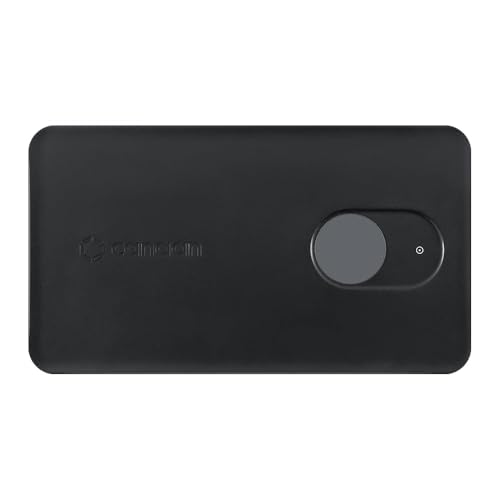
Minerpals sells what appears to be the same Nano 3S hardware (6 TH/s, 140W, PSU included) but at a price that often undercuts the other two Nano 3S listings. The listing calls it a "Super Home Quiet SHA256 ASIC Miner" and includes the heater description, though the Nano 3S doesn't produce enough heat to be useful as a room heater (unlike the Mini 3). It's still a quiet, compact miner suitable for a desk.
The catch is that this seller, Minerpals, is a generic brand seller, and the unit may not come with the same level of support as the AltairTech or OEMGMINER versions. The features are identical: Wi-Fi, display, Canaan chip, and 6 TH/s. If you want the absolute lowest price for this hardware, this is the one to get.
However, for the small price difference, many buyers will prefer the AltairTech version for the slightly better seller reputation. But if you're comfortable with a generic listing, this will get you the same mining capability.
Pros
Cons
Best for: Cost-conscious buyers who want the 6 TH/s Nano 3S experience without paying a premium for a brand name.
Check current price on Amazon →
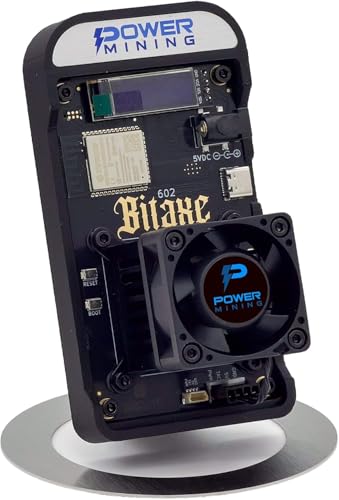
The Bitaxe Gamma 602 from POWER MINING is the most efficient ultra-compact miner we've seen. At 1.1 TH/s and just 18W, it achieves an astonishing 16.4 J/TH, which is better than many full-size miners. This means you can run it 24/7 for about the cost of an LED lightbulb. The unit is built in Europe with a BM1370 chip (the same found in the Antminer S21 Pro), and it comes with a 5V/6A power supply, 3D-printed stand, and an OLED display.
Open-source AxeOS firmware gives you full control: you can tweak frequencies, monitor temperature, and even contribute to the community. Wi-Fi connectivity means no Ethernet cable required, and the web interface makes configuration simple. It's designed for solo mining, and while the odds of finding a block are astronomically low, the educational value and the satisfaction of running your own node-connected miner are real.
At this power level, you can keep it running on a desk without worrying about heat or noise. The fan is small but quiet. The included stand keeps it stable. This is the miner we'd hand to a friend who wants to understand how Bitcoin mining actually works.
Pros
Cons
Best for: Tinkerers and learners who want to solo mine with minimal power cost.
Check current price on Amazon →

The Vynel-branded Bitaxe Gamma 602 boosts the hash rate to 1.8 TH/s at 35W, for an efficiency of 19.4 J/TH. That's still very good, though not quite as efficient as the POWER MINING version. The trade-off is more hashing power per device, which slightly improves your solo mining odds (though they remain vanishingly small).
Like its counterpart, it uses a BM1370 ASIC chip, has Wi-Fi, and runs open-source firmware. The orange color and slightly different chassis distinguish it. It comes assembled with a heat dissipation system, so you just plug in, connect, and start mining. The 35W power draw is still low enough to run off a USB-C PD power supply (included).
The Vynel unit is a bit more expensive than the POWER MINING one in our dataset, but not by much. If you want the highest hash rate possible from a Bitaxe-style miner, this is the one. The extra 0.7 TH/s may make a psychological difference, even if the real-world probability of a solo block remains tiny.
Pros
Cons
Best for: Solo miners who want the maximum hash rate from a tiny, low-power device.
Check current price on Amazon →

The yysluping Gamma 601 is the lowest-priced ASIC miner in this roundup, and it offers almost the same experience as the Bitaxe units for a much lower cost. It delivers 1 to 1.2 TH/s at 18-20W, with efficiency around 16 J/TH. It uses the same BM1370 chip, has 2.4 GHz Wi-Fi, an OLED display, and includes a 5V power supply and stand.
The firmware is open-source and compatible with AxeOS, giving you all the same customization options. The build quality feels a step behind the European-made Bitaxe, but at this price, it's a negligible concern for someone just dipping their toes into mining. The unit is black and compact, with a low-noise fan.
The main drawback is the support from yysluping, which is a less known brand. But the hardware is standard, and the community around AxeOS can help with any issues. If you want to see if mining is for you without spending more than $60, this is the way in.
Pros
Cons
Best for: Absolute beginners on a tight budget who want to experiment with solo mining.
Check current price on Amazon →
The right ASIC miner depends on your electricity cost, space, noise tolerance, and ambition. Here are the factors to weigh before you buy.
Efficiency is the single most important metric for long-term profitability. It tells you how many joules it takes to produce one terahash. Lower is better. An Avalon Q at 18.6 J/TH will cost far less to run per TH than an Antminer S19 Pro at 33 J/TH, even though both produce similar hash rates. Over a year of 24/7 operation, the difference can be hundreds of dollars at average US electricity rates. For home miners paying retail electricity, we recommend targeting machines under 25 J/TH if possible. For industrial operations, the threshold drops further.
Industrial miners like the Antminer S19 Pro run at 75 dB, which is like a vacuum cleaner running constantly. They also output enormous heat: 3400W of thermal energy that you need to vent. At home, that's only practical in a basement, garage, or outdoor shed. Desktop miners like the Bitaxe and Nano 3S run at 30-50 dB and can sit on a desk near you. The Avalon Mini 3 is a middle ground: it's quiet enough for a room, but the heat output is significant and can raise the temperature. Think about where you'll put the miner before you buy.
Many high-hashrate miners require 220-240V circuits. Standard US 110V outlets can only handle about 1500-1800W continuous, so the Avalon Q at 1674W is right at the limit for a 15-amp circuit (with nothing else on it). The S19 Pro machines at 3300-3400W cannot run on 110V at all. If you don't have a 220V outlet, your options are the Avalon Q, the Avalon Mini 3, the Nano 3S, and the Bitaxe units. Always check the voltage and amperage of your circuit before plugging in a high-power miner.
Some miners are nearly plug-and-play: the Nano 3S and Bitaxe units have Wi-Fi and web interfaces that get you mining in minutes. Others, like the Antminer S19 Pro, require connecting to a mining pool, configuring IP settings, and often dealing with custom firmware. If you are not comfortable with network setup, stick with the simpler units. Open-source firmware like AxeOS on the Bitaxe gives you more control but also more complexity. The Avalon Q and Mini 3 have their own management software that strikes a good balance.
New units come with a warranty, known history, and usually include all accessories. Refurbished Antminer S19 Pros are significantly cheaper but lack a manufacturer warranty and may have cosmetic flaws. They often require buying a power cord separately and using 220V. If you are willing to accept the risk, refurbished can be a great way to get high hash rate for less. But if you want peace of mind and easy returns, buy new.
It depends on your electricity cost and the miner's efficiency. With a highly efficient miner like the Avalon Q and electricity under $0.10 per kWh, you can generate a small profit. With less efficient miners or higher electricity rates, you may operate at a loss. Many home miners do it for the hobby, the heat, or to support the network rather than for direct profit.
Solo mining means you mine without joining a pool. You keep the entire block reward if you solve a block, but the odds of finding a block with a small miner are extremely low. For example, a 1 TH/s miner has about a 1 in 1,000,000 chance per day of finding a block. Most solo miners never see a payout. Pool mining gives you small, regular payments proportional to your hash rate.
No, any stable internet connection works. Most home miners use Wi-Fi, but Ethernet is more reliable. Data usage is very low (a few megabytes per day). The key is uptime: if your internet goes down, your miner stops earning.
Multiply the power draw in watts by 24 hours and 30 days, then divide by 1000 to get kilowatt-hours. A 140W Nano 3S uses about 100 kWh per month. A 3400W Antminer uses about 2450 kWh. At $0.12 per kWh, that's $12 for the Nano 3S and $294 for the Antminer. This is a significant operating cost.
No. The S19 Pro requires a dedicated 220-240V circuit, typically with a C19 plug and a PDU or direct wiring. Attempting to run it on a 110V outlet will trip breakers and could damage the unit. You need to consult an electrician if you don't have 220V available.
The Avalon Q is newer, more efficient (18.6 vs 33 J/TH), quieter, and can run on 110V. The Antminer S19 Pro offers a slightly higher hash rate (100-104 TH/s vs 90 TH/s) but requires 220V and is louder. The Avalon Q costs more upfront but saves on electricity over time.
For a complete beginner, the Bitaxe Gamma 602 (POWER MINING version) is ideal. It's cheap, efficient, easy to set up with Wi-Fi, and has great open-source community support. The Canaan Nano 3S is also beginner-friendly if you want a slightly higher hash rate and a more polished product.
The best ASIC miner in 2026 for most home miners is the Avalon Q 90TH/s, because it combines high hash rate, excellent efficiency, and low noise into a package that works on standard 110V power. If you want to offset heating costs, the Avalon Mini 3 is a brilliant dual-purpose machine. For budget-minded beginners, the Bitaxe Gamma 602 from POWER MINING offers the lowest-cost entry into solo mining with great efficiency. If you need maximum hash rate on a budget and have 220V access, the refurbished Antminer S19 Pro is the most cost-effective way to get 100+ TH/s.
Whatever you choose, match the miner to your electricity rate, noise tolerance, and available voltage. The best ASIC miner is the one that fits your specific situation, and this roundup gives you options across every price and performance tier. If you're still unsure, start small with a Bitaxe or Nano 3S, learn the ropes, then scale up if the numbers make sense.
This article contains Amazon affiliate links. We may earn a small commission on qualifying purchases at no extra cost to you.


