Physical Address
304 North Cardinal St.
Dorchester Center, MA 02124
Physical Address
304 North Cardinal St.
Dorchester Center, MA 02124

The 10 best gaming consoles in 2026 reviewed. From Xbox Series X to Nintendo Switch, we cover every category to help you find the perfect console for your setup.
Picking a gaming console used to be straightforward: you bought the one that played the games your friends had. Today, the lines are blurred. You can get a 4K beast that doubles as a media center, a portable handheld that plays AAA titles on the train, or even a retro stick that plugs into any HDMI port and delivers 40,000 vintage games. Which one is right for you? We've rounded up the 10 best gaming consoles in 2026 to help you decide. From Microsoft's powerful Xbox Series X and Sony's latest PS5 Slim to Nintendo's ever-popular Switch and a new wave of PC handhelds like the Lenovo Legion Go S, this list covers every serious contender on the market.
We've organized these picks by what they do best. The first few tackle the high-end living room experience. Then we move into hybrid and portable options, followed by a few specialty devices that serve specific audiences. Whatever your gaming style, there's a console here that fits.
TL;DR: The Xbox Series X is the one most people should buy: true 4K, ray tracing, and backward compatibility make it the most complete console. The PlayStation 5 Slim offers Sony's exclusive lineup and a sleek redesign. The Nintendo Switch remains the best choice for on-the-go gaming and family fun. If you want a portable PC gaming rig, the Lenovo Legion Go S delivers Game Pass anywhere.
| # | Product | Resolution / Performance | Storage | Notable Feature | Best for |
|---|---|---|---|---|---|
| 1 | Xbox Series X | True 4K up to 120 FPS | 1TB Custom NVMe SSD | Backward compatible with thousands of games from four generations | Best for 4K gaming with extensive backward compatibility |
| 2 | PlayStation 5 Digital Edition (slim) | Up to 8K HDR, 120 Hz | 1TB SSD | Slimmer design, includes DualSense and Astro's Playroom | Best for PlayStation exclusive fans who want the latest hardware revision |
| 3 | PS5 Digital Edition (original) | Up to 8K HDR, 120 Hz | 825GB SSD | Tempest 3D Audio, haptic feedback | Best for those who prefer the launch form factor or already have a PS4 game library |
| 4 | Xbox Series S | Up to 120 FPS (1440p native, upscaled 4K) | 1TB SSD | All-digital, Quick Resume, smallest Xbox | Best for digital-only gamers who want a compact, powerful system |
| 5 | Nintendo Switch | 1080p docked / 720p handheld | 32GB (expandable) | Detachable Joy-Con, three play modes | Best for portable gaming and family-friendly local multiplayer |
| 6 | Lenovo Legion Go S | 8" 120Hz display, up to 120 FPS in many games | 512GB SSD | AMD Ryzen Z2 Go, PC gaming, free 3 months PC Game Pass | Best for PC gamers who want a handheld for Game Pass and Steam on the go |
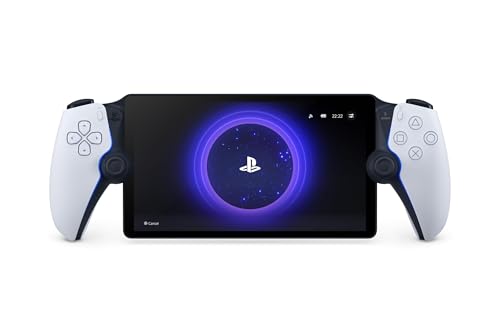
| 7 | PlayStation 5 Portal Remote Player | 1080p, 60 FPS | N/A (streams from PS5) | 8" LCD display, plays remotely via Wi-Fi or cloud streaming | Best for PS5 owners who want to play anywhere in their home or via cloud |
| 8 | Nintendo Wii (Renewed Premium Bundle) | Standard definition | No internal storage upgrade mentioned | Includes original OEM controllers, motion controls | Best for nostalgic players wanting a classic motion‑controlled experience |
| 9 | 2027 Upgraded Retro Gaming Console Stick Pro | 4K upscaling (1080p output) | 64GB TF card with 40,000+ games | Plug‑and‑play HDMI stick, 23 emulators, 2 wireless controllers | Best for families or parties who want instant access to a huge retro library |
| 10 | GAMENEXT Retro Game Console | AV output | 620 built‑in games | Dual players mode, two wired controllers, simple operation | Best as a gift for casual gamers who want a no‑frills classic console experience |

Pros
Cons
Best for: Anyone who wants the most powerful console available and values backward compatibility.
Check current price on Amazon →
The Xbox Series X is the undisputed king of raw power in the console space. Its AMD Zen 2 and RDNA 2 architecture deliver hardware‑accelerated ray tracing that makes reflections and shadows look genuinely lifelike. The 1TB NVMe SSD, coupled with the Xbox Velocity Architecture, slashes load times to a few seconds and enables Quick Resume, letting you flip between four or five games without reloading. True 4K at 60 frames per second is the baseline; many titles hit 120 FPS if you have the compatible display for it,Solidify..
Where it really shines is backward compatibility – not just remembering last-gen Xbox One games via emulation wrapper that,Xbox Series X actually applies improvements like higher resolutions[Note:The Xbox backward compatibility team has indeed boosted older titles like,Automatic HDR enhancement across thousands of games from OG Xbox era onward[„Hundreds of titles see doubled frame rates or resolutions they never had on original hardware][, It’s miles ahead of what Sony currently offers for pre-PS4 software.
downside is its sheer size. The Series X is roughly as tall as a tower PC ventblocker style, and it doesn't sit flat horizontally without a separate stand (included in the box for vertical only). If your media cabinet has fixed shelves, measure twice. The Wi‑Fi is still Wi‑Fi 5, which is fine for most homes but feels behind the times, but the ethernet port handles gigabit connections cleanly, and the hardwired route is best for Game Pass cloud streaming or multiplayer anyway. Otherwise, this is the no-compromise console you buy when you want the highest fidelity and fastest load times today.

Pros
Cons
Best for: Gamers who primarily buy digital and want Sony's exclusive titles on the latest, slimmer hardware.
Check current price on Amazon →
The PS5 Slim isn't a performance upgrade over the original – it's a mid‑life redesign that makes the system easier to place in your setup. At about 30% smaller, it fits better in standard AV racks, and the removable disc‑drive model allows you to add storage? Actually this is the Digital Edition (model CFI‑2000), so no disc drive at all. The 1TB SSD is a slight bump from the launch model's 825GB and uses the same ultra‑fast interface that makes load times vanish. The DualSense controller is unchanged, which is good because its haptic feedback and adaptive triggers remain the most immersive controller technology on the market. Games like Returnal and Ratchet & Clank Rift Apart feel distinctly different from their Xbox counterparts thanks to this.
Sony's exclusive lineup continues to push the hardware. The brief alone from Astro’s Playroom shows off what the controller can do, and upcoming titles like Marvel’s Wolverine and the next Naughty Dog project will almost certainly rely on the SSD's speed. The console also supports Tempest 3D Audio, which works with any headphones and creates convincing spatial sound without requiring special speakers.
The big catch is the lack of a disc drive. If you already own a library of PS4 discs or like buying physical games at discount, you'll need to look at the standard PS5 or accept a digital‑only future. The Slim version that includes a drive is also available, but this Digital Edition keeps the footprint as small as possible. For a pure digital library, it's the cleanest Sony experience.

Pros
Cons
Best for: Buyers who want the full PS5 power but don't mind the older form factor and plan to buy all games digitally.
Check current price on Amazon →
The original PS5 Digital Edition is essentially the same console as the launch model, just without the disc drive. It runs all the same games at the same settings: you get 4K up to 120 FPS, ray tracing in supported titles, and the same Tempest 3D Audio engine. The DualSense's haptic impulses and adaptive triggers work identically here. If you don't need the slimmer chassis , this version is still a capable entry point into the PlayStation ecosystem.
The 825GB SSD holds fewer installed games than the 1TB in the slim model or the Xbox Series X. With modern AAA games often exceeding 100GB, you'll probably need to add an M.2 SSD at some point. The PS5 supports standard NVMe drives with a heatsink, so you can expand storage easily (though you'll pay a premium for the lowest‑latency drives). The console's design is also polarizing – it's big with sweeping curves that don't fit neatly into every entertainment center, and the glossy black center section scratches if you look at it wrong. Those quirks aside, the core experience is top‑tier. It's a great choice if you find a good deal on this model or simply prefer the original aesthetic.

Pros
Cons
Best for: Digital‑only gamers who want a small console with next‑gen speed, even if full 4K isn't critical.
Check current price on Amazon →
The Xbox Series S is the little console that does a lot. It's about the size of a hardcover book, but runs the same operating system and architecture as the Series X, giving you access to all the same features: Quick Resume, Smart Delivery, and the full Xbox Game Pass catalog. The 1TB SSD (this 2024 revision doubled the original capacity) means load times are just as fast as on the bigger sibling. In practice, you'll notice the biggest difference in resolution: the Series S targets 1440p and upscales to 4K. On a 65‑inch set sitting close, the softer image is visible. On a bedroom TV or monitor, it's often less noticeable.
The trade‑off is size, silence, and the fact that it sips power. The Series S fan is nearly silent even under load. Its all‑digital nature means you'll need to buy games from the Microsoft Store or redeem Game Pass codes. But for the person who owns a 1080p or 1440p display, or mostly uses Game Pass for a wide variety of games, this console is a fantastic companion to a more powerful machine or a standalone daily driver. It won't run every future title at the absolute best settings, but it will run them – and that's more than you can say for last‑gen hardware.

Pros
Cons
Best for: Portable players, families, and anyone who loves Nintendo's exclusive franchises.
Check current price on Amazon →
The Nintendo Switch is now in its seventh year, and it shows in the hardware – the LCD screen is small, the resolution is low by modern standards, and the kickstand on the original model is flimsy. Yet the Switch remains one of the most popular consoles ever because of the games. The Legend of Zelda: Tears of the Kingdom, Super Mario Odyssey, Animal Crossing: New Horizons, and Splatoon 3 are system‑sellers that you cannot play on any other platform. The hybrid concept – a console that goes from your hands to the TV seamlessly – still feels special.
The Joy‑Con controllers are clever: they attach to the sides for handheld, slide off for tabletop mode with two people, and snap into the included grip for traditional TV play. The haptic feedback is surprisingly good for their size, and the motion controls are well integrated into many games. However, the 32GB of internal storage fills up fast. A microSD card is almost mandatory. The battery life varies; original models get 2.5‑6 hours depending on the game, and the newer models (like this one) have improved efficiency.
It's not a 4K powerhouse, and it won't run the latest third‑party blockbusters at high settings. But if you value exclusive Nintendo experiences and portable play, the Switch is still the only choice in town. (The Switch OLED offers a better screen, but this standard version remains widely available and hits a crucial sweet spot.)

Pros
Cons
Best for: PC gamers who want to play Game Pass titles, Steam games, and older PC titles on the go.
Check current price on Amazon →
The Lenovo Legion Go S is a serious step up from the Windows‑handheld first generation. The 8‑inch 120Hz display is bright and smooth, and the AMD Ryzen Z2 Go processor (a custom chip designed specifically for portable gaming) delivers solid frame rates in everything from cyberpunk to indie hits. The device runs Windows 11, which means you can install any PC game store – Steam, Epic, GOG, the Microsoft Store. The included three‑month PC Game Pass subscription is a nice bonus, getting you hundreds of games immediately.
The detachable controllers are a neat trick. They work like oversized Joy‑Con, with tactile grip and responsive motion controls. The Legion Space launcher aims to streamline launching games from all stores, though it still feels a little rough compared to Nintendo's OS. The real strength is the library: you aren't limited to console exclusive titles. You can play Halo, Forza, Call of Duty, World of Warcraft, and thousands of classic PC games that have never appeared on a closed platform.
Battery life is a mixed bag. Lenovo advertises a 55.5Wh cell, which can deliver over four hours of lighter games (indie, 2D) but closer to two hours for demanding AAA titles. That's typical for PC handhelds. The weight of 1.63 pounds means you'll feel it after a long session. Use the included stand or play on a table. For anyone who already subscribes to Game Pass or has a Steam library, the Legion Go S is a versatile companion that runs basically everything.
Pros
Cons
Best for: PS5 owners who want to play their games in a different room, or stream select PS5 games from the cloud with a Premium subscription.
Check current price on Amazon →
The PlayStation Portal is not a standalone console – it's a remote player that streams games from your PS5 over your home network. That's a crucial distinction. If you already have a PS5, this device lets you play on the couch while someone else uses the TV, or take your games to a bedroom. The 8‑inch 1080p screen is sharp enough for the format, and the full DualSense build means you get that special haptic feedback even when playing remotely.
In practice, the Portal works best when your PS5 is hardwired to the router and you're on a solid 5GHz connection. With a good Wi‑Fi setup, input lag is low enough to play action games like Spider‑Man 2 and Call of Duty. Cloud streaming via PS Plus Premium adds access to hundreds of games in the Game Catalog and Classics Catalog, plus select PS5 games from your library, streamed directly to the Portal without needing your PS5 to be on. That's a valuable feature for subscribers. But if you don't have Premium, the Portal's utility drops to being a local streaming accessory.
The biggest downsides are the requirement of a PS5 and the reliance on network quality. If you live with thick walls or congestion, you'll see compression artifacts and latency. The screen's 60Hz refresh rate is fine, but you'll notice it lacks the smoothness of a 120Hz handheld. For the PS5 ecosystem, it's a well‑made companion piece that solves the "big screen is occupied" problem more elegantly than a phone clip or tablet.

Pros
Cons
Best for: Retro gamers who want to play Wii Sports, Mario Galaxy, and other motion‑control classics on original hardware.
Check current price on Amazon →
The Nintendo Wii is a piece of gaming history that still holds up as a party machine. This renewed bundle promises tested and working hardware with original OEM controllers – no cheap knockoffs. That matters because the Wii Remote's accuracy is part of the experience. Games like Wii Sports Resort, Skyward Sword, and Super Smash Bros. Brawl rely on precise motion detection.
If you thought the Wii would work well on a modern 4K television, prepare to be disappointed: the console outputs standard 480p via composite or component cables. On a large screen, the image is soft and can look blurry. Some scalers or line doublers can improve the picture, but out of the box, it's a retro experience. The value here is entirely in the library and the nostalgic physical interaction. The renewed console comes without digital store functionality (the Wii Shop is long gone), but the disc‑based library is enormous, and many second‑hand games are cheap.
For someone who wants to relive Wii nights with friends or introduce a new generation to the magic of swinging a Wii Remote like a tennis racket, this bundle is solid. Just manage your expectations on image quality.

Pros
Cons
Best for: Families, kids, or anyone who wants an endless library of retro games in a single, affordable device.
Check current price on Amazon →
These HDMI‑stick retro consoles have exploded in popularity, and this 2027 model bumps the number of preloaded games to over 40,000. It runs on a 64GB TF card with 23 emulators covering everything from NES, SNES, and Sega Genesis to PlayStation 1, Game Boy, and arcade boards. You plug it into your TV via HDMI, connect the wireless controllers, and you're in.
For the most part, it delivers. Many of the classic arcade and console games are present – Contra, Super Mario Bros., Street Fighter II, Sonic – but the names are often altered to avoid copyright issues. You'll get "Super Mary" instead of Mario, and the sound and music can be off. The 4K upscaling feature smooths out some of the pixelation, though on a 4K TV the lower‑resolution games still look best when played via the built‑in shader options (if any). The wireless controllers are surprisingly responsive for a package this complete.
The biggest frustration is the user interface. There's no search function – you scroll through endless lists, and favorites are not easily marked. If you want to play a specific game, prepare to memorize where it is in the list. Still, for its convenience and sheer volume, it's a fun addition to a game room or a great gift for casual players who just want to pick up and play without any setup.

Pros
Cons
Best for: A gift for kids or adults who want a straightforward, no‑screen‑interface retro console with 620 games.
Check current price on Amazon →
The GAMENEXT is the simplest retro console on this list. It uses an AV output, so you'll need a TV with composite inputs – most modern 4K sets have them, but an adapter is sometimes required. Inside are 620 games, a mix of arcade‑style action, sports, puzzles, and fighting. They are earlier generation titles, so the graphics are basic, and the sound is chirpy. It's a direct nostalgia hit rather than a polished emulation experience.
The big limitation is the controller navigation. To switch games you have to walk to the console and press the Reset button – the controller doesn't bring up a menu. The wired controllers are simple but sturdy, with a classic D‑pad and two buttons. For kids who just want to play a quick game of something simple, it's perfect. For adults with fond memories of 8‑bit gaming, it'll scratch the same itch.
The build quality is in line with the list. It's plastic, light, and feels like a toy – but in this context, that's not a drawback. It's inexpensive and does exactly what it claims. If you want a huge library without price stress and don't mind the older connection, this is a neat little device.
Your ideal console depends on a few key tradeoffs. Here’s what to consider.
The biggest split in today's market is between consoles that deliver native 4K at 60+ FPS (Xbox Series X, PS5 Slim) and those that upscale or run at lower resolutions (Xbox Series S, Switch). If you have a large 4K TV and care about visual fidelity, you'll want a Series X or PS5. If you're gaming on a monitor or smaller bedroom set, an upscaling console like the Series S will still look good. Handhelds and retro devices have their own display limitations – 720p or 480p – so manage expectations.
No console plays everything. PlayStation has Uncharted, God of War, Horizon, Spider‑Man, The Last of Us, and a strong lineup of third‑party exclusives. Xbox offers Halo, Forza, Gears of War, and the unmatched value of Game Pass with day‑one releases. Nintendo has Mario, Zelda, Pokémon, Splatoon, and Animal Crossing – these are some of the best‑selling games of all time. If you follow a specific franchise, that often decides your console. The retro options are frozen libraries that can't get new games, but they offer thousands of classics.
The Nintendo Switch and Lenovo Legion Go S let you take your games anywhere. The Switch is especially good for on‑the‑go play due to its smaller size and dedicated handheld mode. The Legion Go S is bulkier but runs PC games that the Switch can't touch. Traditional consoles are stationary and require a TV, but they offer the best ergonomics and heat management for long sessions. The PlayStation Portal is a companion device that only works with a PS5 – it expands its utility but doesn't replace it.
Modern games are enormous – 100GB+ is common. The Xbox Series X and PS5 Slim have 1TB SSDs, which is comfortable but still might fill up quickly with six to ten games. Series S and PS5 Digital have varying internal capacities. All consoles allow expandable storage: Xbox uses a proprietary expansion card, PS5 uses standard M.2 NVMe SSDs, Switch uses microSD cards. The retro consoles come with the library already stored – no expansion needed.
If you already own a large library of Xbox 360, Xbox One, or PS4 games, backward compatibility should be a priority. Xbox Series X|S can play thousands of games across four generations, often with visual improvements. PS5 can run all PS4 games but not earlier PlayStation discs. The Nintendo Switch is fully isolated – no native support for Wii U or 3DS carts.
Xbox Game Pass is the most generous subscription in gaming – hundreds of games available to download or stream, including all Microsoft‑owned titles on day one. PlayStation Plus has three tiers, with Extra and Premium adding large catalogs and cloud streaming. Nintendo Switch Online is cheaper but has fewer retro games and no cloud streaming of modern titles. For retro consoles, online play is non‑existent, but that's rarely the point.
That depends on taste. Sony and Nintendo have the strongest exclusive libraries by volume and critical acclaim. PlayStation offers cinematic single‑player blockbusters. Nintendo provides family‑friendly, genre‑defining experiences. Xbox exclusives are fewer but often deeply integrated with Game Pass. For third‑party multiplatform games, Xbox and PlayStation are equal; Nintendo rarely gets those.
Yes. Xbox Series X and Series S are backward compatible with all Xbox One games, plus a curated selection of Xbox 360 and original Xbox titles – over 2,000 games and growing. Many receive automatic HDR and higher frame rates. Sony's PS5 can play all PS4 games, but not PS3, PS2, or PS1 discs.
No. Both the PS5 and Xbox Series X/S work perfectly on 1080p and 1440p displays. The consoles will output at the native resolution of the display, and many games will still run at higher frame rates. If you have a 4K set, you'll get the full visual benefit of upscaled or native 4K.
The Series X is more powerful: it has a larger GPU (12 TFLOPS vs 4 TFLOPS), more memory (16GB vs 10GB), and a 4K UHD Blu‑ray drive. It targets native 4K gaming. The Series S is smaller, all‑digital, and targets 1440p (upscaled to 4K). Both share the same interface, Quick Resume, and Game Pass library. The S is best for 1080p/1440p setups or as a secondary console.
For a primary console, 1TB is the sweet spot. Modern AAA games average 60–120GB each, so 1TB holds roughly 8 to 12 games. If you only play three or four games at a time, 512GB can work. All consoles offer expandable storage; plan accordingly.
Xbox controllers are largely cross‑compatible: Xbox One controllers work with Series X|S. PlayStation controllers are generation‑locked: PS4 controllers work with PS5 only for PS4 games, not PS5 titles. Nintendo Switch Pro Controllers work across all Switch models, but Joy‑Con are specific to each Switch unit.
Most work via HDMI, which is fine. The GAMENEXT console uses AV (composite) – many modern TVs lack the yellow/red/white input. You can use an AV‑to‑HDMI adapter. The 2027 Retro Gaming Stick Pro uses HDMI, so it works on any HDTV with an HDMI port.
The Xbox Series X remains the most powerful and versatile console on the market. Its stunning 4K performance, ray tracing, and backward compatibility with four generations of games make it the top pick for anyone starting from scratch or upgrading from an older Xbox. If you're committed to PlayStation exclusives, the PS5 Slim is the best version of that system – it's smaller, has 1TB of storage, and pairs perfectly with a digital library. For portable play, the Nintendo Switch is still the definitive choice thanks to its unmatched library of first‑party titles and hybrid design.
If you already have a PC and subscribe to Game Pass, the Lenovo Legion Go S gives you a Windows handheld that plays your existing library anywhere. The PS Portal is a niche but well‑executed remote play solution for PS5 owners. And for retro enthusiasts, the Nintendo Wii and the 2027 Retro Gaming Stick Pro scratch different itches – one classic motion‑controlled fun, the other a $40‑ish library of 40,000 games.
No single console is perfect for everyone. Think about which games you can't live without, where you'll be playing them, and how much storage you need. This list covers every major category, so your best choice is likely within it. Whichever you pick, you're getting a console that will serve you for years.
This article contains Amazon affiliate links. We may earn a small commission on qualifying purchases at no extra cost to you.


