Physical Address
304 North Cardinal St.
Dorchester Center, MA 02124
Physical Address
304 North Cardinal St.
Dorchester Center, MA 02124

We picked the 10 best MacBook Pros in 2026, from the M5 powerhouse to a renewed Intel classic, so you can find the right laptop for creative work, AI, or everyday use.
You know that moment when your laptop slows to a crawl mid-edit, or an AI model you need takes forever to run locally. The latest MacBooks have erased that frustration, but now the choice is overwhelming: M5, M5 Pro, M5 Max, Air, Neo, even an Intel model for the truly frugal. It's too easy to get buried in chips and specs. Where do you start?
The 10 best MacBook Pros in 2026 cover every corner of the lineup: the base M5 packs enough punch for most pros; the M5 Pro and M5 Max chew through video renders and AI training; the Air and Neo offer thin-and-light alternatives for students and travelers; and a renewed 2019 model keeps the Intel flag flying for those who need legacy compatibility. We sorted through the entire current catalog to help you pick the one that fits your work, not the other way around.
TL;DR: The Apple 2025 MacBook Pro M5 (16GB) is the one most people should buy: great performance, excellent display, and all-day battery. The Apple 2026 MacBook Pro M5 Pro (24GB, 14-inch) steps up for heavy creative workloads with Thunderbolt 5 and Wi-Fi 7. The MacBook Neo (256GB) is the budget-friendly entry point for students and casual users, while the renewed 2019 16-inch Intel is a niche pick for those who need macOS on a budget.
| # | Product | Chip | Screen | Memory | Storage | Best for |
|---|---|---|---|---|---|---|
| 1 | Apple 2025 MacBook Pro (M5, 16GB) | M5 (10‑core CPU, 10‑core GPU) | 14.2" Liquid Retina XDR | 16GB | 1TB | All-around pro work, coding, photo editing |
| 2 | Apple 2026 MacBook Pro (M5 Pro, 24GB, 14") | M5 Pro (15‑core CPU, 16‑core GPU) | 14.2" Liquid Retina XDR | 24GB | 1TB | Video editing, 3D modeling, multitasking pros |
| 3 | Apple 2026 MacBook Pro (M5 Pro, 24GB, 16") | M5 Pro (18‑core CPU, 20‑core GPU) | 16.2" Liquid Retina XDR | 24GB | 1TB | Creative pros who want a big screen and extra cores |
| 4 | Apple 2025 MacBook Pro (M5, 24GB) | M5 (10‑core CPU, 10‑core GPU) | 14.2" Liquid Retina XDR | 24GB | 1TB | RAM‑hungry workflows like virtual machines or heavy browser tabs |
| 5 | Apple 2026 MacBook Pro (M5 Pro, 48GB, 16") | M5 Pro (18‑core CPU, 20‑core GPU) | 16.2" Liquid Retina XDR | 48GB | 1TB | AI/ML development, large dataset work, serious multitasking |
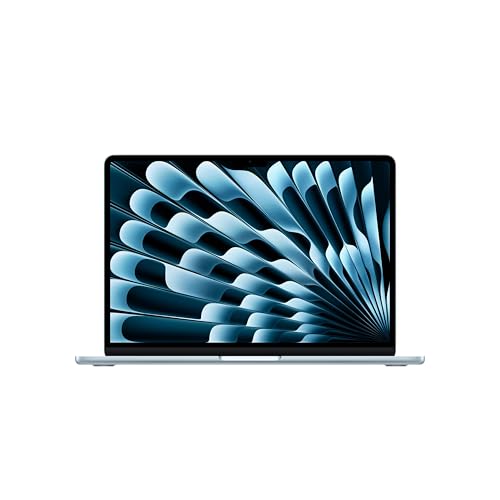
| 6 | Apple 2026 MacBook Air (M5, 15") | M5 (10‑core CPU, 10‑core GPU) | 15.3" Liquid Retina | 16GB | 512GB | Travelers and students who want a big screen without the weight |
| 7 | Apple 2026 MacBook Air (M5, 13") | M5 (10‑core CPU, 10‑core GPU) | 13.6" Liquid Retina | 16GB | 512GB | Ultra‑portable daily driver for class, coffee shops, and light work |
| 8 | Apple 2026 MacBook Neo (A18 Pro, 256GB) | A18 Pro | 13" Liquid Retina | 8GB | 256GB | Students and casual users who need a colorful, affordable Mac |
| 9 | Apple MacBook Pro 2019 Intel (Renewed) | Intel Core i7‑9750H | 16" Retina | 16GB | 512GB | Users who need Intel compatibility or want a cheap way into macOS |
| 10 | Apple 2026 MacBook Neo (A18 Pro, 512GB, Touch ID) | A18 Pro | 13" Liquid Retina | 8GB | 512GB | Students who want more storage and fingerprint unlock |
Chip and performance tier: Apple's M-series chips scale dramatically. The base M5 is fast enough for most professionals; the M5 Pro and M5 Max (represented here by the higher-core Pro configs) handle GPU‑intensive tasks and AI workloads. We considered how each chip matches common workflows.
Unified memory capacity: RAM determines how many apps you can run simultaneously and whether you can train large models or keep giant files open. 16GB is the new baseline for professionals; 24GB and 48GB suit heavy multitaskers.
Display size and quality: The Liquid Retina XDR on Pro models hits 1600 nits peak and 1000 nits sustained, critical for HDR video work. The Air and Neo have excellent but less bright screens. A 16‑inch canvas is nicer for editing, but 14 inches is more portable.
Ports and connectivity: Thunderbolt 4 vs. Thunderbolt 5, HDMI, SDXC, MagSafe, Wi‑Fi 7. The newer Pro models with Thunderbolt 5 offer faster data transfers and support for more external displays.
Build and weight: Aluminum unibody construction across the board, but weight varies from 2.7 pounds (MacBook Air 13) to 4.7 pounds (16‑inch Pro). The Neo and Air are genuinely laptop‑bag friendly; the 16‑inch Pro is a desktop replacement for most.
Storage and upgradability: None of these have user‑upgradeable RAM or SSD. Choose carefully at purchase time. Apple's SSDs are fast, but the base Neo's 256GB fills quickly for media projects.

Pros
Cons
Best for: The professional who needs a portable workhorse for coding, photo editing, and general productivity.
Check current price on Amazon →
The base M5 MacBook Pro is the sweet spot for most people. Its 10‑core CPU and 10‑core GPU match the performance of many desktop chips from a few years ago, and the 16‑core Neural Engine accelerates on‑device AI tasks – summarizing notes in Apple Intelligence or running local language models feels instant. The 14.2‑inch XDR display is the real star: 1600 nits peak for HDR content, 1000 nits sustained, and 1,000,000:1 contrast ratio. It makes photo editing a genuine pleasure.
Battery life is stellar. Apple claims all‑day, and in practice you get a full workday of mixed use without reaching for the charger. That matters when you're bouncing between meetings and coffee shops. The 12MP Center Stage camera keeps you framed during video calls, and the six‑speaker array with Spatial Audio sounds fuller than most laptop speakers.
The catch is the 16GB RAM ceiling. If you routinely run multiple Docker containers, a Windows VM, and a dozen browser tabs, you'll notice contention. For that crowd, the 24GB version (item 4) or the M5 Pro models are better. But for a pure code‑and‑Photoshop machine, this is the one most people should buy.

Pros
Cons
Best for: Video editors, graphic designers, and developers who need more GPU and RAM than the base Pro offers.
Check current price on Amazon →
Step up to the M5 Pro and you get substantially more GPU headroom. The 15‑core CPU / 16‑core GPU configuration is a noticeable leap over the base M5 for tasks like rendering in DaVinci Resolve or compiling large Xcode projects. The 24GB unified memory means you can keep After Effects, Photoshop, Slack, and a dozen Chrome tabs open without hitting swap.
The biggest practical upgrade for creative pros is Thunderbolt 5. With up to 120 Gb/s bandwidth, you can connect fast NVMe external drives and multiple high‑resolution displays through a single cable. This model also adds the Apple N1 wireless chip for Wi‑Fi 7 and Bluetooth 6, which makes a difference with Wi‑Fi 7 routers – faster file transfers and lower latency in crowded networks.
The 14‑inch form factor is a trade‑off. It's more portable than the 16‑inch, but if your workflow involves long timelines or wide spreadsheets, you'll want an external monitor or the 16‑inch version. Still, for a laptop you can take to a client meeting and then dock to a multi‑monitor setup, this is the ideal middle ground.

Pros
Cons
Best for: Creative pros who work primarily at a desk but need occasional portability, and want the biggest screen.
Check current price on Amazon →
The 16‑inch MacBook Pro with the M5 Pro is a desktop replacement that you can still toss in a bag. The 18‑core CPU and 20‑core GPU give it an edge over the 14‑inch M5 Pro in sustained multi‑core tasks. Video export times drop noticeably, and 3D render previews are snappier. The 16.2‑inch XDR display is the best laptop screen Apple makes – 1600 nits peak, wide color, and enough room for a full timeline in Final Cut without constant zooming.
Portability is the obvious downside. At nearly 4.7 pounds, it's heavy. Combined with the large footprint, it's not a machine you'd carry to a coffee shop every day. But if your primary workspace is a desk and you need a laptop for the occasional trip to a studio or client site, the size is worth the trade‑off.
The 24GB memory is fine for most video editing and design work, but if you run large language models locally or handle massive datasets, you'll want the 48GB version (item 5). The 1TB SSD is fast but fills quickly with ProRes footage; consider a 2TB or 4TB upgrade if you work on multiple projects.
Pros
Cons
Best for: Developers who run Docker, multiple VMs, or memory‑intensive software but don't need the GPU of an M5 Pro.
Check current price on Amazon →
This is the same 2025 chassis and M5 chip as our top pick, but with 24GB of unified memory instead of 16GB. If your workflow is memory‑hungry – think running a Windows ARM VM, a few Docker containers, a database server, and 50 browser tabs – the extra 8GB makes a real difference. You'll hit swap less often, and the system feels snappier under load.
For everyone else, the 16GB version is smarter because the performance uplift from more RAM is only noticeable if you actually use it. But for the niche of professionals who need the headroom but don't need the GPU cores of the M5 Pro, this is a clean upgrade path. You lose Thunderbolt 5 and Wi‑Fi 7 compared to the 2026 models, but the M5 chip itself is still extremely capable.
One thing to note: the 2025 model supports only two external displays, while the M5 Pro models support three or four. If you run a multi‑monitor setup, factor that in.
Pros
Cons
Best for: Machine learning engineers, data scientists, video editors working with 8K, and anyone who needs to train or run large models locally.
Check current price on Amazon →
This is the heaviest hitter in the lineup. The 48GB unified memory lets you load large language models that wouldn't fit in 24GB – think 13B‑parameter models for local inference, or multiple VMs for development. The 18‑core CPU and 20‑core GPU tear through rendering, compilation, and AI training tasks. With Thunderbolt 5, you can attach fast external GPU enclosures or massive RAID arrays.
The 16.2‑inch XDR display is a joy for code and data visualization, though you'll likely dock it to larger monitors for serious work. The chassis runs cool and quiet under heavy load – Apple's thermal design on the 16‑inch Pro is exceptional.
The price is steep, and the weight is real. This is a machine for people who need every bit of power and memory. If you're not training models or rendering 8K video, the 24GB 14‑inch M5 Pro is a better balance. But for those who need the headroom, nothing else in this list comes close.

Pros
Cons
Best for: Students, travelers, and general users who want a large screen without the bulk of a Pro.
Check current price on Amazon →
The 15‑inch MacBook Air with M5 is a remarkable machine. It packs nearly the same CPU performance as the base 14‑inch Pro (the M5 chip is identical) into a chassis that's almost a pound lighter and completely silent. The 15.3‑inch Liquid Retina display is bright and colorful, though it lacks the extreme brightness and ProMotion of the Pro models. For web browsing, office work, light photo editing, and streaming, it's more than enough.
Battery life is outstanding. Apple rates it at 18 hours, and in real‑world mixed use you can easily get through a full day of classes or work without charging. The 12MP Center Stage camera is a nice upgrade over previous Airs, keeping you centered during video calls.
The big compromises are ports and cooling. You get only two Thunderbolt 4 ports, no HDMI, no SD slot. If you need to connect external monitors or SD cards regularly, you'll need dongles. And while the M5 handles sustained loads well for a fanless laptop – thanks to its efficiency – extended 4K video exports will eventually throttle. The Pro models with fans will outperform the Air for heavy, prolonged work.
Pros
Cons
Best for: Students, commuters, and anyone who prioritizes portability above all else.
Check current price on Amazon →
The 13‑inch MacBook Air is the laptop you forget you're carrying. At 2.7 pounds, it disappears into a bag, and the wedge‑less design feels solid. The M5 chip makes it a legitimate work computer – not just a web browsing machine. You can edit 1080p video, run Xcode, and juggle dozens of browser tabs without frustration. The Sky Blue color is a nice departure from the usual gray and silver.
Battery life matches the 15‑inch Air, so you don't have to worry about charging during a full day of classes or remote work. The 12MP Center Stage camera is excellent for video calls, and the four‑speaker sound system with Spatial Audio sounds surprisingly good for such a thin chassis.
The smaller screen is the main compromise. If you often work with two documents side by side, you'll wish for more real estate. The 15‑inch Air or a 14‑inch Pro are better for multitasking. Also, the lack of an SD card slot and HDMI means you'll need adapters for camera work or external displays beyond a single monitor (though it supports up to two displays via Thunderbolt).

Pros
Cons
Best for: Students, casual users, and anyone who needs a basic Mac for web, email, documents, and streaming.
Check current price on Amazon →
The MacBook Neo is Apple's new entry‑level laptop, replacing the old MacBook Air M1 in spirit. It's built around the A18 Pro chip (the same chip used in the iPhone 16 Pro) rather than an M‑series processor, which keeps costs down while delivering enough performance for everyday tasks. For browsing, Office apps, Zoom calls, and light photo editing, it feels snappy. Apple Intelligence features – like writing tools and image generation – run smoothly thanks to the Neural Engine.
The design is a highlight. The Indigo color is eye‑catching, and the aluminum chassis feels premium for the price. The 13‑inch Liquid Retina display at 500 nits is bright and sharp, though it lacks the wide color gamut of the Air. The 1080p camera is fine for video calls but not as sharp as the Center Stage camera on higher‑end models.
The limitations are real. 8GB memory is the bare minimum in 2026; if you regularly have 20+ browser tabs open while running apps, you'll feel the pinch. The 256GB SSD is enough for cloud‑heavy users but will fill quickly if you download movies, games, or large files. For the target audience – a student who mostly uses cloud services and light apps – it's a fantastic value. For anyone doing heavier work, look at the 512GB Neo or the Air.

Pros
Cons
Best for: Users who absolutely need Intel macOS for legacy software, Boot Camp Windows, or who are on a tight budget.
Check current price on Amazon →
The 2019 16‑inch MacBook Pro is a relic at this point, but it still has a niche. If you rely on software that won't run on Apple Silicon – certain Windows‑only apps via Boot Camp, obscure scientific tools, or older Adobe plugins – this is one of the last Intel Macs that can do both. The 9th‑gen Core i7 and Radeon Pro 5300M are still capable for light video editing and graphics work.
The 16‑inch Retina display is excellent even by today's standards: 3072×1920 resolution, P3 wide color, and 500 nits brightness. The six‑speaker system was ahead of its time and still sounds good. You get a full HDMI port, two Thunderbolt 3 ports, SDXC slot, and MagSafe 2 (though you'll need the right adapter).
The downsides are significant. Performance is several generations behind the M5 chips – expect longer export times, slower app launches, and louder fans under load. Battery life is around 6–8 hours at best, half of what the M5 Airs offer. And as a renewed unit, it may show signs of use. It's a niche pick for a specific use case. For most people, the MacBook Neo or a base Air will be faster, longer‑lasting, and more enjoyable.
Pros
Cons
Best for: Students and casual users who want the base Neo's affordability but need more storage and prefer Touch ID.
Check current price on Amazon →
The 512GB MacBook Neo addresses the biggest complaint about the base model: storage. 256GB is tight for anyone who installs a few big apps, games, or stores media locally. Doubling to 512GB gives you breathing room for your photo library, a video project or two, and some apps. It also adds Touch ID, which makes login and payments much more convenient – the base Neo uses a Lock Key that just wakes the machine.
Everything else is the same: the A18 Pro chip, 8GB memory, 13‑inch display, and the same colorful chassis. The 8GB memory is still the limiting factor – if you're a tab‑hoarder or run heavy apps, you'll wish for more. But for the typical student use case – Office, Chrome, Spotify, Zoom – it works well.
Between the two Neos, we think this one is the better pick for most buyers. The extra storage is more valuable day‑to‑day than the small savings from the 256GB model. For the small step up, you get a machine that can hold up for a few years of school without running out of space.
The MacBook lineup in 2026 is more diverse than ever, spanning five different chips (A18 Pro, M5, M5 Pro, M5 Max, plus the legacy Intel) across four form factors. To choose the right one, focus on these factors.
The M5 chip is Apple's current base silicon. It has a 10‑core CPU and 10‑core GPU, and it's fast enough for 90% of professional tasks: compiling code, editing 4K video, running multiple apps. The M5 Pro adds more CPU cores (15 or 18) and GPU cores (16 or 20), plus a larger memory bus that allows up to 48GB of unified memory. The M5 Pro is for those who export video, render 3D scenes, or run AI models regularly.
The A18 Pro in the MacBook Neo is a different beast – it's an iPhone‑derived chip with excellent single‑core performance and a strong Neural Engine, but fewer GPU cores and a lower memory ceiling (8GB). It's capable for everyday tasks but not for sustained pro workloads.
Intel is a dead end. The 2019 model is only for compatibility needs.
Unified memory is soldered and shared between CPU and GPU. 8GB is the absolute minimum (Neo). 16GB is the baseline for professionals (base M5 Pro). 24GB suits heavy multitaskers and creative pros. 48GB is for AI/ML and data science. There is no upgrade path, so buy what you need for the next 3–5 years.
SSDs in MacBooks are fast but not user‑replaceable. 256GB is tight for anything beyond basic use. 512GB is a comfortable minimum for most. 1TB or more if you work with large media files. Consider external storage for archival.
The Liquid Retina XDR on Pro models is significantly brighter (1600 nits peak, 1000 nits sustained) and has ProMotion (120 Hz adaptive refresh). The Air and Neo have Liquid Retina displays at 500 nits without ProMotion – still excellent for most tasks, but less ideal for HDR grading or outdoor use. Screen size: 13‑inch is the most portable, 14‑inch is a good compromise, 15‑inch gives a big canvas without too much weight, 16‑inch is the ultimate desktop replacement.
Thunderbolt 4 (40 Gb/s) is standard on the base M5 and Air. Thunderbolt 5 (up to 120 Gb/s) comes on 2026 M5 Pro models, enabling faster external storage and more displays. MagSafe charging frees up a Thunderbolt port. HDMI and SDXC are only on the Pro models. Wi‑Fi 7 and Bluetooth 6 are on 2026 models; 2025 models have Wi‑Fi 6E.
If you carry your laptop daily, weight matters. The 13‑inch Air at 2.7 lb and the Neo at 2.7 lb are a joy. The 15‑inch Air at 3.3 lb is still very portable. The 14‑inch Pro at 3.4–3.5 lb is fine for most. The 16‑inch Pro at 4.7 lb is a desk laptop. The 2019 Intel at 4.3 lb is also heavy.
Renewed MacBooks offer lower cost but come with older hardware, shorter battery life, and no Apple Intelligence support. Only consider if you have a specific need for Intel or a very tight budget. The warranty may be limited.
The M5 MacBook Airs lead with up to 18 hours. The M5 MacBook Pros deliver all‑day performance (about 15–17 hours depending on use). The 2019 Intel model offers 6–8 hours at best.
MacBooks are not gaming laptops. The M5 Pro models can run many Mac games and some Windows games via emulation, but native gaming support is limited. The Neo and Air are not suited for gaming beyond Apple Arcade titles.
Yes, particularly for students who use cloud services, web apps, and Office. Its 8GB memory and 256GB storage are limiting for heavy users; the 512GB Touch ID model is a better long‑term choice.
Apple Intelligence features are available on both M5 and A18 Pro chips. Performance is similar for the core features (writing tools, image playground, etc.), but M5 can handle larger on‑device AI models due to more memory capacity.
You can run Windows for ARM via virtualization (Parallels, VMware) or via the new Windows 11 for ARM. Performance is good for many apps. Boot Camp is not available on Apple Silicon. Intel MacBook Pro (2019) supports Boot Camp for native x86 Windows.
Only if you must run Intel‑only software or need native Boot Camp. Otherwise, an M1 or later MacBook Air will be faster, have better battery life, and support newer macOS features.
The 10 best MacBook Pros in 2026 span a wide range of power, portability, and purpose. For most professionals, the Apple 2025 MacBook Pro (M5, 16GB) hits the sweet spot: powerful enough for serious work, with a gorgeous display and all‑day battery. Creative pros who render and edit should step up to the Apple 2026 MacBook Pro M5 Pro (24GB, 14‑inch) for Thunderbolt 5 and extra GPU cores. If you need the biggest screen and most memory, the Apple 2026 MacBook Pro M5 Pro (48GB, 16‑inch) is the ultimate machine. Students and budget buyers will find the MacBook Neo (512GB, Touch ID) a capable entry point. And the 2019 Intel MacBook Pro (Renewed) remains a niche option for those who must keep one foot in the Intel world. Pick the one that matches your work, your bag, and your next few years.
This article contains Amazon affiliate links. We may earn a small commission on qualifying purchases at no extra cost to you.


