Physical Address
304 North Cardinal St.
Dorchester Center, MA 02124
Physical Address
304 North Cardinal St.
Dorchester Center, MA 02124

Best Robot Vacuums (October 2026): compare 10 eufy, iRobot, Shark and roborock picks for strong suction, smart mapping, pet hair pickup and hands-off mopping.

A robot can have strong suction and still miss the point if it gets caught on cords, needs frequent bin emptying, or drags a damp mop across carpet. The Best Robot Vacuums make those everyday trade-offs easier to manage, but the right choice depends on your floor mix, how much hair collects, and how much dock maintenance you want to take on.
The short answer: the eufy E25 Roller Mop suits homes that want vacuuming and more involved mopping, the iRobot Roomba 105 Vac is a straightforward LiDAR-mapped vacuum, and the Shark AI Ultra AV2511AE pairs methodical cleaning with a self-emptying base. The rest range from compact, simpler combos to dock-heavy models with mop washing, drying, and stronger suction. Match the robot to your floors first; the most elaborate dock is not automatically the most useful one for every home.
TL;DR: top picks at a glance
- Best overall: the eufy E25 Roller Mop, with 20,000 Pa suction, an automatically refreshed roller mop, and a station that washes and dries it.
- Best for simple vacuuming: the iRobot Roomba 105 Vac, with LiDAR navigation, neat-row cleaning, and recharge-and-resume.
- Best for pet hair and less bin handling: the Shark AI Ultra AV2511AE, with a 60-day self-emptying base and a hair-resistant brushroll.
- Best for automated mop care: the roborock Qrevo S Pro, with spinning mops and a dock that washes them at 167°F.
| # | Product | Best for | Suction | Battery life | Noise level |
|---|---|---|---|---|---|
| 1 | eufy E25 Roller Mop | Pet homes, floor scrubbing | 20,000 Pa | 125 min | 57 dB |
| 2 | iRobot Roomba 105 Vac | Neat-row vacuuming | Not listed | 200 min | Not listed |
| 3 | Shark AI Ultra AV2511AE | Pet hair, self-emptying | Not listed | 120 min | Not listed |
| 4 | Shark Matrix Plus AV2610WA | Vacuuming and sonic mopping | Not listed | 110 min | Not listed |
| 5 | roborock Q7 M5+ | Pet hair, longer intervals | 10,000 Pa | Not listed | Not listed |
| 6 | roborock Q10 S5+ | Carpet-aware mopping | 10,000 Pa | 150 min | 65 dB |
| 7 | roborock Q7 L5 | Slim vacuum-and-mop combo | 8,000 Pa | 150 min | 60 dB |
| 8 | ROPVACNIC S1 | Low-pile floors, simple mopping | 5,200 Pa | 120 min | Not listed |
| 9 | roborock Qrevo S Pro | Hands-off mop maintenance | 18,500 Pa | 180 min | 60 dB |
| 10 | Dreame L40 Ultra Gen 2 | High suction, dock automation | 25,000 Pa | 231 min | Not listed |

Pros:
Cons:
Best for: Pet households with mixed hard floors and short carpet that want automated mop washing as well as vacuuming.
Check current price on Amazon →
The eufy E25 Roller Mop puts more emphasis on wet-floor care than the simpler mop-pad combos in this group. Its roller is refreshed with clean water during cleaning, while the station washes and dries it after a run. That makes it the most complete pick here for a home where routine footprints and kitchen splashes need more than a quick dry pass.
The 20,000 Pa suction and anti-tangle brush design also target daily debris and pet hair across hard floors, wood, tile, and short carpet. The side brush extends toward edges and corners, and the robot can lift its mop 10.8 mm when it encounters carpet. That separation helps, though a shallow lift is not a substitute for setting carpet boundaries carefully in a mixed-floor layout.
The station is the major practical trade-off. At 37.48 pounds and roughly 18 inches wide, the listed robot-and-station dimensions call for a permanent spot rather than a narrow gap beside a cabinet. The setup is described as taking five minutes, and it supports up to five floor plans, which suits multi-level homes when you can move the robot between floors.
Compared with the roborock Q10 S5+, the E25 centers its mopping system on a continuously refreshed roller, while the Q10 uses sonic vibration and lifts its mop on carpet. The E25 has the stronger all-in-one washing story, but its 57 dB operating level is still present in a quiet room. It also works on 2.4 GHz Wi-Fi, so confirm that network band is available before planning app control.

Pros:
Cons:
Best for: People who want a mapped, vacuum-only robot for carpet and hard floors without adding a mop system.
Check current price on Amazon →
A 200-minute battery life gives the iRobot Roomba 105 Vac room to work through a longer cleaning task, and its LiDAR mapping organizes travel into neat rows. The appeal is simplicity: it vacuums carpet and hard floors, returns to charge when needed, and resumes where it stopped instead of treating a low battery as the end of the job.
The 5.8-inch cleaning path is narrower than the robot’s 13.2-inch body. It can navigate a mapped home, but a narrow path means more passes across a wide open floor than a broad industrial-style sweep. Four power levels and targeted spot cleaning add useful control when crumbs gather near a table or an entryway needs extra attention.
The Roomba is a clearer choice than the Shark AI Ultra AV2511AE when the priority is a straightforward vacuuming routine rather than a self-emptying station. It weighs 6.2 pounds, which makes it relatively easy to move between floors, but there is no dock automation for dust disposal and no mopping hardware. The one-year manufacturer warranty is a defined support period, while the missing suction and noise figures make direct performance comparisons harder.
A keep-out zone, room scheduling, and filter-life checks are available through the app. Setup and operation use 2.4 GHz Wi-Fi; after setup, the robot remains on that band while the phone can return to 5 GHz. If your floors need damp cleaning, a dedicated robot mop is a separate category to consider rather than expecting this Roomba to do both jobs.

Pros:
Cons:
Best for: Pet households that want mapped vacuuming and less frequent dust-bin emptying without a mop attachment.
Check current price on Amazon →
The Shark AI Ultra AV2511AE gives its dock a central role: the bagless base holds debris for up to 60 days, reducing how often you need to empty the robot by hand. A 360° LiDAR system maps rooms, and Matrix Clean moves through a grid pattern rather than relying on a single pass over a patch of floor. That method makes sense for homes where pet hair and everyday crumbs keep returning.
Its brushroll is designed to resist hair wrap, and the robot handles both carpet and hard floors. The 120-minute battery life pairs with recharge-and-resume, so a larger cleaning route can be broken into charging and cleaning stages. The stated runtime is not a promise that every floor plan will be finished in one uninterrupted run.
Compared with the iRobot Roomba 105 Vac, the Shark adds automatic dust disposal and a pet-focused brushroll, while the Roomba has a longer listed battery life and a simpler vacuum-only setup. Neither offers mopping here. The Shark’s cartridge filter and 0.27-gallon base capacity are specific maintenance details, but its 60-day interval will vary with how much hair and dirt the robot collects.
The dock is also a larger commitment than a basic charging stand. Give it a stable place near the rooms it will clean, and account for its footprint before settling on a home for it. The product also comes in black, in addition to the white-and-black finish shown in the product details.

Pros:
Cons:
Best for: Homes with substantial hard-floor areas that want a mapped vacuum and sonic mop in one machine.
Check current price on Amazon →
The Shark Matrix Plus AV2610WA takes the self-emptying design of the AI Ultra and adds a sonic mop. Its mop scrubs up to 100 times per minute, while the LiDAR-guided Matrix pattern makes repeated passes over the cleaning area. For kitchens and entryways, that combination offers more active floor contact than a robot that simply drags a damp pad.
The station holds debris for up to 60 days and uses HEPA filtration. The 350 ml water capacity and reusable microfiber pads are the key mop-care details: the robot can handle routine surface dirt, but the pads still need attention between runs. Its 110-minute battery life is shorter than the Shark AI Ultra AV2511AE, so a large floor plan may need more charging time.
The distinction from the eufy E25 Roller Mop is in the mop mechanism and upkeep. Eufy refreshes a roller with clean water and washes it in its station; the Shark scrubs with a reusable pad. The Shark’s base includes a bagless design and HEPA filtration, while its 17-pound listed weight and 21.4-inch length call for more space than a compact charging dock. It also comes in black and gold, with a black-on-black variant available.
Pros:
Cons:
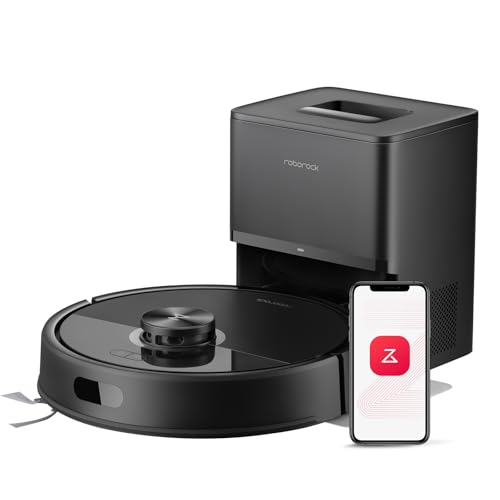
Best for: Pet homes that want strong suction, mapped cleaning, and a long gap between emptying the dust bag.
Check current price on Amazon →
The roborock Q7 M5+ combines 10,000 Pa suction with a sealed 2.7-liter dust bag designed to last 7 to 9 weeks between emptying. Its dual anti-tangle system addresses hair at both the main brush and side brush, an advantage for homes where long strands would otherwise need frequent manual removal. LiDAR mapping gives it a planned route through multiple rooms.
It also vacuums and mops in one run, with three water-flow settings. That is a useful daily-maintenance combination, not the same level of mop automation as the Shark Matrix Plus AV2610WA or the roller-mop system on the eufy E25 Roller Mop. Those models put more emphasis on floor scrubbing and pad or roller care; the Q7 M5+ makes the stronger case for long stretches between dust-bag changes.
Battery life and operating noise are not supplied, so it is harder to judge how it will fit a large open plan or a noise-sensitive schedule. The app supports 2.4 GHz Wi-Fi and allows scheduling, spot cleaning, and no-go zones. If pet hair is the main challenge and floor washing is secondary, this roborock’s brush design and sealed bag are its defining practical features.

Pros:
Cons:
Best for: Mixed-floor homes that want an active mop and automatic carpet detection in the same routine.
Check current price on Amazon →
At 65 dB, the roborock Q10 S5+ is not the quietest option for a room where people are working or sleeping. Its practical advantage is more specific: sonic mopping reaches up to 3,000 vibrations per minute, and the mop lifts 8 mm when it detects carpet. That helps with transitions, although thick rugs remain a reason to use mapped zones.
The 10,000 Pa suction, 150-minute battery, and 2.7-liter dock bag suit regular cleaning in a multi-room home. Structured-light obstacle avoidance and LiDAR mapping add a layer of route planning for spaces with furniture and everyday clutter. Its 70-day emptying interval is a maximum, so pet-heavy homes may need to empty the bag sooner.
Compared with the roborock Q7 M5+, the Q10 S5+ is the more mop-focused choice, with an auto-lifting mop and a stated 70-day dock interval. The Q7 M5+ is a simpler vacuum-and-mop setup with dual anti-tangle brushes and a 7-to-9-week bag interval. The Q10 also comes in white, and its app uses 2.4 GHz Wi-Fi.

Pros:
Cons:
Best for: Smaller homes that need a low-profile robot for routine vacuuming and light mopping across hard floors and carpet.
Check current price on Amazon →
The roborock Q7 L5 is 3.89 inches tall, making it the most compelling option here for furniture with limited clearance. Its 8,000 Pa suction and 150-minute battery suit recurring cleaning, while LiDAR mapping helps it move through rooms methodically. The slimmer body matters only if the gap under your furniture is high enough, so measure the clearance before making that the deciding feature.
The 270 ml water tank lets it vacuum and mop together, with three water levels and a removable mop pad. The tank and dustbin form one integrated combo part, however, so this is not as cleanly separated as a vacuum-only robot plus a dedicated mop reservoir. Compared with the ROPVACNIC S1, the Q7 L5 has stronger suction and LiDAR mapping, but neither model provides the self-emptying dock found on the roborock Q7 M5+.
It also comes in white variants. The 60 dB noise level is noticeable in a quiet room, and the one-year warranty covers quality-related issues. This is a practical everyday combo for homes that can handle occasional bin and pad maintenance themselves.

Pros:
Cons:
Best for: A small home with hard floors and low-pile rugs where remote control and basic mopping matter more than advanced mapping.
Check current price on Amazon →
At 2.99 inches tall, the ROPVACNIC S1 is a low-profile vacuum-and-mop combo for homes where furniture clearance matters. Its 5,200 Pa suction, three power levels, and 120-minute battery are a simpler package than the LiDAR-equipped roborock models. The product is recommended for hardwood and low-pile carpet, so it is a less suitable match for thick rugs.
It offers app, remote, touchpad, and voice control, plus four water adjustments for mopping. Unlike the roborock Q7 L5, it does not specify LiDAR mapping or a 270 ml tank capacity, which makes room-by-room planning and mop-water comparisons less clear. The trade-off is a compact, straightforward cleaning routine without a self-emptying dock or detailed mapping figures.
Pros:
Cons:
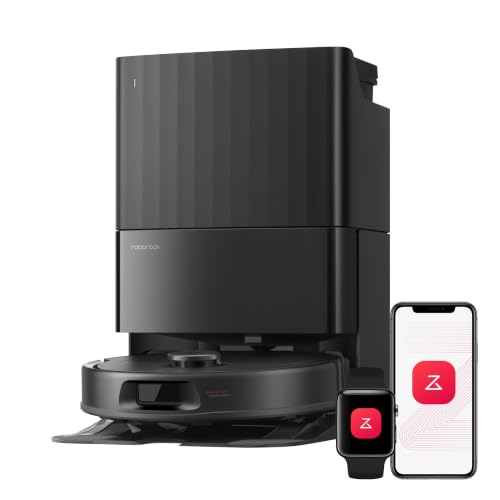
Best for: Busy homes that want automatic mop washing and drying alongside mapped vacuuming.
Check current price on Amazon →
The roborock Qrevo S Pro is the dock-first choice for people who want less direct contact with used mop pads. Its station washes the spinning mops at 167°F, then dries them with warm air, while a sealed 2.7-liter bag handles dust for a stated 7 to 9 weeks. The 18,500 Pa suction and 180-minute battery give it a strong vacuuming spec sheet as well.
Its anti-tangle brush system, carpet settings, and liftable mop address the main complication of running a vacuum and mop together. The dock is the cost of that automation in floor space and handling: at 25.6 pounds for the product package, it is less convenient to relocate than a simple charging base. The Dreame L40 Ultra Gen 2 has higher listed suction, but the Qrevo’s specific advantage is its high-temperature mop-washing routine. It also comes in white.

Pros:
Cons:
Best for: Larger homes seeking long cleaning runs, high suction, and an all-in-one maintenance dock.
Check current price on Amazon →
The Dreame L40 Ultra Gen 2 pairs 25,000 Pa suction with a 231-minute battery, the longest runtime in this group. Its extendable side brush and mop reach toward corners, while the dock handles dust disposal, mop washing, and hot-air drying. Five suction levels offer more adjustment than the simpler models.
Its 10.5 mm mop lift and carpet settings help manage mixed floors, and obstacle-avoidance features support navigation around everyday objects. The important limitation is that automatic cleaning-solution filling requires a separately purchased module. Compared with the roborock Qrevo S Pro, it has higher listed suction and a longer battery life, while both require space for a substantial dock.
A robot vacuum is only convenient if its navigation, floor tools, and dock suit the home it has to clean. The main trade-off is between a simpler machine that needs more hands-on upkeep and a larger system that automates more of the dust and mop care.
Suction figures are useful for comparing models, but they do not describe every part of cleaning performance. Brush design, floor type, and how much debris is present also matter. The 5,200 Pa ROPVACNIC S1 is recommended for hardwood and low-pile carpet, while the 8,000 Pa roborock Q7 L5 and 10,000 Pa Q7 M5+ offer higher listed suction for mixed-floor routines.
The eufy E25 reaches 20,000 Pa, and the Dreame L40 Ultra Gen 2 reaches 25,000 Pa. Those numbers make them the high-suction options here, but a bigger figure alone does not decide which robot fits a home. Look at the stated surfaces, brush design, and mop setup alongside suction. For extra cleaning outside a robot’s reach, a cordless handheld vacuum handles small spots and upholstery separately.
LiDAR is a useful feature when you want mapped routes, room targeting, or keep-out zones. The iRobot Roomba 105 Vac and Shark AI Ultra AV2511AE both use LiDAR, with the Roomba cleaning in neat rows and the Shark using a Matrix grid pattern. The roborock Q7 L5 supports multi-level mapping, while the Q10 S5+ combines LiDAR with structured-light obstacle avoidance.
For a cluttered home, check whether obstacle avoidance is specifically included rather than assuming all mapped robots handle every object equally. A map helps organize the route; object detection helps the robot navigate around things in its path. App control and Wi-Fi requirements matter too: several models here use 2.4 GHz Wi-Fi only.
A longer battery life can help with larger floor plans, but runtime is only one part of coverage. The Roomba 105 Vac lists 200 minutes, while the Q10 S5+ lists 150 minutes and the Shark AI Ultra 120 minutes. Recharge-and-resume is useful when a robot needs to recharge before finishing a cleaning task.
Noise figures are available for only some picks. The eufy E25 is listed at 57 dB, the roborock Q7 L5 at 60 dB, and the Q10 S5+ at 65 dB. Lower numbers generally mean a quieter operating sound, but any vacuum can be distracting in a quiet room. If you plan to run it during calls or overnight, compare models with actual noise figures rather than treating a missing number as silent.
A basic mop attachment is suited to light surface upkeep; active mopping and an automated wash station add more capability and more hardware. The roborock Q7 L5 combines vacuuming and mopping with a 270 ml tank, while the Shark Matrix Plus adds sonic scrubbing. The eufy E25 refreshes a roller mop, and the roborock Qrevo S Pro washes spinning mops at 167°F.
A liftable mop can help when the robot crosses carpet. The Q10 S5+ lifts its mop up to 8 mm, while the E25 lifts 10.8 mm. Check whether that clearance suits your rugs, and whether the dock fits the available floor space. For homes where mopping is the main job, a robot mop and vacuum combination with a suitable wash station may be a better match than a vacuum-focused robot with a basic pad.
There is no single Pa threshold that guarantees a good clean, because floor type and brush design matter too. In this lineup, 5,200 Pa is paired with a recommendation for hard floors and low-pile carpet, while models from 8,000 to 25,000 Pa cover a wider range of suction levels. Compare those figures with the surfaces the manufacturer recommends.
LiDAR is useful when you want a robot to map rooms and follow planned routes instead of wandering through the home. The iRobot Roomba 105 Vac uses it to clean in neat rows, while the Shark AI Ultra AV2511AE pairs LiDAR mapping with a Matrix grid pattern. It does not replace obstacle avoidance, so check for that feature separately if cords or clutter are common.
A robot with a liftable mop can transition between surfaces, but the lift height matters. The roborock Q10 S5+ lifts its mop up to 8 mm, and the eufy E25 lifts it 10.8 mm; neither figure guarantees clearance over every rug. A robot with carpet detection and mapping controls can help keep mopping away from selected carpeted areas.
Self-emptying intervals depend on how much dust, debris, and hair the robot collects. The Shark AI Ultra AV2511AE has a base designed for up to 60 days, the roborock Q10 S5+ for up to 70 days, and the Q7 M5+ for 7 to 9 weeks. Those are maximum intervals, so homes with pets or frequent cleaning may need to empty the dock sooner.
Most robot mops are better suited to routine surface upkeep than to replacing a manual scrub for stubborn stains. The Shark Matrix Plus AV2610WA uses sonic mopping, and the eufy E25 uses a roller refreshed with clean water, giving them more active mop systems than a simple damp pad. Match the system to everyday messes, and plan to handle difficult spots separately.
Check the Wi-Fi requirement, docking space, and floor clearance before choosing a location. Several models in this roundup support 2.4 GHz Wi-Fi only, while larger all-in-one stations need more room than a charging dock. Measure the gaps beneath furniture if you expect the robot to clean there; the ROPVACNIC S1 is 2.99 inches tall, and the roborock Q7 L5 is 3.89 inches tall.
The Best Robot Vacuums in this lineup solve different household problems, but the eufy E25 Roller Mop is the strongest all-around choice for people who want vacuuming, active mopping, mop washing, and dust disposal in one system. Its 20,000 Pa suction and roller refresh are compelling, though the 57 dB operating level and large station are real space and noise trade-offs.
Choose the iRobot Roomba 105 Vac for straightforward mapped vacuuming, a 200-minute battery, and recharge-and-resume. The Shark AI Ultra AV2511AE is the more relevant pick for pet hair and a 60-day self-emptying base, while the roborock Q10 S5+ suits mixed floors that benefit from sonic mopping, carpet detection, and an 8 mm mop lift.
For automated mop care, the roborock Qrevo S Pro washes its spinning mops at 167°F, and the Dreame L40 Ultra Gen 2 pairs 25,000 Pa suction with a 231-minute battery. Those larger dock systems ask for more room and setup planning. If you are still undecided, choose the eufy E25 for hands-off floor care, or the Roomba 105 if you only need a capable mapped vacuum.


