Physical Address
304 North Cardinal St.
Dorchester Center, MA 02124
Physical Address
304 North Cardinal St.
Dorchester Center, MA 02124

We found the 10 best ThinkPad Lenovo laptops in 2026, from the featherlight X1 Carbon to the budget-friendly T14 Gen 2. See which one suits your work.
You know the feeling. You have spreadsheets open, a dozen browser tabs, a video call about to start, and the laptop you’re using starts to stutter. The fan spins up, the cursor lags, and you lose the thread. A ThinkPad is supposed to be the antidote to that moment: a machine that stays out of your way and lets you work. But the ThinkPad lineup is huge. Between the X1 Carbon, T series, E series, L series, and refurbished units, it’s easy to get lost. We’ve gone through the current lineup to find the 10 best ThinkPad Lenovo models worth your attention. The picks range from the ultra‑light X1 Carbon with its 2.8K OLED screen to a renewed T14 that still runs Windows 11 Pro like a champ. Whatever your role, one of these will fix that stutter.
TL;DR: The Lenovo ThinkPad X1 Carbon Gen 13 Aura Edition is the laptop most executives and road warriors should buy: incredibly light, gorgeous OLED, and AI‑ready. The Lenovo ThinkPad T16 Gen 4 is the best 16‑inch all‑rounder for power users who need a number pad and lots of RAM. The Lenovo ThinkPad E14 Gen 7 is the smart pick for anyone who wants a modern 14‑inch ThinkPad without the premium badge. And the Lenovo ThinkPad T14 Gen 2 (Renewed) is the choice for a tight budget: a fully capable business machine that still runs the latest Windows.
| # | Product | Display | Processor | RAM / Storage | Best For |
|---|---|---|---|---|---|
| 1 | Lenovo ThinkPad X1 Carbon Gen 13 Aura Edition (1TB) | 14″ 2.8K OLED, 120Hz | Intel Core Ultra 7 258V | 32GB DDR5 / 1TB SSD | Ultraportable power users who want the lightest flagship |
| 2 | Lenovo ThinkPad X1 Carbon Gen 13 Aura Edition (2TB) | 14″ 2.8K OLED, 120Hz | Intel Core Ultra 7 258V | 32GB DDR5 / 2TB Gen5 SSD | Professionals who need maximum local storage in an ultraportable |
| 3 | Lenovo ThinkPad T16 Gen 4 | 16″ WUXGA IPS, 300 nits | Intel Ultra 7 255U | 32GB DDR5 / 1TB SSD | Anyone who needs a big screen, a number pad, and enterprise durability |
| 4 | Lenovo ThinkPad T14 Gen 6 | 14″ WUXGA IPS, 400 nits | Intel Ultra 5 225U | 32GB DDR5 / 1TB SSD | High‑performing professionals who want a compact, AI‑ready workhorse |
| 5 | Lenovo ThinkPad E16 Gen 2 | 16″ WUXGA IPS, 16:10 | AMD Ryzen 7 250 | 16GB DDR5 / 512GB SSD | Anyone wanting a large 16‑inch screen with strong AMD performance |
| 6 | Lenovo ThinkPad E14 Gen 7 | 14″ WUXGA IPS, antiglare | AMD Ryzen 7 250 | 16GB DDR5 / 512GB SSD | Mobile workers who need a light 14‑inch ThinkPad with modern ports |
| 7 | Lenovo ThinkPad E16 Gen 3 | 16″ WUXGA IPS, 300 nits | AMD Ryzen 5 230 | 16GB DDR5 / 512GB SSD | Budget‑minded users who want a new 16‑inch ThinkPad with Thunderbolt |
| 8 | Lenovo ThinkPad L16 | 16″ WUXGA IPS, 400 nits | Intel Ultra 5 225U | Configurable up to 64GB / 2TB | Small businesses and students who need an affordable, flexible 16‑incher |
| 9 | Lenovo ThinkPad L14 (Renewed) | 14″ FHD IPS, non‑touch | AMD Ryzen 5 PRO 7530U | 16GB DDR4 / 256GB SSD | Anyone who wants a solid business ThinkPad on a tight budget |
| 10 | Lenovo ThinkPad T14 Gen 2 (Renewed) | 14″ Touchscreen FHD | Intel i5‑1145G7 | 16GB DDR4 / 256GB SSD | Bargain hunters who need a touchscreen workhorse for basic tasks |
Pros
Cons
Best for: Executives, consultants, and frequent travelers who need the absolute lightest full‑power Windows laptop with a screen that makes spreadsheets and presentations look fantastic.
Check current price on Amazon →
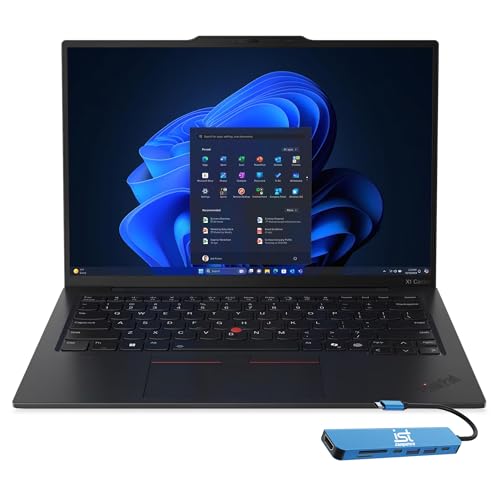
The X1 Carbon Gen 13 is the current king of ultraportable ThinkPads. At 2.17 pounds it’s lighter than a MacBook Air, and the aluminium‑magnesium chassis feels dense and premium in a way that belies its weight. The 14‑inch 2.8K OLED screen is the real showpiece: 500 nits of brightness, true blacks, and a 120Hz variable refresh rate that makes scrolling through documents feel fluid. It’s an eye‑opener if you’ve been working on a standard 1080p IPS panel.
Under the hood, the Core Ultra 7 258V processor includes a 47 TOPS NPU, which means Windows Copilot runs locally without hogging the CPU. You’ll notice the difference when you use real‑time captions, background blur, or AI‑assisted search. The 32GB of DDR5 RAM is plenty for heavy multitasking, but it’s soldered — you can’t add more later. Storage is a 1TB PCIe 4.0 SSD, and there’s a second slot for expansion if you choose the config that allows it. The bundled 7‑in‑1 hub from IST Computers adds HDMI, USB‑C, and an SD card reader, which helps make up for the limited ports (two Thunderbolt 4, two USB‑A, HDMI 2.1). The keyboard, as expected, is superb: deep travel, crisp feedback, and a proper TrackPoint nub. The 1080p IR webcam with ThinkShutter delivers clear video calls and supports Windows Hello. Battery life runs around 10 to 12 hours with mixed use. For anyone who lives on the road, this is the ThinkPad to beat.

Pros
Cons
Best for: Creative professionals and data‑heavy workers who need a massive, fast local drive in the lightest possible chassis.
Check current price on Amazon →
This variant of the X1 Carbon Gen 13 is identical to the first pick in almost every way, except it packs a 2TB PCIe Gen5 NVMe SSD instead of a 1TB Gen4 drive. That means significantly faster read and write speeds, which matters if you regularly work with large video files, databases, or virtual machines. The Gen5 drive can push sequential reads past 10,000 MB/s, making file transfers and application loading feel instantaneous.
The rest is the same standout machine: the same 14‑inch 2.8K OLED display with a 120Hz refresh rate, the same Core Ultra 7 258V processor and 32GB of soldered RAM, and the same incredibly thin profile (0.6 inches thick). This version ships from Amazon directly, which is a plus for warranty support. The only real trade‑off is that you don’t get the 7‑in‑1 hub included — so if you need more than two Thunderbolt 4 ports and a single HDMI, you’ll need to buy your own. That’s a small inconvenience given the storage upgrade. For anyone whose work involves shuffling huge files around, this is the ultimate X1 Carbon.

Pros
Cons
Best for: Finance professionals, analysts, and anyone who works in spreadsheets all day and needs a number pad without carrying a separate keyboard.
Check current price on Amazon →
The T16 Gen 4 is the ThinkPad that feels most like the classic business machine. It has a 16‑inch WUXGA (1920×1200) IPS panel with a 16:10 aspect ratio, giving you a taller canvas for reading contracts or coding. The brightness is 300 nits, which is fine indoors but will have you squinting near a window. The keyboard includes a full number pad, and the keys have that perfect ThinkPad travel: not too shallow, not too deep. The TrackPoint sits in the middle, and the trackpad is glass and smooth.
Inside, the Intel Ultra 7 255U processor is paired with 32GB DDR5 RAM and a 1TB NVMe SSD. The NPU is modest (11 TOPS) compared to the X1 Carbon’s, but it’s enough for basic Copilot features. Connectivity is generous: two USB‑A, two USB‑C (one is Thunderbolt 4), HDMI 2.0, RJ‑45, and a combo audio jack. If you need to plug into a wired network in a corporate office, you’re covered without an adapter. The 5MP webcam with ThinkShutter gives decent video for calls. Battery life is around 8 to 10 hours with the larger 52.5Wh battery. The chassis is MIL‑STD‑810H certified, so it can handle a drop or two. This is the machine to get if you want a no‑compromise 16‑inch workhorse and you don’t need to carry it all day.

Pros
Cons
Best for: Business professionals who want a compact, light (3.06 pounds) laptop with enterprise security and the ability to drive a multi‑monitor setup.
Check current price on Amazon →
The T14 Gen 6 occupies a sweet spot between portability and power. It weighs about 3 pounds, which is light enough to throw in a bag without thinking, yet it packs the modern features that make a ThinkPad effective. The 14‑inch WUXGA display hits 400 nits and has an anti‑glare coating that actually works — you can use it in a coffee shop without seeing your own reflection. The 5MP IR webcam is a step up from the 720p cameras still found on many business laptops, and Windows Hello login is quick.
Power comes from an Intel Core Ultra 5 225U, a 12‑core chip with a base speed of 2.1GHz and boost up to 4.8GHz. It’s not the absolute fastest chip in the lineup (the Ultra 7 in the T16 and X1 is faster), but for daily office work, light coding, and video calls, it’s more than enough. The integrated Intel Graphics are adequate for two external 4K displays via the dual Thunderbolt 4 ports. With 32GB DDR5 and a 1TB SSD, you won’t run out of memory or storage for typical business workloads. The backlit keyboard is comfortable, the fingerprint reader is reliable, and the combination of Thunderbolt 4 and HDMI means you can leave the dock at home. If you travel frequently but don’t need the absolute lightest machine, the T14 Gen 6 is a smart, capable choice.

Pros
Cons
Best for: Users who want a big, affordable 16‑inch laptop with strong CPU and integrated graphics for occasional creative work or light gaming.
Check current price on Amazon →
The E16 Gen 2 is the value large‑screen ThinkPad. It uses an AMD Ryzen 7 250 processor (based on Zen 4) with Radeon 780M integrated graphics, which is a step above the typical Intel UHD Graphics. You can actually run older games at decent settings, and video editing in apps like DaVinci Resolve will be smoother than you’d expect from a business laptop. The 16‑inch WUXGA display uses the 16:10 ratio, giving you that extra vertical space, though the 300‑nit brightness means you’ll want to avoid direct sunlight.
The build is plastic, but it still feels solid and passed MIL‑STD‑810H testing. The keyboard is backlit and has a numeric keypad, which is rare at this level. Connectivity includes USB‑C (with display and power delivery), USB‑A, HDMI, and an RJ‑45 port. The 1080p webcam has a privacy shutter. One thing to note: the battery life is merely average, around six hours with mixed use. But if you work near an outlet and want a big screen without spending significantly more, the E16 Gen 2 is a compelling option.

Pros
Cons
Best for: Commuters and mobile workers who want a modern 14‑inch ThinkPad with a great processor and the convenience of Thunderbolt 4.
Check current price on Amazon →
The E14 Gen 7 is the smaller sibling of the E16 Gen 2, and it fixes one of the E16’s shortcomings by adding Thunderbolt 4. That means you get 40Gbps data transfer and the ability to drive high‑resolution external displays. The rest of the package is similar: an AMD Ryzen 7 250 processor, 16GB DDR5 RAM, 512GB SSD, and a 14‑inch WUXGA IPS display. The 5MP RGB webcam is a nice upgrade over the standard 720p cameras, and the microphone array picks up your voice clearly.
In everyday use, the E14 Gen 7 feels faster than its price suggests. The Radeon 780M integrated graphics handle 4K video playback without breaking a sweat, and multitasking between dozens of Chrome tabs and Office apps is smooth. The keyboard is backlit and comfortable, though it lacks the deep travel of the T series. Battery life is slightly better than the E16, at around seven to eight hours. If you need a 14‑inch laptop that doesn’t skimp on modern ports and has enough power for creative work, the E14 Gen 7 is a smart pick.

Pros
Cons
Best for: Students and small business users who need a large, lightweight screen and want the convenience of Thunderbolt 4 without spending a lot.
Check current price on Amazon →
The E16 Gen 3 is the most affordable 16‑inch ThinkPad in Lenovo’s current lineup, and it undercuts the Gen 2 by using a Ryzen 5 230 instead of the Ryzen 7. That trade‑off is noticeable: the six‑core processor handles Office apps and web browsing just fine, but if you try to do heavy spreadsheet crunching or run multiple virtual desktops, you’ll feel the slowdown. The integrated Radeon graphics are fine for streaming video, but don’t expect to game or edit 4K video.
What you gain is a very portable 16‑incher. At 3.7 pounds, it’s nearly a pound lighter than the T16 Gen 4, and the 16:10 display gives you a solid workspace. The inclusion of Thunderbolt 4 is a surprise at this price point — it opens up fast external storage and high‑resolution monitors. The backlit keyboard is comfortable, and the 5MP webcam makes you look good on calls. Battery life is its weak point: expect around six hours of mixed use. If you mostly work at a desk with power nearby, this is a fine choice for a large‑screen daily driver.
Pros
Cons
Best for: Small businesses and IT departments that want a flexible, durable 16‑inch machine that can be specced to exact needs.
Check current price on Amazon →
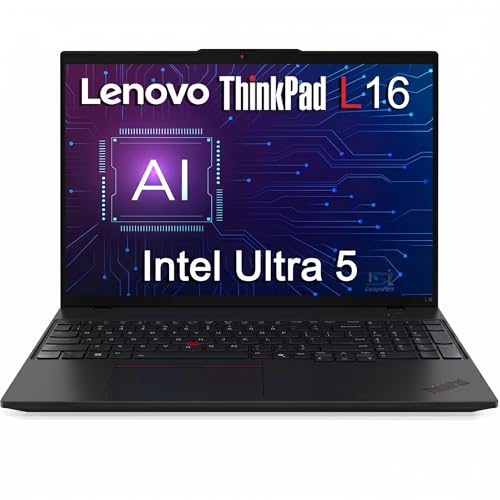
The L16 is Lenovo’s value business line, designed to be cost‑effective while still meeting enterprise standards. The main selling point is configurability: you can order it with anywhere from 8GB to 64GB of DDR5 RAM and storage from 256GB to 2TB. That flexibility means you can buy exactly what you need now and upgrade later. The 16‑inch WUXGA display is bright at 400 nits, which makes a real difference in bright offices or when working near a window.
Performance comes from an Intel Core Ultra 5 225U, a 12‑core processor that balances power and efficiency. It’s not as quick as the Ultra 7 found in the T16, but for spreadsheet work, web apps, and even light CAD, it holds its own. The dual Thunderbolt 4 ports are a standout feature at this tier, letting you drive two 4K monitors at 60Hz (or one 8K display). The keyboard includes a numeric keypad, and the fingerprint reader works well. Battery life is decent at around 9 to 10 hours. The webcam is a weak point — it’s only 720p — but for the price, the L16 offers a lot of value and room to grow.

Pros
Cons
Best for: Budget‑conscious users who want a genuine ThinkPad with modern connectivity and a fast AMD processor, and are comfortable buying certified refurbished.
Check current price on Amazon →
The L14 (Gen 4) renewed offers an AMD Ryzen 5 PRO 7530U processor, which is a six‑core, twelve‑thread chip that competes with Intel’s Core i5 from the same generation. It’s paired with 16GB of DDR4 RAM and a 256GB NVMe SSD. The 14‑inch 1080p IPS display is basic but adequate for productivity tasks. The real appeal is the combination of Windows 11 Pro and a full business port selection: HDMI, USB‑C, USB‑A, and Ethernet. The keyboard has the classic ThinkPad feel, and the TrackPoint is present.
Buying renewed means you’re getting a laptop that was returned and refurbished by Amazon. The condition should be good, but battery life may not match a new unit. The 256GB drive will fill up quickly if you store large files; consider upgrading to a larger SSD. But for the money, this is a reliable secondary machine or a primary laptop for someone whose workload fits in the cloud. It’s a genuine ThinkPad with an OS that belongs on a business laptop.

Pros
Cons
Best for: Someone who needs a touchscreen ThinkPad for note‑taking or occasional touch interactions but is working with a limited budget.
Check current price on Amazon →
The T14 Gen 2 is from 2021, but it still holds up as a capable office machine. The Intel i5‑1145G7 has four cores and eight threads, which is fine for web browsing, Office, and video calls, but you’ll notice the difference if you open too many Docker containers or try to compile code. The 14‑inch 1080p touchscreen is responsive and bright enough for indoor use, and the ThinkPad keyboard is as good as ever. Thunderbolt 4 gives you fast external storage and display options, and you get an HDMI port too.
The 256GB NVMe SSD is small, and the RAM is soldered (16GB is the max), so this is not a future‑proof machine. But as a starter ThinkPad or a secondary travel laptop, it’s a steal. You get Windows 11 Pro, a solid chassis, and a touchscreen that you’d pay much more for in a newer model. Just expect to replace the battery within the first year if it doesn’t hold a charge.
The ThinkPad lineup spans several distinct series, and each one targets a different kind of user. If you’re trying to decide which is right for you, here are the factors that actually matter.
For most office work, a recent Intel Core i5 or AMD Ryzen 5 is all you need. The real differentiator now is the NPU (Neural Processing Unit). The Intel Core Ultra 7 258V in the X1 Carbon has a 47 TOPS NPU, which enables local AI features like real‑time background blur and Windows Studio Effects without taxing the CPU. The Ultra 5 in the T14 Gen 6 and L16 has a smaller NPU (around 11 TOPS), still capable but slower. If you don’t care about Copilot or AI, an older Intel 11th‑gen or AMD Ryzen 5000 series will still run spreadsheets and email just fine. But if you want future‑proofing, aim for at least an Intel Core Ultra 5 or AMD Ryzen 7 250.
ThinkPads come in three quality tiers: the basic 250‑nit TN panel (avoid), the standard 300‑nit IPS, the better 400‑nit IPS, and the premium OLED (500‑nit, HDR, 120Hz). The 300‑nit displays are fine for indoor use; 400‑nit is a noticeable step up that works in brighter environments. OLED is gorgeous for media but uses more battery and is prone to burn‑in over years. Also look for 16:10 aspect ratio displays — they give you more vertical pixels, which helps when reading documents or code. Anti‑glare coating is standard and worth having.
The ThinkPad keyboard is legendary for a reason: long key travel (1.5mm or more), crisp tactile feedback, and a spill‑resistant design. All current models except some cheap E‑series variants have backlit keyboards. The TrackPoint (the red nub) is a personal preference — some users love it, others never touch it. Build quality varies: X1 Carbon and T series use magnesium or carbon fiber; L and E series use more plastic but still meet MIL‑STD‑810H for drops and temperature extremes. If you travel a lot, step up to a T or X1.
ThinkPads traditionally had every port you could want. The trend toward USB‑C has thinned them out, but most still include a USB‑A port or two, HDMI, and a headphone jack. The X1 Carbon has two Thunderbolt 4 ports but only one USB‑A — bring a dongle. The T16 and T14 Gen 6 have Ethernet (RJ‑45), which is still essential in many corporate offices. Thunderbolt 4 is valuable for fast data transfer and connecting multiple 4K monitors. Wi‑Fi 6E is becoming standard; Wi‑Fi 7 is in the latest X1 Carbon but not yet essential.
Many recent ThinkPads solder the RAM to the motherboard — the X1 Carbon, T14 Gen 6, and E14 Gen 7 are not upgradeable. The L16 and L14 let you change RAM modules. If you plan to keep the machine for three or more years, buy as much RAM as you can upfront (32GB is the sweet spot). Storage is usually a replaceable M.2 NVMe SSD, but check if the slot is accessible. Refurbished units often come with small drives; factor in the cost of an upgrade if you need more than 256GB.
It depends on what you need. ThinkPads run Windows natively, have better keyboard travel, and offer more ports and upgrade options. MacBooks have longer battery life, better speakers, and a more polished ecosystem. For IT‑managed corporate environments, ThinkPads are easier to deploy and support. For individual creatives, a MacBook may be a better fit.
The T series (T14, T16) strikes the best balance of performance, portability, and upgradeability. A T14 Gen 6 with 32GB of RAM and a fast SSD is excellent for coding. The X1 Carbon is lighter but has soldered RAM (max 32GB). The E series is fine for lighter work. The L series offers great value if you need to configure high RAM.
Renewed ThinkPads can save you up to 60% compared to new. They are tested and come with a warranty (usually 90 days to a year). The main risk is battery degradation — expect to replace it within a year. For budget buyers, a renewed T14 Gen 2 or L14 is a solid choice if you don’t need the latest processor.
The Aura Edition is a new sub‑brand for Lenovo’s premium models. It includes the Intel Core Ultra 200V series processor with a high‑performance NPU, a brighter OLED display, and an even lighter chassis. The X1 Carbon Gen 13 Aura Edition is the current flagship.
The integrated graphics in most ThinkPads handle basic games like Minecraft, League of Legends, and CS:GO at low settings. Models with AMD Radeon 780M (Ryzen 7 250) are significantly better for light gaming. None of these are designed for AAA titles; you’ll want a dedicated GPU laptop for that.
Yes, all current ThinkPad models (including the L series and E series) include the TrackPoint. Some users find it useful for precise cursor control without lifting hands from the home row. Others disable it. It’s a signature feature.
It varies widely. The X1 Carbon Gen 13 gets about 10 to 12 hours of mixed use. The T16 with a larger screen manages 8 to 10 hours. The E series with smaller batteries can dip to 6 hours. The L series with 400‑nit displays usually hits 9 hours. Expect less when using maximum brightness or running heavy apps.
The best ThinkPad Lenovo for most people in 2026 is the Lenovo ThinkPad X1 Carbon Gen 13 Aura Edition. It’s the lightest, has the best screen, and the latest processor with AI acceleration. If you need a bigger screen and a number pad, the Lenovo ThinkPad T16 Gen 4 is the better fit. For those on a tighter budget, the Lenovo ThinkPad E14 Gen 7 gives you a modern 14‑inch machine with Thunderbolt 4 and a fast AMD chip. And if you’re willing to buy renewed, the Lenovo ThinkPad L14 or T14 Gen 2 are capable machines that won’t break the bank. The ThinkPad lineup is deep, but there’s a clear winner for every use case — pick the one that matches your weight, screen size, and performance needs, and you’ll be set for years.
This article contains Amazon affiliate links. We may earn a small commission on qualifying purchases at no extra cost to you.


