Physical Address
304 North Cardinal St.
Dorchester Center, MA 02124
Physical Address
304 North Cardinal St.
Dorchester Center, MA 02124

We found the 10 best UPS batteries in 2026 to protect your home office gear. Covers backup units and replacements from APC, CyberPower, and more.
The power blinks out. Your monitor goes black. The Wi‑Fi router shuts down mid-call, and any unsaved work is gone. That split-second of frustration is exactly what a good UPS exists to prevent. But not every UPS is the same. Some are meant to keep a single modem running for a few minutes. Others can power a full desktop workstation through a brownout. Then there are the replacement batteries that keep older units alive for years beyond their original lifespan.
We've sorted through the options to find the best UPS batteries for 2026, covering both complete units and the drop‑in replacements that extend their life. Whether you need a compact brick for a router, a sine‑wave unit for a gaming PC, or a two‑pack of SLA batteries for a toy car or alarm system, there is something here that fits.
TL;DR: The APC BE600M1 is the one most people should buy: reliable, affordable, and widely compatible with home office gear. The CyberPower CP1500PFCLCD is the pure sinewave choice for sensitive electronics. The GOLDENMATE 1000VA offers a modern lithium battery with a ten‑year lifespan. And the ExpertPower EXP1290 two‑pack is the top pick for general 12V replacement needs.
| # | Product | Type | Capacity | Waveform | Outlets | Price | Best for |
|---|---|---|---|---|---|---|---|
| 1 | APC BE600M1 | UPS unit | 600VA / 330W | Simulated sine | 7 (5 backup) | $83.99 | Entry-level whole‑desk protection |
| 2 | CyberPower CP1500PFCLCD | UPS unit | 1500VA / 1000W | Pure sine | 12 (6 backup) | $239.95 | Gaming PCs, active PFC power supplies |
| 3 | APC BX1500M | UPS unit | 1500VA / 900W | Simulated sine | 10 (5 backup) | $189.99 | High‑capacity home office with AVR |
| 4 | CyberPower CP1500AVRLCD3 | UPS unit | 1500VA / 900W | Simulated sine | 12 (6 backup) | $199.95 | Users who want a detailed LCD display |
| 5 | CyberPower ST425 | UPS unit | 425VA / 260W | Simulated sine | 8 (4 backup) | $59.95 | Budget‑minded modem/router protection |
| 6 | APC BE425M | UPS unit | 425VA / 255W | Simulated sine | 6 (4 backup) | $62.50 | Ultra‑compact wall‑mountable backup |
| 7 | GOLDENMATE 1000VA | UPS unit | 1000VA / 800W | Pure sine | 8 (8 backup) | $209.99 | Wanting lithium longevity and low total cost |
| 8 | ExpertPower EXP1290 (2 Pack) | Replacement battery | 12V 9Ah each | N/A | N/A | $45.06 | Multi‑device SLA replacements (toys, alarms, small UPS) |
| 9 | Mighty Max ML7-12 | Replacement battery | 12V 7.2Ah | N/A | N/A | $19.99 | APC BE550G and similar small UPS |
| 10 | SafeAMP 9Ah 24V | Replacement battery | 24V (2x 9.5Ah) | N/A | N/A | $55.99 | Larger APC units like BR1500G, BX1500M |
Prices fluctuate and are accurate as of publication.
These are the factors that matter most when buying a UPS or a replacement battery, and the criteria we used to narrow the field.

The APC BE600M1 is the entry‑level UPS that actually earns its hype. It provides 600VA / 330W of simulated sine wave backup, which is enough to keep a standard desktop PC, monitor, and network gear running for five to ten minutes during a full outage. That window is plenty for saving work and shutting down cleanly. The unit has seven outlets: five with battery backup plus two surge-only. A built‑in USB‑A port charges a phone even when the power is out.
What sets this model apart from cheaper contenders is the user‑replaceable battery. When the internal lead‑acid cell ages out after three to five years, you can swap in an APCRBC154 battery rather than tossing the whole unit. That cuts long‑term cost significantly. The 3‑year warranty with connected equipment protection adds peace of mind.
The BE600M1 is not the most powerful or feature‑rich unit on this list, but it hits the sweet spot of price, reliability, and ease of ownership. It is the best choice for anyone who wants one UPS to cover a typical home‑office setup without overthinking it.
Pros
Cons
Best for: The home‑office worker who needs a reliable, straightforward UPS for a desktop computer, monitor, and router.
Check current price on Amazon →

The CyberPower CP1500PFCLCD is the go‑to when your equipment demands real utility‑grade sine wave power. It delivers 1500VA / 1000W of pure sine wave output, which is enough to run a high‑end gaming PC, a workstation with multiple monitors, or a rack of network gear without compatibility headaches. The 12 outlets give you six backup and six surge‑only, offering plenty of room for expansion.
A color LCD panel shows input voltage, load level, battery capacity, and diagnostic information. The screen tilts up to 22 degrees, which is a nice touch for rack or desk placement. The unit is line‑interactive with Automatic Voltage Regulation, so it corrects minor fluctuations without tapping the battery, preserving runtime for when you really need it.
The battery is user‑replaceable, and CyberPower includes free PowerPanel management software for automatic shutdown. The $500,000 connected equipment guarantee is the highest coverage on this list. If you have invested heavily in a PC build or studio gear, this is the protection it deserves.
Pros
Cons
Best for: Enthusiasts with gaming PCs, active PFC workstations, or audio equipment that requires a clean sine wave.
Check current price on Amazon →

The APC BX1500M packs 1500VA / 900W into a slim tower that stands just under 10 inches tall. It is the largest APC consumer UPS, and it comes with Automatic Voltage Regulation that compensates for low voltages down to 88V and surges up to 13 percent. That makes it a strong pick for areas with flaky grid power where brownouts are more common than full blackouts.
You get ten outlets: five battery‑backed and five surge‑only. There is also coaxial and Ethernet surge protection, which is helpful for cable modem setups. The built‑in LCD shows load, runtime, and battery status. The unit supports active PFC power supplies, though the output is simulated sine wave, not pure sine.
The BX1500M is Energy Star certified, running above 92 percent efficiency when on line power. The user‑replaceable battery (APCRBC124) is easy to swap. For someone who needs a 1500VA class UPS with AVR but does not need pure sine wave, this is a smarter buy than the CyberPower CP1500AVRLCD3 at a similar price.
Pros
Cons
Best for: Home‑office users who need high capacity and voltage regulation for standard desktop gear.
Check current price on Amazon →

The CyberPower CP1500AVRLCD3 is nearly identical in capacity to the APC BX1500M (1500VA / 900W, simulated sine wave) but adds a more informative color LCD panel. The screen shows input and output voltage, frequency, load percentage, and battery charge. A color‑coding system alerts you to potential issues before downtime occurs. It also has two USB charging ports (one Type‑A, one Type‑C), which is a convenience the APC lacks.
The unit packs twelve outlets: six backup and six surge‑only. AVR is included, so it handles under‑ and over‑voltage events without switching to battery. The form factor is a mini tower with a small footprint. The fan is quieter than earlier CyberPower models, but it still kicks in under heavy load or charging.
The 3‑year warranty includes the battery, and the $500,000 connected equipment guarantee matches the other CyberPower offerings. If you have a home server or network rack where monitoring power conditions matters, the informative LCD makes this a better fit than the APC.
Pros
Cons
Best for: Users who want real‑time power data and multiple USB charging options in a 1500VA UPS.
Check current price on Amazon →

The CyberPower ST425 is one of the smallest and cheapest UPS units that still offers genuine battery backup. At 425VA / 260W, it is not meant to power a full desktop. Instead, it is ideal for keeping a router, modem, and maybe a single monitor alive. The unit has eight outlets: four battery‑backed and four surge‑only. The transformer‑spaced outlets accommodate bulky plugs without blocking adjacent sockets.
The ST425 uses a standby topology, so it switches to battery only when the AC power fails. That keeps efficiency high during normal operation. The simulated sine wave output is fine for the networking equipment this unit targets. A single LED indicates power‑on and wiring faults. There is no display or USB port.
At 3.8 pounds, it is light enough to tuck behind a desk or mount on a wall with the keyhole slots. The 3‑year warranty and $75,000 equipment guarantee are better than what many similarly priced units offer. For the price of a decent surge protector, you get actual backup power.
Pros
Cons
Best for: Someone who just wants to keep the internet and a modem alive through short outages, on a tight budget.
Check current price on Amazon →

The APC BE425M is even smaller than the CyberPower ST425. At 4.1 inches tall and 5.5 inches wide, it fits in tight spaces and can be mounted on a wall or under a desk with the built‑in keyhole slots. It provides 425VA / 255W of simulated sine wave backup, with four battery‑backed outlets and two surge‑only.
This unit is specifically made for low‑power essentials: a Wi‑Fi router, a modem, a VoIP phone, and maybe a small switch. APC says it delivers up to 15 minutes of runtime at a 100W load, which is plenty to keep a video call from dropping during a brief outage. The compact design means you can put it where it is out of sight, unlike the larger tower units.
The BE425M lacks AVR and USB ports, keeping the price low. The 3‑year warranty and $75,000 equipment protection match the CyberPower ST425. If you need something even smaller, this is it.
Pros
Cons
Best for: Apartment dwellers or anyone who wants a dedicated UPS for networking gear that fits in a tight spot.
Check current price on Amazon →

The GOLDENMATE 1000VA / 800W UPS breaks from the lead‑acid crowd by using a LiFePO4 (lithium iron phosphate) battery pack. That chemistry gives it a rated lifespan of over ten years and more than 5,000 charge cycles. Over the same period, a lead‑acid UPS would need two or three battery replacements. The total cost of ownership is lower despite the higher upfront price.
The unit outputs pure sine wave, so it is safe for any electronics, including those with active PFC power supplies. It has eight outlets, all battery‑backed with surge protection. The LCD panel provides real‑time voltage and load data. There is a buzzer mute function for quiet operation in battery mode.
The built‑in Battery Management System (BMS) prevents overcharging, overheating, and deep discharge. The cooling fan is rated below 50 dB, so it is not distracting. The unit is white, which stands out from the black towers most others use. The 10‑year expected lifespan makes this the most cost‑effective option over time if you keep gear running long term.
Pros
Cons
Best for: Someone who plans to keep the same UPS for a decade and wants the lowest maintenance and replacement cost over that time.
Check current price on Amazon →
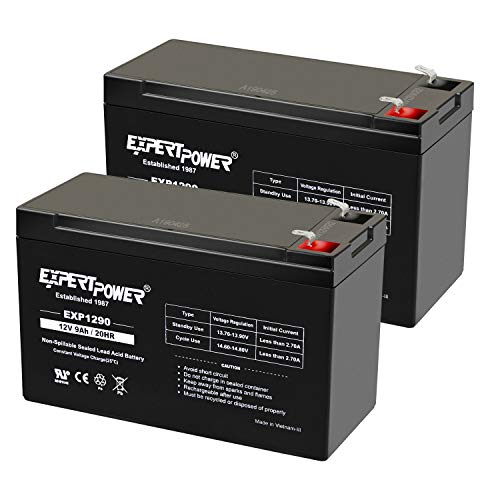
The ExpertPower EXP1290 is a two‑pack of 12V 9Ah sealed lead‑acid batteries with F2 terminals. These are the most common size used in small UPS units, alarm systems, emergency lights, ride‑on toys, and even some electric bikes. The two‑pack price is a solid value, giving you a spare for future replacement or enough capacity for a device that uses two batteries in series.
The batteries are AGM (absorbent glass mat), which means they are spill‑proof and can be mounted in any orientation. The case is ABS plastic with good resistance to vibration. Dimensions are standard: 5.94 x 2.56 x 3.70 inches. Before buying, check that your device can accept a battery of this height with the F2 terminal spacing. Many APC units (like the BE550G) use a 7.2Ah battery rather than 9Ah, so verify compatibility.
This two‑pack works well if you have multiple SLA devices or want to stock a spare for a UPS that uses a single 9Ah battery. At this price, it is cheaper per amp‑hour than most single‑battery listings.
Pros
Cons
Best for: Replacing worn‑out batteries in alarms, toys, gate openers, or UPS units that use a single 12V 9Ah SLA battery.
Check current price on Amazon →
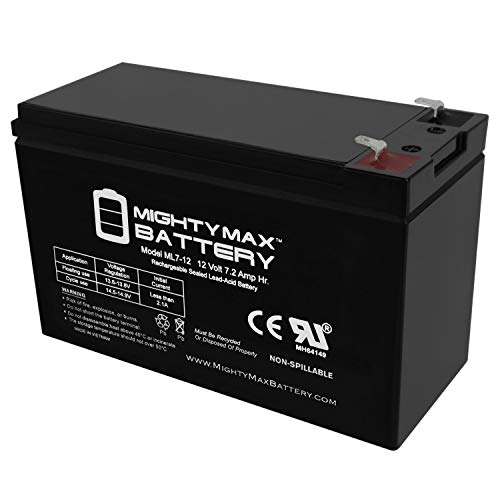
The Mighty Max ML7-12 is a 12V 7.2Ah sealed lead‑acid battery designed to replace the battery inside the APC Back‑UPS BE550G and similar small UPS units. It is also UL certified, which is important for safety when the battery lives inside a device that plugs into mains power.
The price is the lowest of any replacement on this list. At that cost, you get a basic SLA battery that will restore the original runtime of your UPS. The F1 terminals match most small APC units. Dimensions are 5.94 x 2.56 x 4.02 inches, so make sure your battery compartment can accommodate the 4‑inch height.
Mighty Max includes a one‑year warranty, which is standard for this category. The battery is maintenance‑free and can be mounted in any position. If your old UPS still works well but the battery no longer holds a charge, this is the cheapest fix.
Pros
Cons
Best for: Reviving an APC BE550G or similar small UPS that has lost its runtime.
Check current price on Amazon →

The SafeAMP replacement is a 24V battery cartridge (two 9.5Ah 12V batteries wired in series) designed to replace the APCRBC124 battery pack used in many popular APC UPS models. Compatible units include the BR1500G, BX1500M, BR1300G, and several others. This is the battery you need when your APC tower UPS no longer runs for more than a minute.
The SafeAMP pack is assembled to match the original form factor, so it slides into the same compartment without modification. The amp‑hour rating is slightly higher than the original 9Ah (9.5Ah per cell), which can give a small runtime bump. The connectors match the APC cable harness.
For a 1500‑class APC unit that has been in service for three or four years, this replacement costs about a third of what a whole new UPS would cost. It is the most economical way to extend the life of a good unit. The brand is not APC itself, but SafeAMP tests each pack for compatibility and performance before shipping.
Pros
Cons
Best for: Extending the life of a large APC UPS that needs a new battery but is otherwise working perfectly.
Check current price on Amazon →
Picking the right UPS or replacement battery comes down to matching three things: the load you need to protect, the features your equipment demands, and the budget you are working with. Here are the factors that separate a good fit from a bad one.
Volt‑amp (VA) and watt (W) ratings are the headline numbers. VA is the theoretical capacity; watts are the real power the UPS can deliver. A 600VA / 330W unit can handle about 330 watts of continuous load. To calculate your needs, add up the wattage of everything you want to connect. A typical desktop PC uses 200 to 400 watts under load. A gaming PC with a high‑end GPU can pull 600 watts. Add a monitor (30 to 60 watts), a router (5 to 15 watts), and you get the total. Leave at least 20 percent headroom. For runtime, the rule of thumb is that a fully loaded UPS gives three to five minutes, enough for a safe shutdown. Half‑loaded, it can run fifteen to thirty minutes.
Most consumer UPS units output a simulated (stepped‑approximation) sine wave. This works fine for standard computer power supplies, monitors, and networking gear. However, an increasing number of modern electronics use active PFC power supplies (common in gaming PCs, some monitors, and server gear). Active PFC supplies can generate excessive noise or even shut down when fed a simulated sine wave. If you have such equipment, you need a pure sine wave UPS like the CyberPower CP1500PFCLCD or the GOLDENMATE 1000VA. Pure sine wave also produces cleaner power for audio equipment and medical devices.
Sealed lead‑acid (SLA) batteries are the standard. They are inexpensive, widely available, and have predictable lifespans of three to five years. They also degrade if discharged deeply or kept in high temperatures. Lithium iron phosphate (LiFePO4) batteries, as in the GOLDENMATE, cost more upfront but last two to three times longer and can handle thousands of partial discharge cycles without significant capacity loss. For a home office that stays in place for years, LiFePO4 can be the cheaper option overall. For replacement batteries, you must match the original chemistry: a UPS designed for SLA will not charge a lithium pack correctly, and vice versa.
AVR is a feature that smooths out voltage fluctuations (brownouts and surges) without switching to battery power. It extends battery life and keeps equipment running when the voltage dips or spikes but does not go out entirely. If you live in an area with frequent voltage dips or unstable power, a UPS with AVR is worth the extra cost. The APC BX1500M and both CyberPower 1500VA models include it. The entry‑level units (APC BE600M1, BE425M, CyberPower ST425) do not.
Not all outlets on a UPS provide battery backup. Always check the split between backup and surge‑only outlets. A 1500VA unit might have six backup and six surge‑only. If you need to protect five devices, six backup outlets are enough. Also consider the physical spacing: some power adapters are large and block adjacent outlets. Units with transformer‑spaced outlets, like the CyberPower ST425, avoid this problem.
If you are buying a replacement battery for an existing UPS, the voltage must match exactly (most consumer units use 12V single or 24V pairs). The amp‑hour rating can be equal or slightly higher, but the physical dimensions and terminal type must match. Common terminal types are F1 (0.187‑inch spade) and F2 (0.250‑inch spade). The ExpertPower uses F2, the Mighty Max uses F1. Check your UPS manual or the old battery before ordering.
VA (volt‑amps) is the apparent power the UPS can supply. Watts is the actual power it can deliver to connected devices. The difference is due to the power factor of the load. Most consumer UPS units list both numbers. A typical desktop power supply has a power factor around 0.6 to 0.7, so a 600VA UPS might only deliver 330W. Always match your load to the watt rating, not the VA rating.
A sealed lead‑acid battery inside a UPS typically lasts three to five years. The lifespan depends on temperature (cooler is better), the number of discharge cycles, and how deeply it is discharged. Many UPS units sound an alarm when the battery needs replacement, or the runtime will drop noticeably. Lithium UPS units like the GOLDENMATE claim a ten‑year battery life.
Usually yes, if the physical dimensions and terminal type match. Increasing the Ah rating from 7.2 to 9 can add 20 to 25 percent runtime. However, the UPS charging circuit is designed for a certain capacity range. If you go too high, the battery may take longer to charge and could overheat the charger. Stick to the same voltage and an Ah rating no more than double the original.
If your gaming PC has an active PFC power supply (most modern units do), you should use a pure sine wave UPS. Simulated sine wave can cause the power supply to make buzzing noises, drop offline, or shut down unexpectedly. Check your power supply specifications. If it says active PFC, buy a pure sine wave unit like the CyberPower CP1500PFCLCD.
AVR stands for Automatic Voltage Regulation. It adjusts undervoltages (brownouts) and overvoltages without switching to battery power. This keeps your equipment running during voltage dips and extends the UPS battery life. If you live in a region with frequent power fluctuations, AVR is a valuable feature. If your power is generally stable, you can skip it and save money.
Absolutely. In fact, many people set up a small UPS just for networking gear to keep the internet alive during brief outages. The APC BE425M and CyberPower ST425 are ideal for this. They are compact, inexpensive, and provide enough runtime to ride out short blackouts without losing a video call or streaming session.
Sealed lead‑acid batteries are recyclable and should not go in household trash. Most battery retailers, auto parts stores, and some electronics recyclers accept them. Many UPS manufacturers also offer recycling programs. Check with your local waste management authority for drop‑off locations.
The best UPS battery for most people is the APC BE600M1. It delivers reliable backup for a standard desktop setup at a fair price, and the user‑replaceable battery means you will not throw the whole unit away when it ages. If you need pure sine wave for a gaming PC or sensitive electronics, the CyberPower CP1500PFCLCD is the clear choice. For those who want the longest lifespan with the least maintenance, the GOLDENMATE 1000VA with its lithium battery is a forward‑looking investment.
For replacement batteries, the ExpertPower EXP1290 two‑pack is the best value for common 12V 9Ah devices, while the SafeAMP 24V pack keeps larger APC UPS units running at a fraction of the cost of a new unit. Whatever your setup, there is a good UPS battery here that fits both your equipment and your budget.
This article contains Amazon affiliate links. We may earn a small commission on qualifying purchases at no extra cost to you.


