Physical Address
304 North Cardinal St.
Dorchester Center, MA 02124
Physical Address
304 North Cardinal St.
Dorchester Center, MA 02124

Compare the 10 Best RAM for Gaming PCs (November 2026), from Corsair and Lexar, with clear differences in capacity, speed, memory type and form factor.

Buying memory for a gaming PC goes wrong in a few predictable ways. DDR4 sticks will not fit a DDR5 board, laptop SODIMM modules will not seat in a desktop slot, and a kit advertised at 6000MHz may run at a much lower default speed until an XMP or EXPO profile is switched on in the BIOS. Capacity matters too: 16GB still launches most games, but 32GB leaves room for background apps, streaming and modern open-world titles. The Best RAM for Gaming PCs depends on your platform (DDR4 or DDR5), your form factor (desktop DIMM, laptop SODIMM or mini PC) and whether you want to upgrade a machine you own or buy one with the memory already fitted.
The short answer: the Skytech Crystal Ryzen 7 7700 suits buyers who want 32GB of DDR5-5600 already installed in a complete RTX 5060 Ti desktop, the ASUS ROG Strix G16 suits players who need 16GB of DDR5-5600 in a portable gaming laptop, and the GMKtec M6 Ultra 1TB suits anyone who wants a compact 32GB DDR5 system that can grow to 128GB. The rest of the list covers standalone DDR4 and DDR5 kits for desktop builds, a laptop-format Crucial kit, and more complete systems with different memory configurations.
TL;DR: top picks at a glance
- Best overall: the Skytech Crystal Ryzen 7 7700, 32GB of DDR5-5600 with heat spreaders, paired with an RTX 5060 Ti 8GB and a 1TB NVMe SSD.
- Best for portable gaming: ASUS ROG Strix G16, 16GB of DDR5-5600 behind a 165Hz 16:10 display and an RTX 5060 laptop GPU.
- Best for compact builds: GMKtec M6 Ultra 1TB, 32GB of dual-channel DDR5 SO-DIMM that supports expansion to 128GB.
- Best for DDR4 upgrades: Corsair Vengeance LPX 32GB DDR4-3200, a 2x16GB kit only 34mm tall for tight cases.
| # | Product | Best for | Memory | Speed | Format |
|---|---|---|---|---|---|
| 1 | Skytech Crystal Ryzen 7 7700 | Ready-made DDR5 desktop | 32GB DDR5 | 5600 | Prebuilt tower |
| 2 | ASUS ROG Strix G16 | Portable gaming | 16GB DDR5 | 5600MHz | Laptop |
| 3 | GMKtec M6 Ultra 1TB | Compact upgradable setup | 32GB DDR5 (2x16GB) | Not listed | Mini PC |
| 4 | Corsair Vengeance LPX 32GB DDR4-3200 | DDR4 desktop upgrades | 32GB DDR4 (2x16GB) | Up to 3200MHz | Desktop DIMM kit |
| 5 | Lexar Thor Z RGB 32GB DDR5-6000 | Fast DDR5 desktop builds | 32GB DDR5 (2x16GB) | 6000MHz CL38 | Desktop DIMM kit |
| 6 | Crucial 32GB DDR5-5600 SODIMM | Laptop memory upgrades | 32GB DDR5 (2x16GB) | 5600MHz | SODIMM kit |
| 7 | CyberPowerPC Gamer Master Ryzen 7 8700F | Mainstream DDR5 desktop | 16GB DDR5 | Not listed | Prebuilt tower |
| 8 | G.Skill Trident Z RGB 16GB DDR4-3000 | RGB DDR4 refresh | 16GB DDR4 (2x8GB) | Up to 3000MT/s | Desktop DIMM kit |
| 9 | Evounic RTX 2070 Gaming PC | Liquid-cooled DDR4 rig | 32GB DDR4 | Not listed | Prebuilt tower |
| 10 | GMKtec M6 Ultra 512GB | Smaller-storage mini PC | 32GB DDR5 (2x16GB) | Not listed | Mini PC |

Pros:
Cons:
Best for: Buyers who want 32GB of DDR5 already installed and a complete 1080p gaming tower without sourcing memory separately.
Check current price on Amazon →
The Skytech earns the top spot because its memory is the right size and generation for current games. Thirty-two gigabytes of DDR5-5600 is double what the CyberPowerPC Gamer Master ships with, and it matches the capacity of the Evounic tower, which uses older DDR4. The RAM carries a heat spreader, and the system arrives with Windows 11 Home, a keyboard and a mouse, so there is no BIOS profile hunting or compatibility checking.
The pairing of a Ryzen 7 7700 and an RTX 5060 Ti 8GB is balanced rather than extreme. The maker targets Ultra settings at 1080p with 60+ FPS in titles such as Cyberpunk 2077 and Elden Ring. At 1440p or higher the 8GB graphics buffer, not the system memory, becomes the first limit. The case measures roughly 16.6 by 11.3 by 14.4 inches, so check desk or shelf space first.
This is the wrong choice if you already own a desktop and only need more memory. In that case the Lexar Thor Z RGB (DDR5) or the Corsair Vengeance LPX (DDR4) fits better, depending on your motherboard. It is also the wrong choice for anyone who needs to travel with their rig, where the ASUS ROG Strix G16 is the better match.

Pros:
Cons:
Best for: Players who want one machine for desk gaming and travel, and who care about display speed more than extra memory.
Check current price on Amazon →
What sets the ROG Strix G16 apart is that the memory is part of a tuned mobile package. The i7-14650HX and RTX 5060 laptop GPU are cooled by a design that aims to hold clocks under load, and the 16GB of DDR5-5600 is enough for most current games. Compared with the Crucial 32GB SODIMM kit, which is a separate upgrade product, the ASUS gives you a finished machine with a fast display.
Do not choose it if you want the most memory for the least fuss. The Skytech tower has twice the capacity and a larger graphics card in the same tier. The ASUS is also the wrong fit if your goal is simply to upgrade an existing laptop, because the Crucial SODIMM kit is the listed product for that task. The memory capacity of this laptop is not described as upgradeable in the product information, so confirm slot access before planning a later increase.

Pros:
Cons:
Best for: Buyers who want a small, quiet desktop for light gaming, work and multi-monitor use, with a clear route to more memory.
Check current price on Amazon →
The M6 Ultra stands out because memory is a genuine strength of the design. Dual-channel 32GB is the right setup for a machine without a dedicated graphics card, since the Radeon 760M draws bandwidth from system RAM. The 128GB ceiling and the second SSD slot also make it the most upgrade-friendly of the three compact or portable options on this list.
It is the wrong choice for anyone who wants high frame rates in new releases. The Skytech Crystal and CyberPowerPC towers both carry an RTX 5060 Ti 8GB and will deliver a much stronger gaming experience. Buy the M6 Ultra when size, noise, connectivity and multi-display work matter as much as gaming.

Pros:
Cons:
Best for: Owners of DDR4 desktops who want to move from 16GB to 32GB with a kit that fits cramped cases.
Check current price on Amazon →
The Vengeance LPX is a practical choice rather than a flashy one. Its CL16 timings at 3200MHz are well-suited to mainstream DDR4 platforms, and the low profile avoids the clearance problems that tall RGB kits such as the G.Skill Trident Z RGB can cause around a CPU cooler.
Skip it if your motherboard uses DDR5, or if you are building new and want a platform with a longer upgrade path. In that case the Lexar Thor Z RGB is the listed kit that fits. The kit is also unsuited to laptops, where the Crucial SODIMM is the correct form factor.

Pros:
Cons:
Best for: Builders assembling or upgrading a DDR5 desktop who want a 32GB kit at a popular 6000MHz speed.
Check current price on Amazon →
For anyone who already owns a compatible motherboard, this is the most relevant kit here. It offers the fastest rated speed in the list, and its support for both XMP 3.0 and EXPO removes the guesswork about which profile to enable. If you are reading up on DDR5 RAM for gaming, a 2x16GB 6000MHz kit like this one is the configuration most guides point to.
It sits below the prebuilt systems in this ranking only because those include a full set of parts. The Lexar is the wrong purchase if your board is DDR4, where the Corsair Vengeance LPX is the better match, or if you need laptop memory, where the Crucial kit applies. Remember that the kit reaches 6000MHz only after the profile is enabled in the BIOS.

Pros:
Cons:
Best for: Owners of DDR5 laptops or mini PCs who want to raise memory to 32GB.
Check current price on Amazon →
This kit is a laptop and mini PC product, so it only counts as gaming PC memory for small systems. It would suit the GMKtec M6 Ultra, which uses DDR5 SO-DIMM, and could be a route to larger capacity there. Confirm that the target machine accepts DDR5-5600 and that its slots are accessible before buying.
Do not buy it for a tower build. The Lexar Thor Z RGB is the listed kit for a DDR5 desktop. It is also redundant for the ASUS ROG Strix G16 owner who simply wants a finished machine, and it cannot help a DDR4 system, where the Corsair kit is the better choice.

Pros:
Cons:
Best for: Gamers who want a current-platform tower with an RTX 5060 Ti and do not mind adding memory later.
Check current price on Amazon →
The Gamer Master gives you the same graphics tier as the Skytech Crystal, with a more affordable position in the value tiers for a budget gaming PC shopper. The Ryzen 7 8700F has 8 cores, and 16GB of DDR5 is enough for most games today, though background apps will use up headroom quickly.
The trade-off is memory. If you plan to run streaming software or keep many browser tabs open, the Skytech's 32GB is a safer fit. Its memory slot count is not specified, so check before buying a second kit. Pairing it later with the Lexar Thor Z RGB would require removing the original modules unless the slots allow mixing, and mixing kits can cause instability.
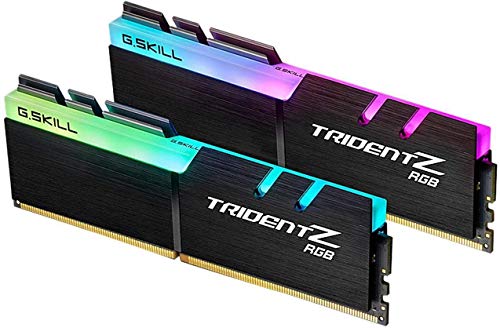
Pros:
Cons:
Best for: Owners of DDR4 systems who want a lit-up 16GB kit with tight timings.
Check current price on Amazon →
The Trident Z RGB is the style-first DDR4 option. Its 3000MT/s speed is below the Corsair Vengeance LPX's 3200MHz, and the capacity is half, so the Corsair is the stronger pick on pure performance and headroom. The G.Skill makes sense when visual impact and CL16 timings matter more than gigabytes.
It is the wrong choice for anyone running modern open-world games alongside other apps, where 32GB is more comfortable. It is also unsuitable for a DDR5 board, where the Lexar Thor Z RGB is the listed alternative with RGB lighting of its own.

Pros:
Cons:
Best for: Buyers who want a lot of memory and storage in a 1080p-focused tower and are happy with older parts.
Check current price on Amazon →
The Evounic is a different kind of value proposition. It puts 32GB of RAM and a 12-core processor in a tower with liquid cooling, but the graphics card and memory generation are older. If you are weighing it against modern gaming desktops, the RTX 5060 Ti systems from Skytech and CyberPowerPC offer a newer graphics architecture and DDR5.
It is the wrong choice for buyers who want the longest upgrade path, since DDR4 platforms are at the end of their lifespan. For a desktop that will keep growing, the Skytech Crystal is the better fit. The Evounic is better for people who prioritize raw capacity and storage over current-generation features.

Pros:
Cons:
Best for: Buyers who want the M6 Ultra's memory and connectivity with storage they can expand later.
Check current price on Amazon →
This model matches the GMKtec M6 Ultra 1TB in every detail except the SSD size, so the choice comes down to storage. It makes sense if you already have a drive to install in the second slot, or if you mainly stream and play lighter games.
For most buyers the 1TB version is the safer pick, since a 512GB drive leaves little room after Windows and a few large titles. If you need a real gaming experience at higher settings, a discrete-graphics tower such as the CyberPowerPC Gamer Master is the better choice.
The core trade-off in memory is between capacity and platform. More gigabytes help only if the motherboard accepts the module type, and faster speeds help only if the profile is enabled and the CPU's memory controller can keep up. Most buyers are best served by choosing the platform generation first, then the capacity, then the speed.
Before choosing, check these project details:
DDR5 is the current standard and the memory type in the Lexar Thor Z RGB, the Skytech Crystal, the CyberPowerPC Gamer Master and the ASUS ROG Strix G16. It offers higher rated speeds, with the Lexar kit at 6000MHz and the Skytech at 5600. DDR5 modules also include an onboard power management chip, which the Lexar kit lists alongside on-die ECC.
DDR4 remains relevant for existing systems. The Corsair Vengeance LPX at up to 3200MHz and the G.Skill Trident Z RGB at up to 3000MT/s are well-suited to older boards. If you are planning a gaming PC build from scratch, DDR5 is the better long-term choice, since DDR4 platforms have little future upgrade path.
Sixteen gigabytes is enough for many games, and it is what the CyberPowerPC Gamer Master and ASUS ROG Strix G16 ship with. Thirty-two gigabytes gives more room for streaming, content creation and heavy open-world titles, and it is the capacity of the Skytech Crystal, the Evounic tower and both GMKtec mini PCs.
Buy memory in matched kits. The Corsair, Lexar and Crucial products are all 2x16GB, which runs in dual channel and gives better bandwidth than a single module. G.Skill notes specifically that different kits should not be mixed, so adding to an existing pair is risky.
Desktop DIMMs and laptop SODIMMs are physically different. The Crucial 32GB DDR5-5600 kit is a 262-pin SODIMM, which fits laptops and mini PCs such as the GMKtec M6 Ultra, not tower motherboards. The Corsair, Lexar and G.Skill kits are 288-pin desktop modules.
Height matters too. The Corsair Vengeance LPX is only 34mm tall and fits small cases and under large coolers. The G.Skill Trident Z RGB reaches about 1.7 inches, so check your cooler before buying.
Rated speed is only reached when an XMP or EXPO profile is enabled. The Lexar Thor Z RGB supports both XMP 3.0 and EXPO, and the Crucial kit also lists both. The Corsair and G.Skill kits boot at JEDEC defaults until a profile is selected.
Latency should be read together with speed. The Corsair's CL16 at 3200MHz and the G.Skill's CL16 at 3000MT/s are tight for DDR4, while the Lexar's CL38 at 6000MHz is typical of DDR5. In real games, the difference between neighboring speed grades is small compared with the jump from 16GB to 32GB or from DDR4 to DDR5.
Sixteen gigabytes is enough for most games, and it is what the CyberPowerPC Gamer Master and ASUS ROG Strix G16 include. Thirty-two gigabytes is better for streaming, multitasking and large open-world titles, as in the Skytech Crystal and Evounic towers. Buying a 2x16GB kit such as the Lexar Thor Z RGB gives that capacity in dual channel.
DDR5 is the better choice for a new build because it supports higher speeds, such as the 6000MHz of the Lexar Thor Z RGB. DDR4 kits like the Corsair Vengeance LPX remain sensible for older boards. The difference in games is usually smaller than the gain from adding capacity.
No, laptop SODIMM modules are physically smaller and have a different pin layout from desktop DIMMs. The Crucial 32GB DDR5-5600 kit is a 262-pin SODIMM, suited to laptops and mini PCs. For a tower, pick a desktop kit such as the Lexar Thor Z RGB or the Corsair Vengeance LPX.
Yes, to reach the rated speed. Without a profile, memory boots at a slower JEDEC default. The Lexar Thor Z RGB supports both XMP 3.0 and EXPO, while the G.Skill Trident Z RGB includes an Intel XMP profile.
It is not recommended. G.Skill states that mixing kits can cause instability or system failure, since kits are matched sets. If you want more capacity, replace the pair with a single larger kit such as the Corsair Vengeance LPX 32GB.
It can be, because the memory is already matched to the platform. The Skytech Crystal ships with 32GB of DDR5-5600, while the CyberPowerPC Gamer Master has 16GB. Check the capacity before buying, because some systems need a later upgrade.
Best RAM for Gaming PCs for most buyers start with Skytech Crystal Ryzen 7 7700: it combines 32GB of DDR5-5600 with a Ryzen 7 7700, an RTX 5060 Ti 8GB and a 1TB NVMe SSD in a ready-to-play tower. Its main weakness is Wi-Fi 5-class wireless and a short 1-year warranty. If you want a similar tower with a faster SSD interface and a longer support offer, the CyberPowerPC Gamer Master is the alternative, though it has 16GB of memory.
For alternatives by use case, the ASUS ROG Strix G16 is the pick for portable play with a 165Hz display and 16GB of DDR5-5600. The GMKtec M6 Ultra 1TB is the compact choice, with 32GB of dual-channel DDR5 and a 128GB ceiling, while the GMKtec M6 Ultra 512GB suits buyers who will add their own storage. The Evounic RTX 2070 Gaming PC makes sense for those who prioritize 32GB of DDR4 and mixed storage over newer parts.
For specialist upgrades, the Lexar Thor Z RGB 32GB DDR5-6000 is the kit for a DDR5 desktop, the Corsair Vengeance LPX 32GB DDR4-3200 is the low-profile choice for DDR4 boards, and the G.Skill Trident Z RGB 16GB suits a lit-up DDR4 refresh. The Crucial 32GB DDR5-5600 SODIMM is the one for laptops and mini PCs. If you are still undecided, confirm your motherboard's memory type first, then buy 32GB in a matched 2x16GB kit.


