Physical Address
304 North Cardinal St.
Dorchester Center, MA 02124
Physical Address
304 North Cardinal St.
Dorchester Center, MA 02124

Best PoE Access Points (November 2026): 10 picks from TP-Link and Ubiquiti, from small office ceiling units to weatherproof outdoor point-to-point bridges.

Most Wi-Fi problems in offices, shops and larger homes trace back to a mismatch between the access point and the job. A unit built for a 1,500 sq ft office gets stretched across a warehouse. An indoor ceiling model gets bolted to an outside wall. A fast Wi-Fi 7 radio gets plugged into a 1G switch port that wastes half of it. Best PoE Access Points depend on three things: the Wi-Fi generation your devices can actually use, the PoE power source you already have, and how you want to manage the network afterward.
The short answer: the Omada EAP650 Wi-Fi 6 suits most small offices and homes that want cloud management and a long warranty, the Cisco CBW150AX suits small businesses that want an injector and mounting kit in the box, and the TRENDnet TEW-941APBO Outdoor suits anyone who needs a weatherproof access point or a wireless bridge between buildings. The rest of the list covers Wi-Fi 7 upgrades, compact Ubiquiti units, an eero option for existing eero networks and a plain browser-managed NETGEAR model.
TL;DR: top picks at a glance
- Best overall: the Omada EAP650 Wi-Fi 6, AX3000 dual-band speeds up to 2976 Mbps with free cloud management and a 5-year warranty.
- Best for small business with injector included: Cisco CBW150AX, a Wi-Fi 6 2×2 unit that ships with a PoE injector and mounting kit.
- Best for outdoor and bridge use: TRENDnet TEW-941APBO Outdoor, an IP67 AX1800 access point with a 2.5G PoE+ port and point-to-multi-point bridging.
- Best for Wi-Fi 7 on a budget of ports: Omada EAP720 Wi-Fi 7, BE5000 with up to 5.0 Gbps and a 2.5G Ethernet port.
| # | Product | Best for | Wi-Fi Class | Wired Port | Weight |
|---|---|---|---|---|---|
| 1 | Omada EAP650 Wi-Fi 6 | Small offices, homes | Wi-Fi 6 AX3000 | 1G | 0.86 lb |
| 2 | Cisco CBW150AX | Small business setups | Wi-Fi 6 2×2 | 1 GbE | Not listed |
| 3 | TRENDnet TEW-941APBO Outdoor | Outdoor and bridging | Wi-Fi 6 AX1800 | 2.5G PoE+ | 1.56 lb |
| 4 | Omada EAP720 Wi-Fi 7 | Multi-gig Wi-Fi 7 | Wi-Fi 7 BE5000 | 2.5G | 0.9 lb |
| 5 | Ubiquiti UniFi nanoHD | Dense user counts | Wi-Fi 5 Wave 2 | Not listed | 1.5 lb |
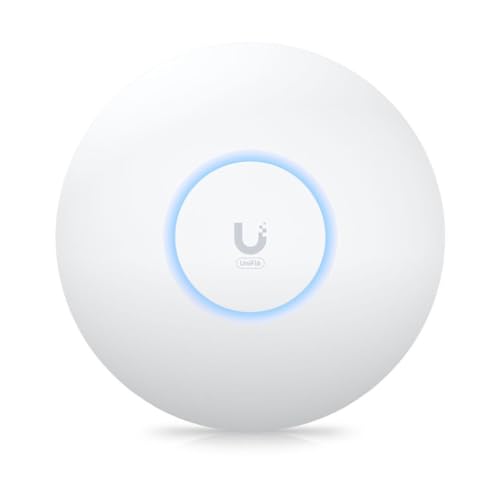
| 6 | Ubiquiti U6+ | Wall-mount Wi-Fi 6 | Wi-Fi 6, 3 Gbit/s | Gigabit | 0.74 lb |
| 7 | Omada EAP225 Wi-Fi 5 | Basic managed Wi-Fi | Wi-Fi 5 AC1350 | Gigabit | 1.1 lb |
| 8 | eero PoE 6 | eero home networks | Wi-Fi 6, 1.6 Gbps | Not listed | 0.97 lb |
| 9 | Omada EAP770 Wi-Fi 7 Pro | Tri-band Wi-Fi 7 | Wi-Fi 7 BE11000 | 2.5G | 1.54 lb |
| 10 | NETGEAR WAX210 | Browser-managed offices | Wi-Fi 6 AX1800 | 1G PoE | 0.73 lb |

Pros:
Cons:
Best for: A small office, clinic or large home that wants a reliable Wi-Fi 6 access point with free cloud management and no controller hardware.
Check current price on Amazon →
What sets the EAP650 apart is the balance. It does not chase the newest standard, but it offers more raw Wi-Fi 6 capacity than most of the list and wraps it in a management system that scales from one unit to a multi-site deployment. A DC adapter ships with it, so it works on a desk or shelf before any PoE infrastructure is in place.
Against the Cisco CBW150AX, the Omada gives up the bundled PoE injector but gains a 5-year warranty (Cisco offers 3 years) and a higher-rated speed class. Against the Omada EAP720 Wi-Fi 7, it costs you the 2.5G port and Wi-Fi 7 features, which matter only if your clients and uplink can use them.
It is the wrong choice for outdoor mounting, where the TRENDnet TEW-941APBO Outdoor is the only weather-rated option here. It is also the wrong choice if you already run an eero network, where the eero PoE 6 fits better.

Pros:
Cons:
Best for: A small business that wants a branded, simple-to-manage access point with the injector and hardware included.
Check current price on Amazon →
The CBW150AX is the easiest of the managed options to deploy from a single box. Cisco also lets you mix it with other Cisco Business Wi-Fi 6 access points and mesh extenders, so an office can add coverage later without changing platforms.
A small office that needs site-to-site tunnels or tight traffic control will still want a VPN router at the edge, because the access point only handles the wireless side. Compared with the Omada EAP650 Wi-Fi 6, the Cisco is less open about its radio capacity, so the Omada is the better pick when you need to size for numbers.
Skip it for multi-gig uplinks, since the single 1 GbE port is no match for the Omada EAP770 Wi-Fi 7 Pro, and skip it for any exposed location.

Pros:
Cons:
Best for: A property owner linking a garage, barn or second building to the main network, or covering a patio, yard or loading area.
Check current price on Amazon →
The TEW-941APBO is a specialist, and it behaves like one. The four detachable RP-SMA antenna connectors with 5 dBi omni antennas let you swap in different antennas for different layouts, which indoor models cannot do.
Compared with the Omada EAP720 Wi-Fi 7, it is slower on paper but it is the one you can put outside. The tradeoff is clear: if your coverage area is entirely indoors, the Omada EAP650 Wi-Fi 6 or Ubiquiti U6+ is the better use of a PoE port.

Pros:
Cons:
Best for: Offices and prosumer homes with a 2.5G switch and a planned move to faster internet.
Check current price on Amazon →
The EAP720 is the more sensible of the two Wi-Fi 7 Omada models. The 5 GHz radio speed is a significant jump over the Omada EAP650 Wi-Fi 6, and the 2.5G port means the wired side no longer holds it back.
If your gateway is still a Wi-Fi 6 model, the access point alone will not change much, and a WiFi 7 router is worth looking at for a full upgrade. Choose the Omada EAP770 Wi-Fi 7 Pro instead if you need a third radio for crowded spaces.

Pros:
Cons:
Best for: Classrooms, event rooms and cafes where many devices connect at once and Wi-Fi 6 is not required.
Check current price on Amazon →
The nanoHD is a legacy choice that still makes sense when the existing network is built around Ubiquiti gear. Its strength is client density, and the 200+ user figure is the most specific capacity claim among the Wi-Fi 5 options.
Anyone buying new today is better served by the Ubiquiti U6+, which offers Wi-Fi 6 in a lighter body. Budget-minded buyers who want managed Wi-Fi 5 should compare the Omada EAP225 Wi-Fi 5, which adds a 5-year warranty and an included injector.
Pros:
Cons:
Best for: Offices and homes that want a Wi-Fi 6 wall-mount unit and are comfortable in the Ubiquiti ecosystem.
Check current price on Amazon →
The U6+ is a straightforward Wi-Fi 6 upgrade over the older Ubiquiti UniFi nanoHD, in a lighter package. The PoE+ allowance of 25.5W gives it room to run without negotiating down.
It is the wrong choice for outdoor use, where the TRENDnet TEW-941APBO Outdoor is built for the job. For cloud management with a longer warranty, the Omada EAP650 Wi-Fi 6 is the stronger fit.

Pros:
Cons:
Best for: A budget-conscious small office that wants managed, mesh-capable Wi-Fi without paying for Wi-Fi 6.
Check current price on Amazon →
The EAP225 is the value play in the Omada family. You get the same management system as the Omada EAP650 Wi-Fi 6 and a longer warranty than Cisco, but on an older radio.
It is wrong for homes full of new Wi-Fi 6 devices, where the NETGEAR WAX210 or Ubiquiti U6+ serve better. It works well as a second access point in an existing Omada deployment.

Pros:
Cons:
Best for: A home with structured Ethernet cabling that already runs, or plans to run, an eero network.
Check current price on Amazon →
The eero PoE 6 is built for the household that wants managed Wi-Fi without learning VLANs. It avoids the controller choices of the Omada line and the mix of tools in the Ubiquiti line.
For small offices, the Cisco CBW150AX has stronger business features, and the Omada EAP650 Wi-Fi 6 offers a faster radio. Pick the eero for ease of use inside the eero ecosystem and nothing else.

Pros:
Cons:
Best for: Busy offices and large homes with a multi-gig network and a fleet of Wi-Fi 7 devices.
Check current price on Amazon →
The EAP770 is the premium-priced step above the Omada EAP720 Wi-Fi 7. The extra radio is what you are paying for, and it earns its place only where many clients compete for airtime.
For ordinary rooms, the EAP720 covers the same Wi-Fi 7 features with a lighter body. If you are sticking with Wi-Fi 6 clients, the Omada EAP650 Wi-Fi 6 is the sensible choice.

Pros:
Cons:
Best for: A small office, shop or clinic with a PoE switch and a simple need for staff and guest Wi-Fi.
Check current price on Amazon →
The WAX210 has the clearest published limits on this list, which makes planning easy. Its 30 active device cap and 1,500 sq ft coverage figure fit a small retail floor or a few offices.
It is wrong for anything that needs mesh, roaming across many units, or cloud monitoring, where the Omada EAP650 Wi-Fi 6 or Cisco CBW150AX fit better. For busier rooms, the Ubiquiti UniFi nanoHD supports far more simultaneous users.
The core trade-off is capability against infrastructure. Faster radios and multi-gig ports raise what the access point can do, but they also demand a matching switch, matching clients and a management platform you are willing to run. A well-matched Wi-Fi 6 unit often outperforms an expensive Wi-Fi 7 unit that has nothing to talk to.
Before choosing, check these project details:
Wi-Fi 5 models such as the Omada EAP225 Wi-Fi 5 and Ubiquiti UniFi nanoHD still work well for basic coverage and user density. Wi-Fi 6 units, including the Omada EAP650 Wi-Fi 6, Cisco CBW150AX and NETGEAR WAX210, are the practical middle ground for most buyers. They handle modern phones and laptops efficiently.
Wi-Fi 7 models like the Omada EAP720 Wi-Fi 7 and Omada EAP770 Wi-Fi 7 Pro add Multi-Link Operation and higher throughput, but the benefit depends on the router or gateway and the clients. If the gateway is the bottleneck, pairing the access point with a WiFi 7 router makes the upgrade complete.
The Ubiquiti UniFi nanoHD and NETGEAR WAX210 use 802.3af, while the Ubiquiti U6+ uses PoE+ and the TRENDnet TEW-941APBO Outdoor uses 802.3at PoE+. A mismatch between the power source and the access point is a common installation failure, so verify the standard before you buy.
If you do not have a PoE switch, look at what is in the box. The Cisco CBW150AX and Omada EAP225 Wi-Fi 5 include injectors, the Omada EAP650 Wi-Fi 6 ships with a DC adapter, and the eero PoE 6 and NETGEAR WAX210 do not include an AC adapter.
A 1G port is enough for the Wi-Fi 6 AX1800 and AX3000 class in most real deployments. Multi-gig ports start to matter with Wi-Fi 7. The Omada EAP720 Wi-Fi 7, Omada EAP770 Wi-Fi 7 Pro and TRENDnet TEW-941APBO Outdoor all offer 2.5G.
Uplink planning also affects your switch and gateway choices. A PoE router can power a few access points directly in a small site, which removes the need for a separate switch.
Omada units use free cloud management or a local controller, the Cisco CBW150AX uses its own app or browser, the eero PoE 6 uses the eero app, and the NETGEAR WAX210 is configured in a web browser. Choose the platform you are willing to maintain, not the one with the longest feature list.
Environment decides the rest. Indoor units are fine for offices and homes, but anything exposed to rain, sun or freezing temperatures should be the TRENDnet TEW-941APBO Outdoor, which carries an IP67 rating. Also check the warranty: the Omada models give 5 years, Cisco and TRENDnet give 3.
A PoE access point receives both data and power through a single Ethernet cable. This removes the need for a nearby power outlet, which is why units like the Ubiquiti U6+ and NETGEAR WAX210 suit ceilings and walls. It also keeps installations tidy.
An injector works fine for one or two access points. The Cisco CBW150AX and Omada EAP225 Wi-Fi 5 include one. For several access points, a PoE switch is cleaner because it powers every unit through the same cable that carries data.
It is worth it when your clients support Wi-Fi 7 and your uplink is faster than 1G. The Omada EAP720 Wi-Fi 7 and Omada EAP770 Wi-Fi 7 Pro both include a 2.5G port for that reason. If most of your devices are older, the Omada EAP650 Wi-Fi 6 delivers more value today.
Only if it is weather rated. The TRENDnet TEW-941APBO Outdoor has an IP67 housing and an operating range from minus 22°C to 60°C. The other units here are indoor products.
You can, but each brand needs its own management. The Omada EAP650 Wi-Fi 6 and Omada EAP225 Wi-Fi 5 share a platform, as do the Cisco Business units. Mixing a Ubiquiti U6+ with an eero PoE 6 means two separate systems.
Use the coverage figure as a starting point. The NETGEAR WAX210 covers up to 1,500 sq ft indoors, and the eero PoE 6 covers up to 2,000 sq ft. Walls, floors and device counts reduce those numbers, so plan one unit per room cluster in dense buildings.
Best PoE Access Points for most buyers start with Omada EAP650 Wi-Fi 6: AX3000 speeds up to 2976 Mbps, free cloud management, a 0.86 lb body and a 5-year warranty. Its main weakness is the single 1G Ethernet port, which caps wired speed. For small offices, clinics and larger homes, that trade-off is easy to accept.
For alternatives by use case, the Cisco CBW150AX is the choice when you want the injector and mounting kit in the box. The Omada EAP720 Wi-Fi 7 suits buyers moving to a 2.5G network, and the Omada EAP770 Wi-Fi 7 Pro adds a third radio for crowded spaces. The Ubiquiti U6+ is the pick for Ubiquiti networks that want Wi-Fi 6 in a light wall-mount unit.
The specialists come last. The TRENDnet TEW-941APBO Outdoor is the only outdoor and bridge option, the eero PoE 6 fits eero households, the NETGEAR WAX210 is the simplest browser-managed unit, and the Ubiquiti UniFi nanoHD and Omada EAP225 Wi-Fi 5 cover Wi-Fi 5 needs. If you are still undecided, buy the Omada EAP650 Wi-Fi 6 and move up to a Wi-Fi 7 Omada model only when your switch and client devices can use it.


